

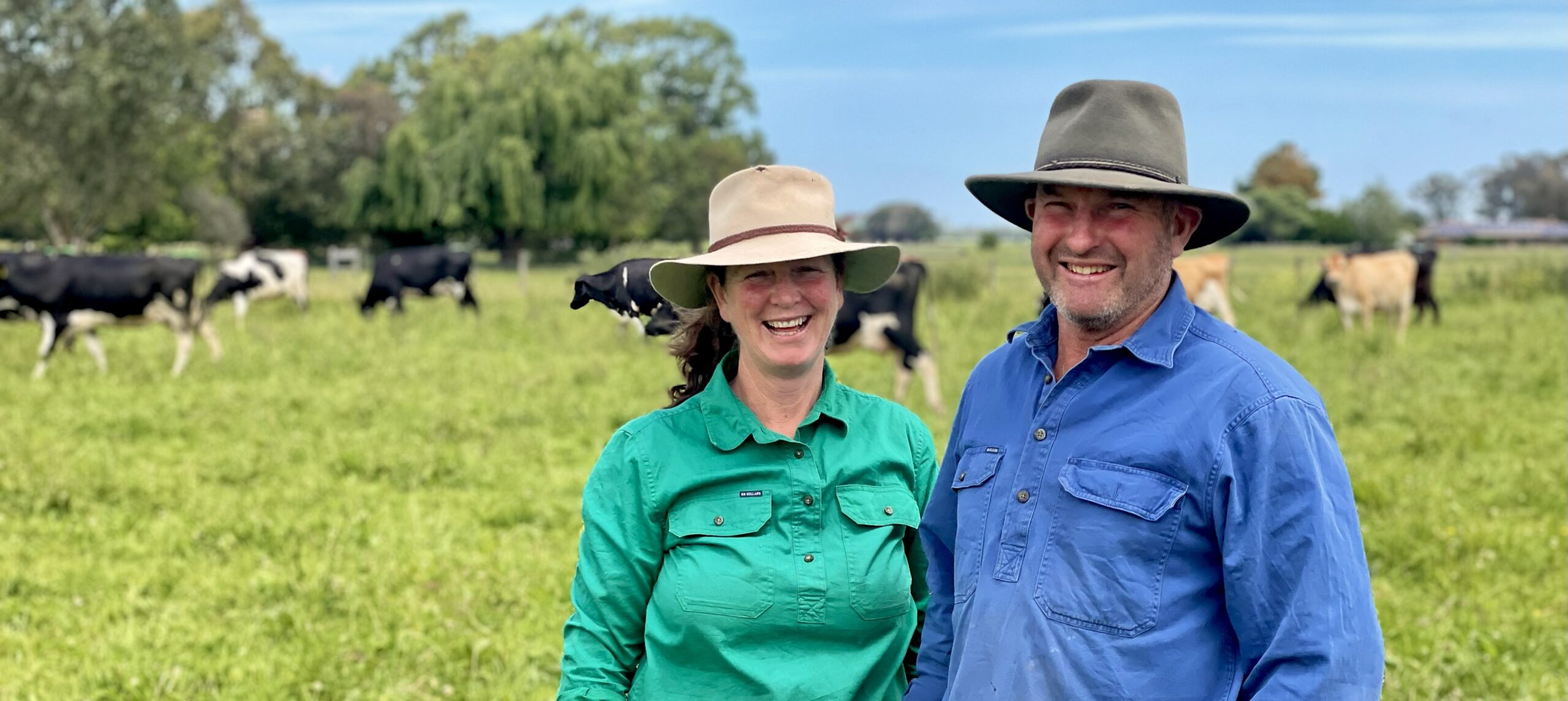
Kate and Peter at Neaves Mirams Agriculture
Improving production and profitability by waking up soil biology in Newry, Victoria
Part of the Dairy Resilience Project case study series | Published March 2026
For over two decades, Kate Mirams and Peter Neaves have operated their dairy farm, Neaves Mirams Agriculture, on the alluvial floodplains of the Macalister River in Gippsland, Victoria. Over the past seven years, they have managed to significantly reduce synthetic inputs while maintaining some of the highest pasture consumption rates in their benchmarking group and ranking amongst the top 25% for return on assets in the Dairy Farm Monitor Project.1For more information on the Dairy Farm Monitor Project see: https://agriculture.vic.gov.au/ about/agriculture-in-victoria/dairy-farm-monitor-project As they have shifted towards practices focused on soil health and ecology, they have shown it is possible to remain profitable while building soil and landscape health. On a personal level, they have found ‘joy in seeing everything thriving’.
Farm Facts
Location
Gunaikurnai Country, Newry, VIC
Regional Climate
Warm summer, mild winter/Temperate cool season
Average Annual Rainfall
600 mm
Property Size
Newry: 194 ha (Newry Property 135 ha, 110 ha irrigated, 25 ha non-irrigated; Boisdale Property 59 ha, 50 ha irrigated, 9 ha non-irrigated)
Elevation
30 m
Social Structure
Family owned and operated
Enterprise Type
Pasture-based dairy farm with moderate supplementary feeding
Landscape
Alluvial Floodplains, including three threatened EVCs: Floodplain Riparian Woodland, Plains Grassland, and Billabong Wetland Aggregate
Soils
Predominant black dermosols. Loam to clay soils with low texture contrast, moderate to high fertility and strong structure, typically formed on fertile alluvial floodplains.
The Highlights
Practices, innovations and strategies
- Transitioning from conventional rye (Lolium perenne) and white clover (Trifolium repens) pastures to multispecies; building diversity and soil health
- Applying biological seed treatments to support root development and beneficial microbial relationships in the soil
- Using soil and plant tissue tests to support targeted foliar and soil applications including boron, manganese, nitrogen, potassium, sulfur, calcium, phosphorus, micronised guano, beneficial anaerobic microbes (BAM), humate and fulvic acid blends, and fish-based nutrients
- Shifting management focus to soil function and health as the key to long-term profitability
- Implementing extensive revegetation for landscape health and shade
Indicators of success
- Significant reductions in synthetic nitrogen
- Top 25% ranking for Return on Assets in Gippsland in the Victorian Dairy Farm Monitor Project 2024-25
- Fourth-highest pasture consumption rates in local benchmarking group
- Increased water drawdown at depth indicating deeper rooting depth and improved water infiltration, storage and drought resilience
- Improvements in Ecological Outcomes Verified (EOV) ecosystem function assessments for water cycling, nutrient flow, energy flow and biodiversity
- Improved soil function and fodder production
Next steps
- Running a new trial to understand the differences in water dynamics between ‘conventional’ and soil health focused pastures
- Exploring ways to improve the nutrient value of dairy effluent by incorporating beneficial anaerobic microbes
- Integrating trees and multi-layered vegetation into paddocks to complement edge plantings
- Supporting and sharing knowledge with other farmers
- Using learnings to roll out soil health practices at their run-off property in Boisdale
‘‘I really think soil will save us because vibrant, alive soil holds ecosystems together and is part of the climate resilience challenge, but food grown on alive soil also helps human health and helps our whole community to stay alive.’ – Kate Mirams
Landscape and Soils
Neaves Mirams Agriculture is located on the alluvial floodplains of the Macalister River within the Gippsland Plains bioregion in southeast Victoria. The Gippsland Plains are characterised by gently undulating low lying coastal and alluvial plains that are generally less than 200 m above sea level. The region’s temperate climate experiences winter dominant rainfall, with average annual totals of 500 to 1,100 mm.2 Department of Energy, Environment and Climate Action, Bioregions and EVC benchmarks, environment.vic.gov.au website, n.d., accessed 4 February 2026.
Soils across the upper Gippsland Plains typically include sodosols and chromosols, with pockets of black dermosols, which are the predominant soil type on the Neaves Mirams Newry property.3Department of Energy, Environment and Climate Action, Victorian soil type mapping, Victoria Government open data portal, n.d., accessed 4 February 2026. Dermosol soils are loam to clay in texture with low texture contrast, moderate to high fertility and strong soil structure, reflecting their formation on fertile alluvial floodplains.4C Botfield, Australian soil: definition, classification, types and quality, Accessep website, n.d., accessed 4 February 2026; Soil Science Australia, Dermosols, Soil Science Australia website, n.d., accessed 4 February 2026.
There was little remnant native vegetation when Kate and Peter purchased Newry in 2003. Significant plantings were then undertaken along Newry Creek, which runs through the main production property at Newry. These areas support two endangered5 Bioregional conservation status Endangered: <10% of pre-European extent remains or 10-30% pre-European extent severely degraded remains. ecological vegetation classes (EVCs), Floodplain Riparian Woodland and Plains Grassland, with smaller areas of the endangered Billabong Wetland Aggregate.6Department of Energy, Environment and Climate Action, Bioregions and EVC benchmarks. This rare floodplain wetland class is associated with major river systems and is characterised by aquatic herblands and sedgelands occupying billabongs and seasonally inundated depressions.7Victorian Government Department of Sustainability and Environment, Index of Wetland Condition – Assessment of wetland vegetation [PDF], Victorian Government Library Service, n.d., accessed 4 February 2026.
Floodplain Riparian Woodlands occur along low lying meandering rivers and major creeks and are characterised by open eucalypt woodlands dominated by river red gums (Eucalyptus camaldulensis), Gippsland red gums (Eucalyptus tereticornis subsp. mediana) and swamp gums (Eucalyptus ovata). The understorey typically consists of a medium-tall shrub layer, including species such as lightwood (Acacia implexa), blackwood (Acacia melanoxylon), tree everlasting (Ozothamnus ferrugineus), sweet bursaria (Bursaria spinosa) and Tree Violet (Melicytis dentata). Ground layers include a range of amphibious ground cover species adapted to fluctuating water levels, such as tall sedge (Carex appressa) and trailing speedwell (Veronica plebeia). Soils in these areas are fertile alluvial deposits that can become periodically inundated during flood events.8Department of Energy, Environment and Climate Action, Ecological Vegetation Class (EVC) / Bioregion Benchmark for Vegetation Quality Assessment – Gippsland Plain Bioregion [PDF], Victorian Government, n.d., accessed 4 February 2026.
Plains Grasslands occur on flatter, treeless areas of the floodplain and are dominated by a diversity of grasses and herbs. Characteristic species include kangaroo grass (Themeda triandra), common bog-sedge (Schoenus apogon) and wallaby-grasses (Austrodanthonia spp.), and consist mainly of clay soils.9Department of Energy, Environment and Climate Action, EVC/Bioregion Benchmark for Vegetation Quality Assessment – Gippsland Plain Bioregion [PDF], Victorian Government, n.d., accessed 4 February 2026. Together, these remnant vegetation communities reflect the dynamic floodplain environment and provide important ecological context for farming within a highly productive and variable landscape.
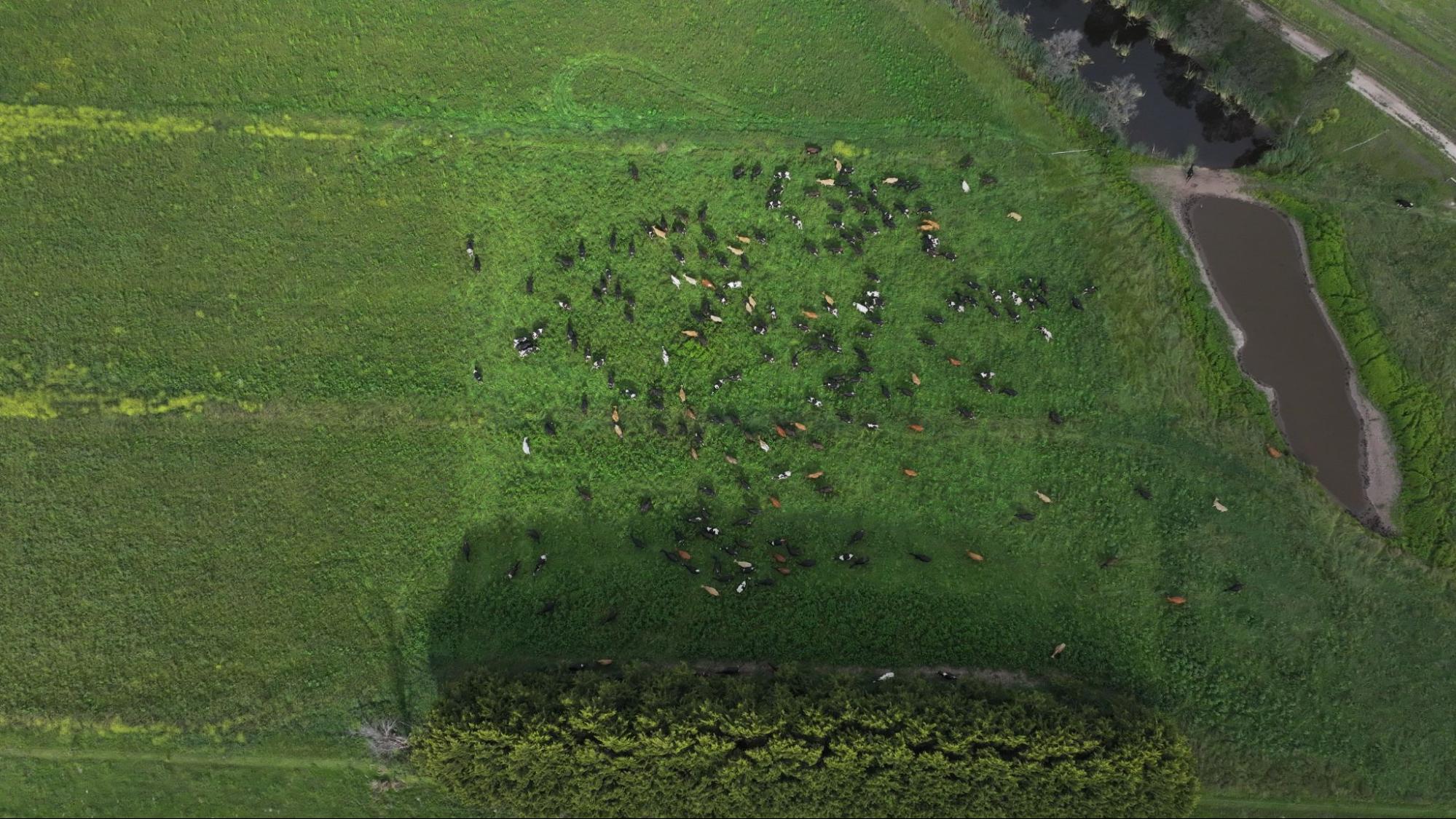
Image 1.Aerial shot of herd grazing at Neaves Mirams Agriculture. Source: Grow Love Project.
Meet Kate and Peter
‘When we let nature come to the party and help us…it’s a miracle. It’s an amazing thing to work with and it’s so joyous and exciting to do.’ – Kate Mirams
Kate and Peter met in 1989 on the front steps of the Agriculture and Forestry building at the University of Melbourne and after graduating two years apart, both went on to work as dairy officers.
In 1994, they were separately awarded dairy industry scholarships to complete a Master’s degree at Massey University in New Zealand, studying dairy production systems. Afterwards, Peter returned to northern Tasmania for three years, while Kate moved to Maffra to support farmers in pasture renovation, soil and fertiliser management, animal health, nutrition and business analysis. Through this work, Kate gained a deep understanding of where the best soils were in the region, which helped them decide where to look for a farm. In 2003, they purchased their property in Newry and in 2023 acquired a run-off block in Boisdale.
Today, Neaves Mirams Agriculture runs 320–330 spring-calving cows and rears 100 heifer calves annually on predominantly flood irrigated pastures. Kate and Peter aim for high pasture intake, targeting at least 70% homegrown feed and harvesting up to 12 tonnes of dry matter per hectare (t DM/ha) from their multispecies paddocks, which make up 60% of the farm. Each cow receives approximately 1.3–1.5 t of grain and 0.5 t of cereal hay annually. Two full-time employees support the operation alongside Kate, Peter and their three sons when home from studies.
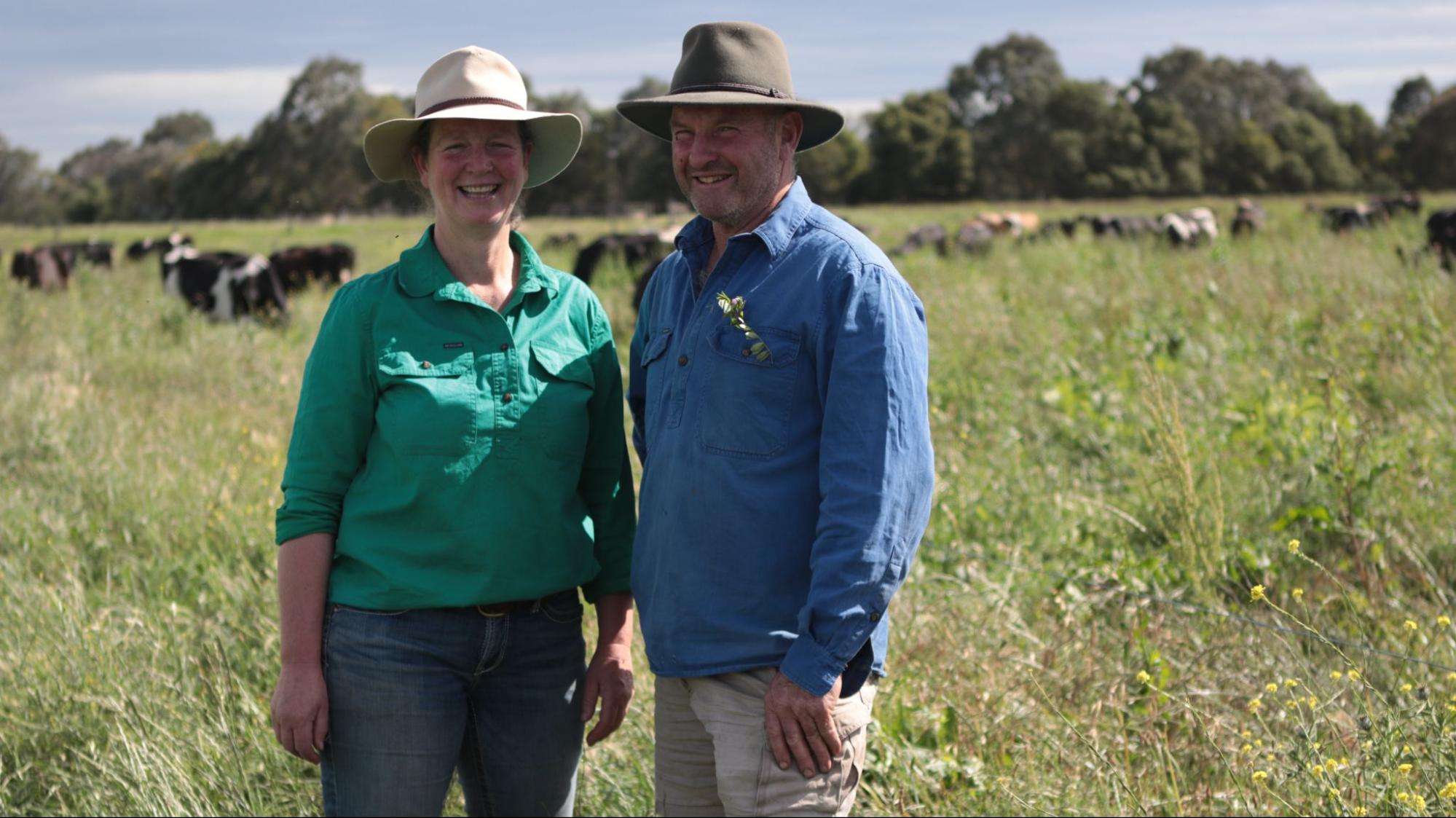
Image 2. Kate Mirams and Peter Neaves in front of a multispecies paddock at Neaves Mirams Agriculture. Source: Grow Love Project.
Early years: Balancing growth and risk
Drawn to the rich alluvial soils of the upper floodplains in Newry, Kate and Peter found their property in 2003 when a chance meeting with the previous owner allowed them to view the farm before it was listed. They purchased the 65 ha working dairy farm with Peter’s parents in a 50/50 equity partnership and leased an additional 32 ha. From day one, they milked 250 cows.
Over the following years, they expanded the farm by purchasing an additional 36 ha adjoining their property and eventually bought out Peter’s parents in 2013. In 2018, they purchased the land they had been leasing, and more recently in 2023, acquired a run-off block to rear heifers and grow silage 10 km away in Boisdale.
In addition to the rich soils, the farm’s landscape is shaped by irregular paddocks, lagoons and the Newry Creek, creating a diverse topography. Early on, Kate and Peter chose to protect the banks and support the health of the waterways by fencing off the creek and undertaking riparian planting with support from the West Gippsland Catchment Management Authority (WGCMA).
At the beginning of their farming journey, two priorities guided them: servicing a mortgage and preparing to buy Peter’s parents out of the equity partnership. As Kate recalls, ‘We knew within ten years we had to have become successful enough at farming that we could buy them out and so, you know, we were going to do what we had to do to make a profit through that time.’
Starting out, their system was typical of many farmers in the district: high-production ryegrass and clover pastures, supported by superphosphate, muriate of potash, diammonium phosphate (DAP) and increasing urea applications to drive feed growth and milk production. Coupled with a strong focus on grazing management, they aimed to grow 12 t DM/ha per year and were renovating approximately 10% of their paddocks each year by spraying them out then direct drilling perennial ryegrass (L. perenne) and white clover (T. repens) with a disc drill.
‘Early on, one of our biggest challenges was just enough time to really think about working on our business. We were so busy working in our business, milking and doing all the farm work that we didn’t…have the time to really think about what’s the future of our business and what’s the direction we want to take it in’ – Kate Mirams
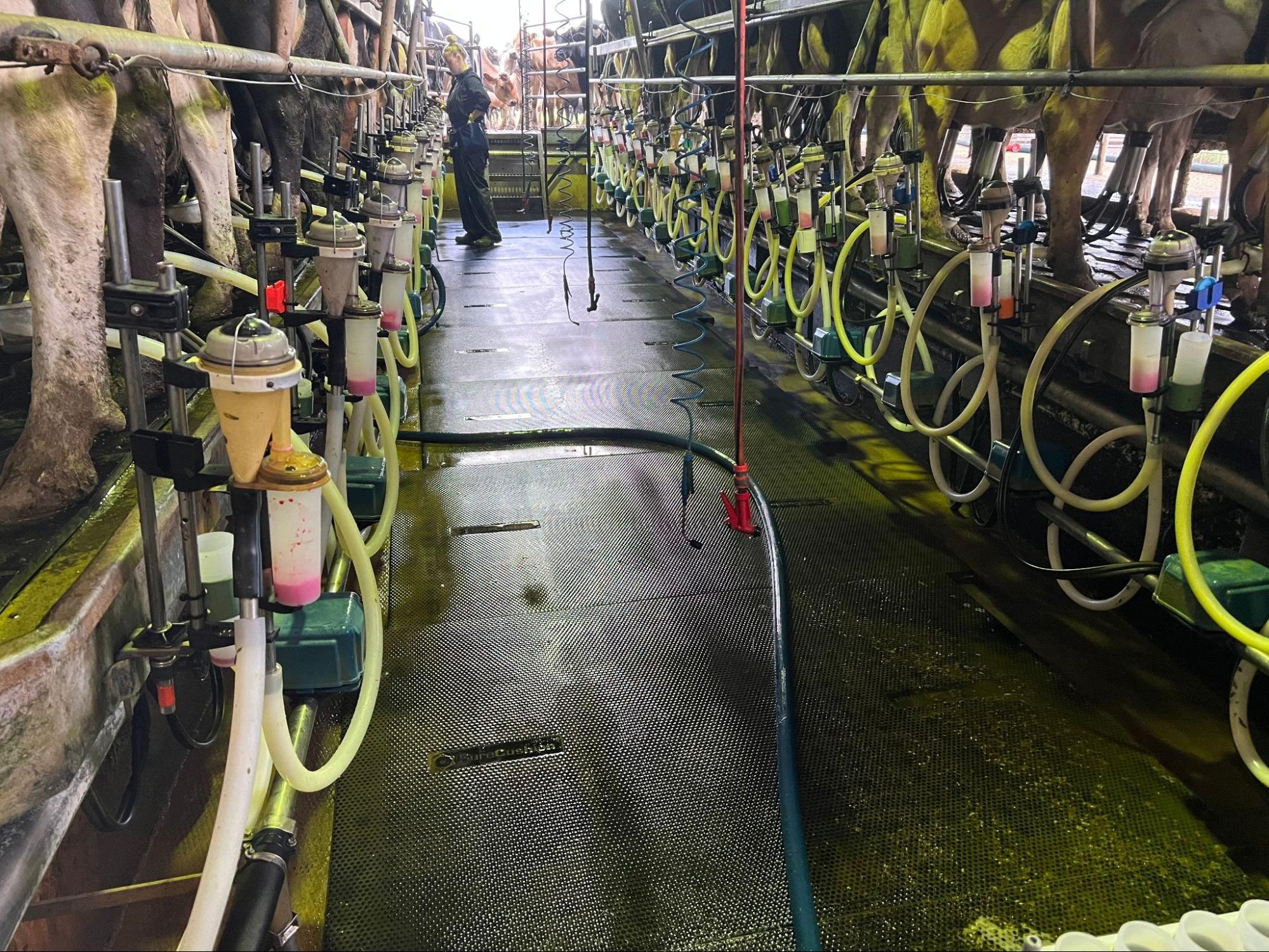
Image 3.Milking shed at Neaves Mirams Agriculture during herd testing. Source: Soils for Life.
Motivations for change
Addressing laser grading impacts and input reliance
Kate and Peter’s decision to explore new practices was sparked by a combination of practical challenges, timing and what Peter describes as ‘a perfect storm of information coming to us’.
From his experience working in Tasmania, Peter knew that irrigated paddocks could produce 12 t DM/ha without applying nitrogen. However, on their own farm, Kate and Peter realised the amount of nitrogen they were putting on the paddocks was steadily increasing. Although they were still harvesting 12 t DM/ha, they were applying 240 kg of nitrogen to achieve that yield.
‘We got dependent on it … we basically couldn’t live without the urea after a while … I was always uncomfortable with that. I wanted to claw it back.’ – Peter Neaves
In 2018, after attending field days, a seminar and a workshop with a range of experts, they felt ready to ‘give it a go’ and reduce their nitrogen use.
Around the same time, they decided to laser grade a ‘poorly irrigated’ paddock to address uneven water distribution during irrigation. Despite their intentions to save the topsoil, the hot dry summer resulted in the soil structure being destroyed. Peter recalls, ‘It was so pulverised, when you drove along it felt like you were driving through water.’ Speaking to their laser grading contractor, the late Greg Hair, Kate questioned whether it was possible to change the water holding capacity of their soil or if it was set by the soil type. Kate adds, ‘The laser grading told us, you can stuff the soil and therefore you should be able to fix the soil.’
Their prior experience was that graded paddocks could take 20 years to recover to pre-grading condition. Kate and Peter wanted to find a way to rebuild the soil quicker. Kate says, ‘We then started looking for people who could help us learn how to do it, and we were so lucky that the West Gippsland Catchment Management Authority, Agriculture Victoria and later GippsDairy came on board to help us with the demonstration site.’
Establishing a soil regeneration trial
With support from the WGCMA, Agriculture Victoria and later GippsDairy, Kate and Peter commenced the development of the demonstration site in the summer of 2018–19. The aim of the trial (which is ongoing as of publication of this case study) is to determine whether soil function, resilience and productivity could be improved more rapidly using regenerative practices following laser grading under irrigated dairy conditions.
The trial includes six irrigation bays arranged as three paired replicates (north, east and west). In each pair, one bay is managed ‘conventionally’ with perennial ryegrass (L. perenne) and white clover (T. repens), supported by standard fertiliser inputs including superphosphate, muriate of potash, urea and DAP. The adjacent paired bay is managed for soil health, initially planted with multispecies pastures and progressively incorporating new practices as Kate and Peter’s knowledge develops. This adaptive approach means the soil health bays continue to evolve over time, rather than being locked into a fixed treatment from the outset.
The trial benefited from expert advice at critical stages. Consultant Jade Killoran, commissioned by the WGCMA, played a key role in setting up the trial, selecting species mixes, carrying out monitoring and meeting regularly with Kate and Peter to review progress and plan next steps. While early advice helped establish the framework, Kate and Peter felt they needed stronger guidance on nutrient management. That gap was filled after meeting another consultant, Dave Huggins, at a field day on the farm. His soil test-based approach, focusing on supplying what soil biology requires rather than blanket inputs, resonated strongly and became the foundation for nutrient decisions within the Soil Health Bays.
The trial has involved extensive monitoring of indicators relevant to productivity, profitability and resilience, including feed quality and quantity, soil moisture, root depth, input use relative to production and input costs. Moisture meters installed in the bays have shown clear differences in how the systems access water, with roots in the Soil Health Bays consistently drawing moisture from depths of up to 60 cm compared to 30 cm or less in the Conventional Bays.
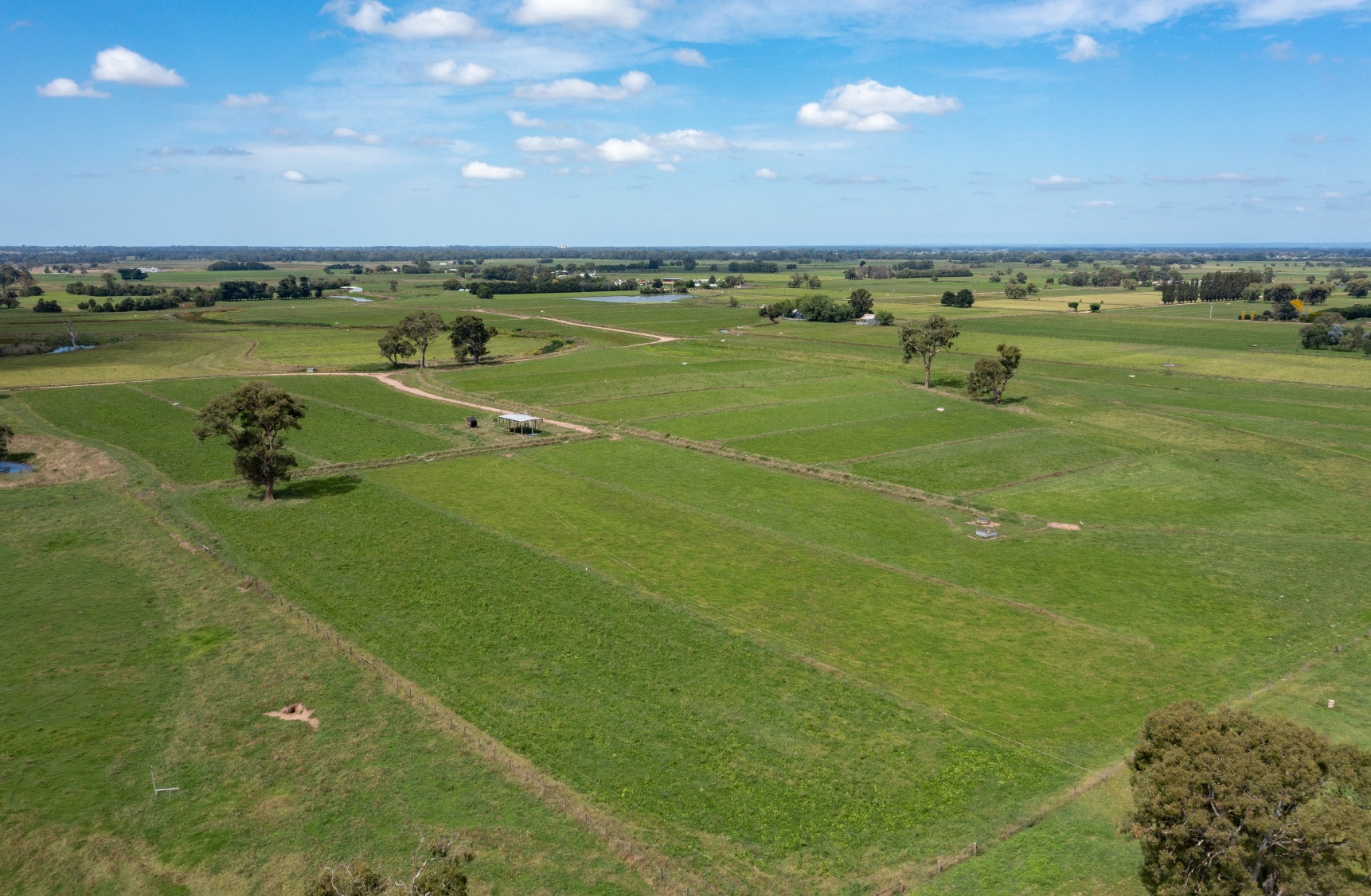
Image 4. Conventional and Soil Health Bays at Neaves Mirams Agriculture. Source: WGCMA.
From trial to farm-wide practice
The data and feedback from the trial gave them the confidence to begin implementing practices across the whole farm in 2020-21 and today Kate and Peter have established a range of practices focused on building soil health and resilience.
Table 1. Practice change at a glance: practices phased out and introduced at Neaves Mirams Agriculture. Source: Kate Mirams.
| Practices phased out | Practices introduced |
|
|
One of the first steps they took was to consider how their management decisions affected the soil microbiome, much like they would the microbes in a cow’s rumen. Along the way, they have mostly stopped cultivating, put in place a farm-wide ban on insecticides and fungicides, and more recently stopped using seeds coated in fungicide or insecticide. Instead, they apply a mix of natural soil amendments to seeds, which supports microbial life and provides nutrients to feed the microbes, helping them establish a strong relationship with the plant roots from the moment the seeds germinate.
Alongside this, they stopped using fertilisers known to be harmful to fungi and beneficial soil bacteria, instead learning about other inputs, such as the sulphate form of minerals, fish hydrolysate and fulvic and humic acids. They began cutting back on their nitrogen use by incrementally reducing urea applications while adding fulvic acid to improve efficiency. To do this, they continued using their standard granular urea but applied fulvic acid powder over the granules, helping the nitrogen work more effectively and allowing them to spread the same load over a larger area. Over time, they gradually reduced application rates, observing that clover and other pasture species began supplying more of the system’s nitrogen naturally.
For more information on improving nitrogen cycling and efficiency, check out our guide here.
As their knowledge grew, Kate and Peter started paying attention to minerals they had previously overlooked. As Kate puts it: ‘The next thing that I think is really an easy thing to do is just start exploring. You know, have you got enough calcium in your soil? Have you got enough sulfur? Have you got enough boron? Have you got enough manganese? Have you got enough copper? So the things that we’re not used to taking notice of, just start taking notice of that and swap some of the money that you’re gonna save on your nitrogen fertiliser into addressing some of those.’
Kate emphasises the importance of finding the right support and advisors: ‘ I think you, have to be quite prepared to chop and change and find people who share your dream of what you’re going to do on your farm and are prepared to be there for the journey.’
Both Kate and Peter also invested heavily in building their knowledge in new practices and soil health, travelling to conferences and looking to connect with other farmers experimenting with similar practices. While these experiences provided confidence, they could also be isolating, as they were often the only dairy farmers in the room. This was sometimes difficult because applying soil health practices in dairy systems can present different challenges, particularly when balancing milk production with allowing plants to mature, which Kate believes can be more easily accommodated in beef systems.
Practices and Strategies
Today the farm has transitioned from predominantly ryegrass and clover pastures to diverse multispecies. Wherever possible, Kate and Peter choose to top-up paddocks, rather than spraying out and resowing, and have shifted towards minerals and microbial inputs that support soil biology. They regularly monitor soil health and make management decisions that build and protect soil function while balancing profitability and sustainability.
Multispecies pastures
Taking their learnings from the trial site, Kate and Peter transitioned the whole farm from rye and clover to long term perennial multispecies pasture, going through an annual cropping phase to get there. They use a variety of species from diverse plant families to build diversity, soil health and resilience.
Their method to begin the transition is to choose an underperforming paddock to spray out in autumn and sow with a winter annual multispecies crop. This is then followed by sowing a spring annual mix with a handful of perennials added in, such as chicory (Cichorium intybus), plantain (Plantago lanceolata), lucerne (Medicago sativa) and a few types of clover (Trifolium spp.). This pasture is then allowed to grow to a mature stage with strong roots before grazing. They then top up the paddock the following autumn with additional grass species.
Kate and Peter manage these crops for soil health, not just milk production. Their goal with the annual multispecies pasture is to bring in a diversity of roots to help build soil structure and create the conditions for beneficial soil microbes and other organisms to establish and thrive. During this transition period, they allow the crop to mature beyond the ideal grazing window for producing milk, extending the period of active photosynthesis and root growth. This increases carbon inputs to the soil through greater root biomass and root exudation, feeding soil microbes and supporting soil function. Peter explains, ‘While this isn’t ideal for milk production, it is ideal for changing soil. And we feel there’s enough diversity here, enough leafy stuff that the cows will do well if we don’t push them too hard.’
‘Diversity is king…we want diversity in the plants, so they’re feeding a diverse range of microbes in the soil. But we want diversity in the plants, so they’re providing diverse nutrition to the cows, and hopefully that flows onto milk quality and better nutritional outcomes for the people who drink our milk.’ – Kate Mirams
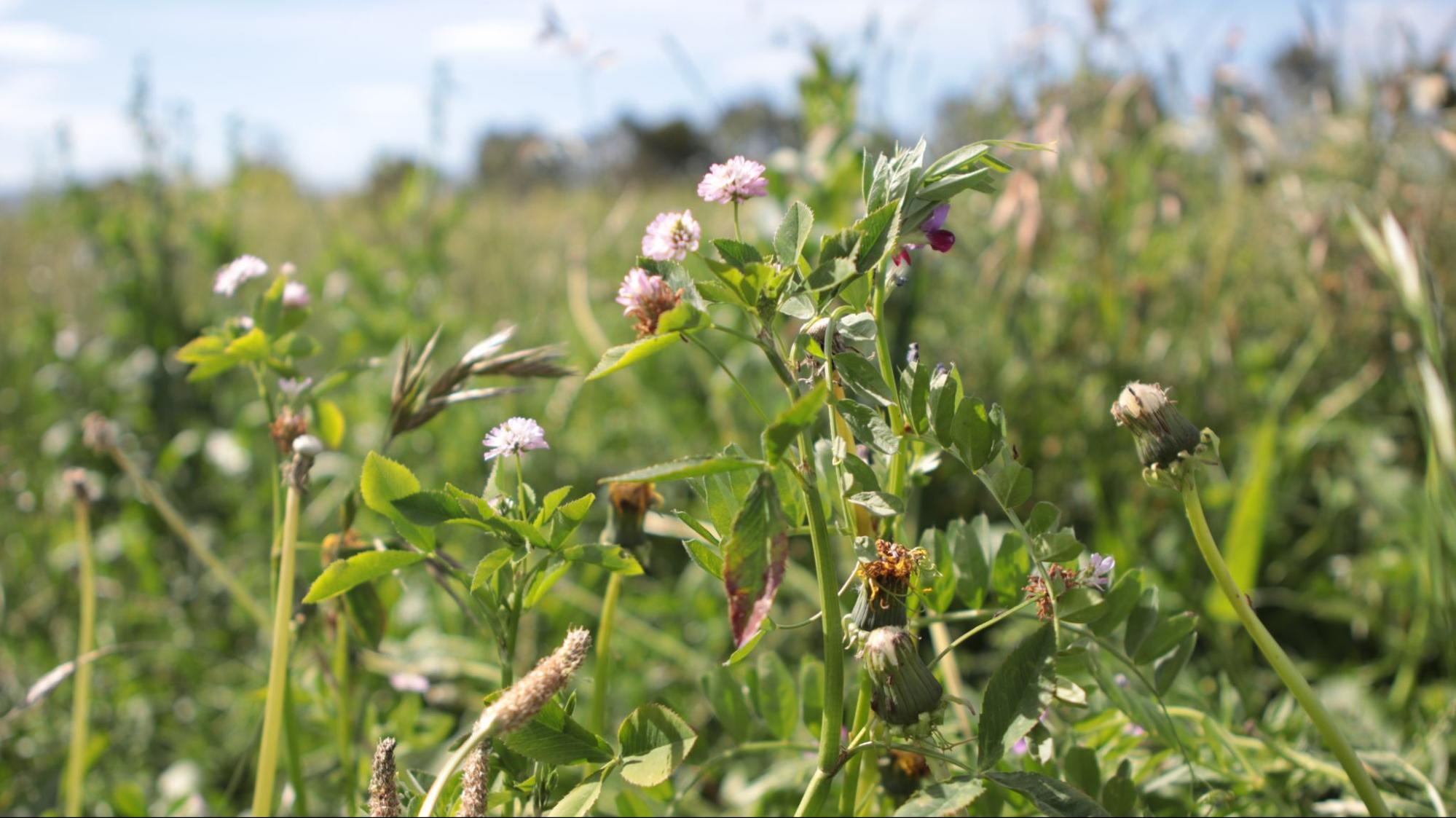
Image 5. Multispecies paddock at Neaves Mirams Agriculture. Source: Grow Love Project.
For more information on multispecies cropping see our practice guide here.
Grazing management with multispecies pastures
Peter believes that when it comes to grazing management, dairy farmers are already on the front foot: ‘ We are all into rotational grazing and varying it depending on the growth rate.’
Managing multispecies pastures, however, adds complexity. Each species has different growth patterns and optimal grazing times, so decisions cannot be based solely on one species like ryegrass. Kate explains that the challenge is balancing the needs of multiple species: ‘It’s the right time for this species, but it’s the wrong time for that one. But the cows won’t make milk if I wait for that one. So, it’s definitely more complex, but it’s also really exciting and interesting and rewarding.’
To address this, they observe each paddock closely and make deliberate decisions about grazing timing to favour the plants they want to prioritise in the sward. Specifically in the transition phase before perennials are established, annual plants are allowed to grow through to reproductive stage, after which the plant’s energy shifts towards seed production and root exudation slows.10 ‘Root exudates are a complex mixture of soluble organic substances, which may contain sugars, amino acids, organic acids, enzymes, and other substances.’B-J Koo, DC Adriano, NS Bolan and CD Barton, ‘Root exudates and microorganisms’, in D Hillel (ed), Encyclopedia of soils in the environment, Elsevier, Amsterdam, 2005, pp 421–428, doi:10.1016/B0-12-348530-4/00461-6. Only then are they grazed, extending the plants’ period of active photosynthesis and contribution to soil health.
Another challenge Kate found was adjusting her expectations of what a healthy paddock looked like. Moving from uniform, glossy ryegrass to mixed-species pastures meant paddocks often appeared untidy, with plants at different stages of growth, requiring a shift in perception to recognise the underlying health and productivity of the sward.
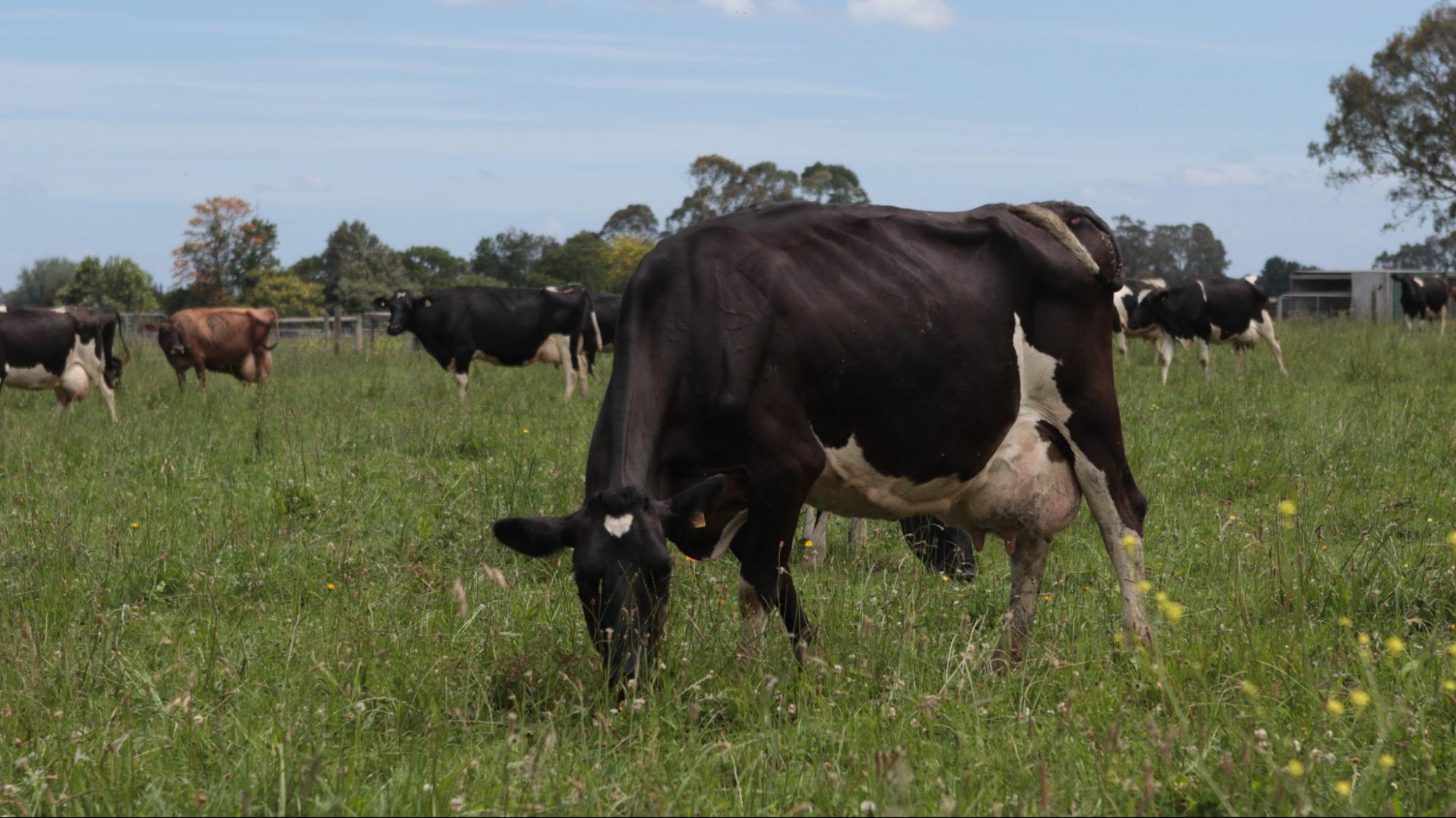
Image 6. Cows grazing multispecies paddock at Neaves Mirams Agriculture. Source: Grow Love Project
Minerals and foliar applications
Kate describes foliar nutrition as ‘groundbreaking’ when it comes to meeting plant and microbial needs and allowing reductions in nitrogen use.
Through their own research and working with consultant Dave Huggins, Kate and Peter started examining their soil tests to see which nutrients their soil needed and where improvements could be made.
One key learning was understanding the relationship between magnesium and calcium in their soils. Peter discovered the area has high magnesium levels creating compacted and blocky soil. They started adding both lime and gypsum to help open up the soil, displace excess magnesium, improve aeration and create conditions more favourable for fungi growth.
In 2020–21, they took the next step by investing in a tow-and-fert machine, which allowed them to begin foliar applications. Foliar applications of fertilisers are applied directly to leaves rather than the soil. Kate has found that shifting from soil applied to foliar urea has helped them improve their farm’s nitrogen use efficiency. In particular, it has reduced the risk of excess nitrogen in the soil, which suppresses legumes’ capacity to fix nitrogen.11 ‘Nitrogen availability plays a crucial role in legume–rhizobia symbiosis, as higher doses of nitrogen fertilizer can hinder successful symbiotic establishment.’ MH Abd-Alla, SM Al-Amri and AW El-Enany, ‘Enhancing Rhizobium–legume symbiosis and reducing nitrogen fertilizer use are potential options for mitigating climate change’, Agriculture, 2023, 13(11):2092, doi:10.3390/agriculture13112092
Kate and Peter often combine their tailored foliar applications with beneficial anaerobic microbes (BAM) and carbon sources, such as fulvic acid. Kate explains that fulvic acid helps chelate and carry minerals in plant available forms, supporting plant uptake and potentially reducing nutrient losses through leaching or runoff. The farm-brewed BAM, she says, has ‘a couple of really useful features’, including being able to ‘get into tight places in the soil and be happy living there’, tolerating low-oxygen conditions during flood irrigation and ‘containing a range of free living nitrogen fixing bacteria and phosphorus solubilising bacteria’.
Foliar applications are generally applied three to ten days after grazing, depending on plant growth rates, and according to Kate and Peter, are best sprayed early in the morning when plants are actively photosynthesising but not heat stressed, humidity is higher, evaporation rates are lower and spray droplets remain on the leaf longer.
For more information on foliar applications, see Soils for Life’s Practice Guide on Foliar Applications.
Seed treatments
Kate and Peter buy uncoated seeds for their multispecies pastures and apply a seed treatment designed to support microbial life and root development. Their approach is guided by a desire to work with the natural ecology of the soil and to encourage soil microbes to mobilise nutrients. Their seed treatment mixes typically include fish products, fulvic acid, vermicast and worm leachate full of beneficial bacteria, fungal spores and small amounts of nutrients. By using biological seed treatments, they hope to establish beneficial plant-soil relationships early on, supporting early growth and plant health.
Since deciding to purchase uncoated seeds and opting for their own biological seed treatment, Kate and Peter have not experienced any issues with germination or detrimental pest pressure. With pests more broadly, they do have some lucerne flea (Sminthurus viridis) activity, which they currently take as a sign of having more to learn and implement. Kate explains that they believe this may be a sign of low silica.12Plants growing in silica-poor soils can be less resilient to pests and other stresses. Research shows that silicon uptake can reduce herbivory by increasing leaf toughness and structural defence. See: D Debona, FA Rodrigues and LE Datnoff, ‘Silicon’s role in abiotic and biotic plant stresses’, Annual Review of Phytopathology, 2017, 55:85–107, doi:10.1146/annurev-phyto-080516-035322.
For more information on biological seed treatments, see our practice guide here.
Monitoring
Alongside the demonstration site monitoring, Kate and Peter regularly check progress across the farm. Armed with a shovel, they dig into paddocks to observe key soil health indicators, such as root development and soil structure.
Some key observations include how roots are growing, including whether they move freely down through the soil, spread sideways when they hit resistance or extend a strong tap root before branching into fine lateral roots. They look for strong rhizosheath development, which is the soil that clings to the roots when plants are lifted, as an indicator of active microbial life. They also assess soil structure, looking for good aggregation and fine crumbs rather than large, blocky clods.
For more information on soil monitoring, check out our soil heath assessment guide here.
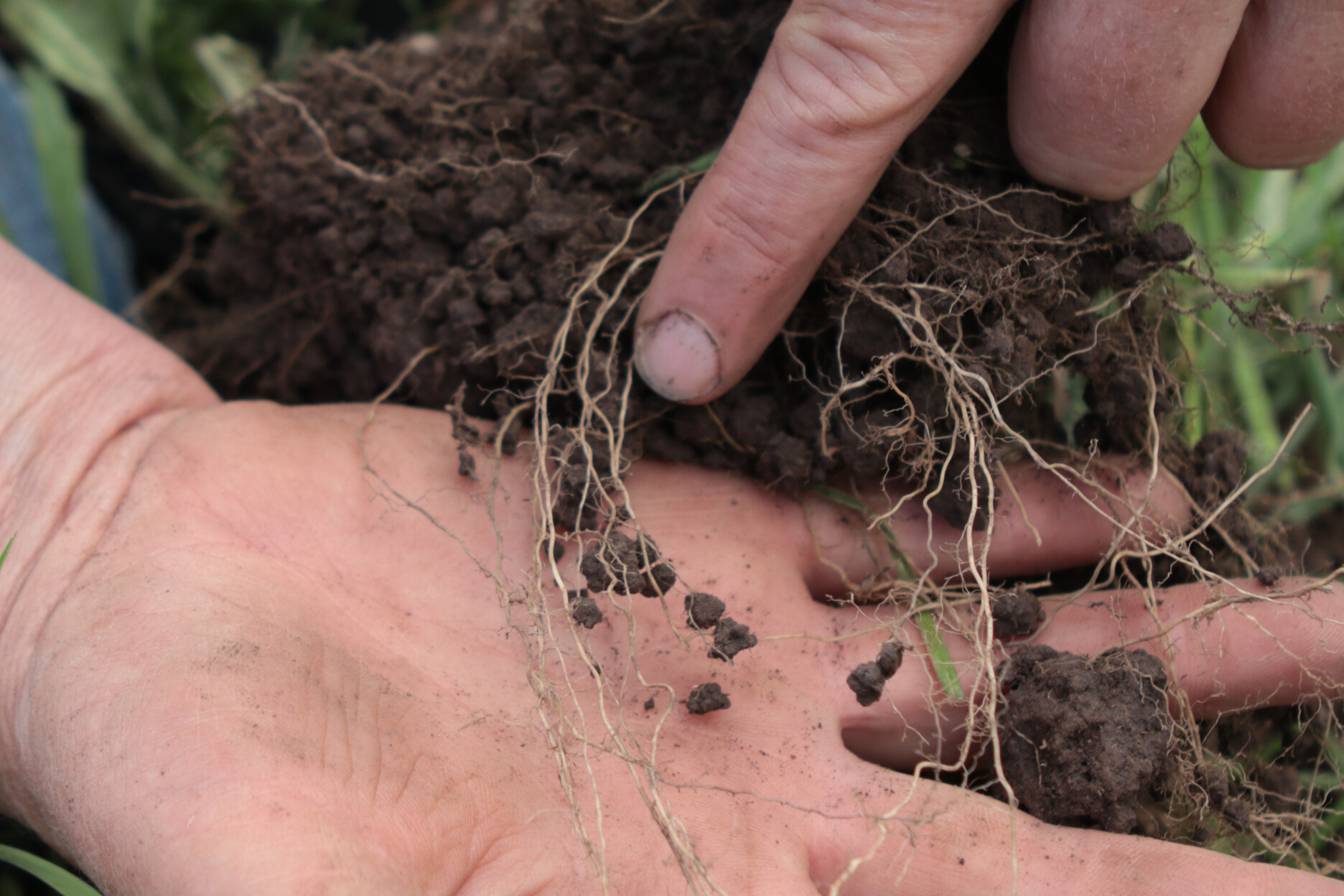
Image 7. Observing root growth in soils at Neaves Mirams Agriculture. Source: Grow Love Project.
Reducing nitrogen across the farm
By keeping the health of the soil microbiome at the forefront of their management decisions, Kate and Peter stopped the use of fungicides, insecticides and superphosphate and have heavily reduced their nitrogen use, learning a lot along the way.
In 2019–20, when Kate and Peter began to reduce their nitrogen, pasture consumption dropped, marking the only time the farm fell below 10 t DM/ha. Experiencing that dip firsthand reinforced the risks of reducing nitrogen too quickly in soils that have long relied on granular nitrogen inputs.
“If you’ve got soils that don’t have nitrogen fixing going on because they’ve relied on granular nitrogen applications and you just go cold turkey, you’re gonna have a crash…we really have to learn the transition practices that are going to allow us to keep growing heaps of feed as we learn how to harvest nitrogen naturally.” – Peter Neaves
This meant that while they initially dropped nitrogen rates from an average of approximately 225 kg/ha to approximately 113 kg/ha, there was a drop in pasture production from 11 t DM/ha to 9.75 t DM/ha. The following season, they decided to increase nitrogen use to around 142 kg/ha, while they adjusted their approach.
Once they began applying targeted nutrients with foliar sprays following insights from soil tests in 2020-21, reducing nitrogen applications became easier and they were able to drop nitrogen without sacrificing feed production. Kate and Peter’s foliar mix includes small amounts of urea, sulphate of ammonia, sulphate of potash, fulvic acid, fish hydrolysate, micronised guano, beneficial anaerobic microbes and a humate based soil drench containing trace elements and fungal food sources.
The tow-and-fert machine was a substantial investment, but one they weighed against their annual fertiliser spend. While foliar applications are slower and require more labour than spreading granular fertiliser, Kate and Peter found the overall costs were offset by reduced nitrogen use and broader soil health benefits. Even accounting for additional time and operational complexity, they believe the gains in pasture health, efficiency and system resilience have more than justified the investment. See the ‘Observations and Outcomes’ section for more detail.
One challenge for Peter was learning to trust the process and be patient. He had to resist the instinct to apply urea immediately when paddocks appeared to be underperforming, learning instead to allow the plants and soil biology time to recover and establish.
For more information on improving nitrogen cycling and efficiency, see our practice guide here.
Observations and Outcomes
Trial results
Kate and Peter’s trial was independently monitored with support from Agriculture Victoria, the WGCMA and GippsDairy. Agriculture Victoria provided in-kind support to the trial, undertaking pasture cuts, conducting feed and soil testing and installing and monitoring soil moisture probes. An independent consultant conducted the monitoring and analysis of dry matter production, quality and cost, tissue tests and soil moisture probes, comparing paddock performance over time. Some additional analysis has been completed by Soils for Life for this case study.
Note: When reading these results, it is important to note that these were not controlled scientific trials and that the practices implemented on the Soil Health Bays evolved over time. Soil and landscape ecosystems are complex and no two farming systems are the same – what works on one farm may not work on others.
Quantity and quality of feed grown
In the first three years of the trial (2020–23), Conventional Bays produced higher dry matter yields than the Soil Health Bays (37 t/DM compared to 31.3 t/DM). However, over the past three seasons (2023–26), production in the Conventional Bays has declined, while the Soil Health Bays have become more productive. Data from 2023 to February 2026 show yields at 34.4 t/DM in Soil Health bays, compared with 30.1 t/DM in the east and west ‘Conventional’ bays, and 26.4 t/DM in the north ‘Conventional’ bay.
Visual observations indicate the Conventional Bays appear less dominated by ryegrass and look less productive than the Soil Health Bays, appearing sparse and nutrient-deficient with more noticeable urine patches compared to the Soil Health Bays. Results suggest that as the trial continues, Soil Health Bays are likely to maintain higher yields than Conventional Bays, both seasonally and over the total perennial phase.
Table 2. Comparison of annual and cumulative fodder production (in tonnes) between Conventional and Soil Health Bays. Source: Jade Killoran, Healthy Farming Systems.
| Fodder production (t) | |||||||
| Trial bayBay | 2020–21 | 2021–22 | 2022–23 | 2023–24 | 2024–25 | 2025– Feb 2026 | TOTAL |
| Soil Health | 11.7 | 11.0 | 8.6 | 9.4 | 14.2 | 10.8 | 65.7 |
| Conventional | 13.6 | 13.3 | 10.1 | 9.0 | 12.3* (east/west)8.6** (north) | 8.8 | 67.1 (east/west)63.4 (north) |
* East/west Conventional Bays were treated with a broadleaf herbicide due to increasing weed pressure.
** The north Conventional Bay was sprayed out and resown.
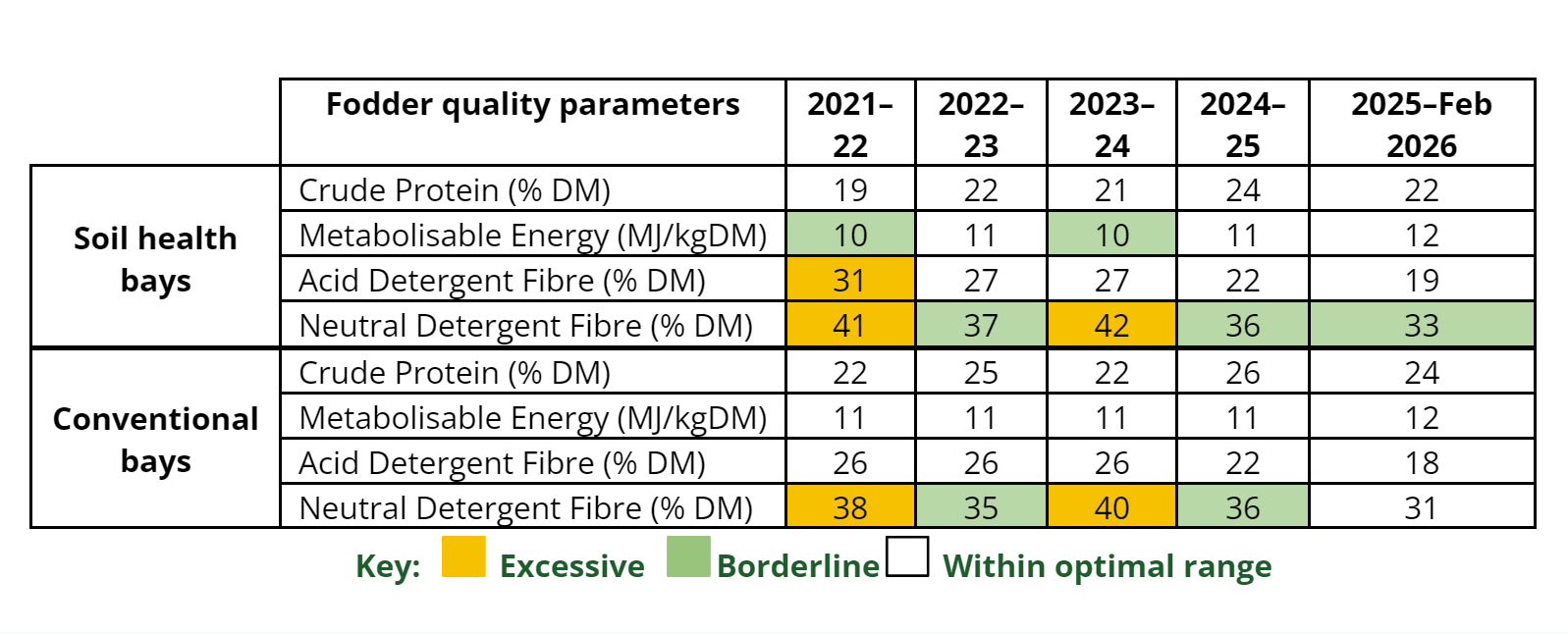
Across the perennial phases in 2021–26, once perennial multispecies pastures were established in the Soil Health Bays, forage quality in both the Soil Health and Conventional Bays has been broadly similar and considered adequate for milk production.
Differences between the two systems were minor and centred on protein, metabolisable energy and fibre measures. These minor variations suggest that both approaches are producing comparable pasture quality outcomes with different management strategies.
The Soil Health Bays recorded slightly lower protein levels than the Conventional Bays, while metabolisable energy was similar between the two. However, protein levels in the Soil Health Bays still remained within the range considered adequate for milk production.
Acid detergent fibre, which indicates the level of indigestible fibre in forage, was generally similar and within acceptable limits for both bays, with the exception of the first year in the Soil Health Bays.
Neutral detergent fibre, typically considered optimal at around 30%, has been slightly higher in both treatments across all seasons since establishment of the perennial pastures. In the 2020–21 and 2023–24 seasons, both Soil Health and Conventional Bays recorded neutral detergent fibre levels above the optimal range for milk production.13Results based on independent analysis by Jade Killoran of Healthy Farming Systems.
Table 3. Comparison of key parameters of fodder quality between Conventional and Soil Health Bays Source: Jade Killoran, Healthy Farming Systems.
Input costs
To date, the Soil Health and Conventional Bays have had similar overall costs despite differences in treatment and variations across seasons. The average cost for the Soil Health Bays is $53/t DM and the Conventional Bays is $51/t DM for the east and west bays and slightly higher at $58/t DM for the north bay.
In 2024–25, Kate and Peter decided to either spray out and resow or apply a broadleaf herbicide to Conventional Bays due to increasing weed pressure. The costs came to $587/ha for the east/west, which were treated with a broadleaf herbicide, and $716/ha for the North Conventional Bay, which was sprayed out and resown. In comparison, the total spend on several foliar applications in the Soil Health Bays was $322/ha, signalling quite ‘a big additional cost’ for weed management.
Table 5. Cost analysis between conventional and soil health bays. Source: Jade Killoran, Healthy Farming Systems.
| Costs | March 2021 sowing cost | Input costs | Average $/t DM | |||||
| FY22 | FY23 | FY24 | FY25 | FY26 (as of Feb 2026) | ||||
| Soil health bays | Cost per hectare ($/ha) | $268
(north/west) $339 (east) |
$391 | $1, 060* | $338 | $322 | $492 | N/A |
| Cost per tonne dry matter ($/t DM) | N/A | $36 | $123 | $36 | $23 | $46 | $53 | |
| Conventional bays | Cost per hectare ($/ha) | $393 | $466 | $602 | $305 | $587 (east/west)
$716 (north)** |
$679 | N/A |
| Cost per tonne dry matter ($/t DM) | N/A | $35 | $59 | $34 | $48 (east/west)
$84 (north) |
$77 | $51 (east/west)
$58 (north) |
|
*2022–23 rise due to additional seed and sowing costs and rise in fertiliser cost.
**The north bay was sprayed out and resown while the east and west conventional bays had a broadleaf spray.
Soil moisture
Based on analysis by consultant Jade Killoran, soil moisture monitoring undertaken from 2021 onwards via moisture probes identified consistent differences in how water was accessed and used in Conventional Bays compared with Soil Health Bays. Across the monitoring period, the Soil Health Bays regularly drew down soil moisture to depths of at least 60 cm, while effective moisture use in the Conventional Bays was largely confined to the top 30 cm of the soil profile.
Figure 1 demonstrates the soil moisture findings across Soil Health Bay North and Conventional Bay North. Each line in the chart shows readings over a period of just over 2 months at a different depth, from 10 cm (blue line) down to 60 cm (brown line) in 10 cm increments. The vertical axis represents soil moisture level, so lines going downwards indicate soil moisture is declining mostly as a result of plant roots drawing water, and lines trending upwards indicate soil moisture is increasing as a result of irrigation or rainfall.
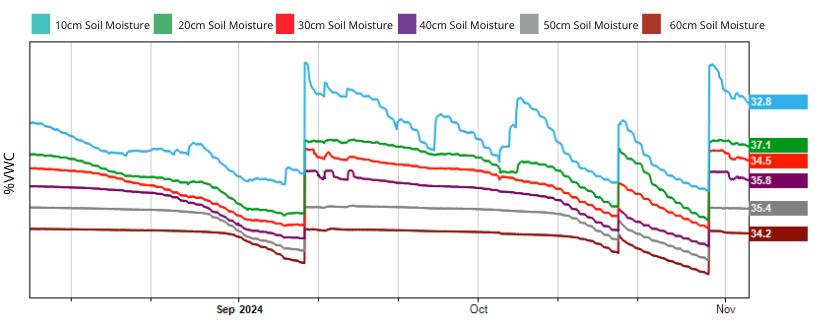
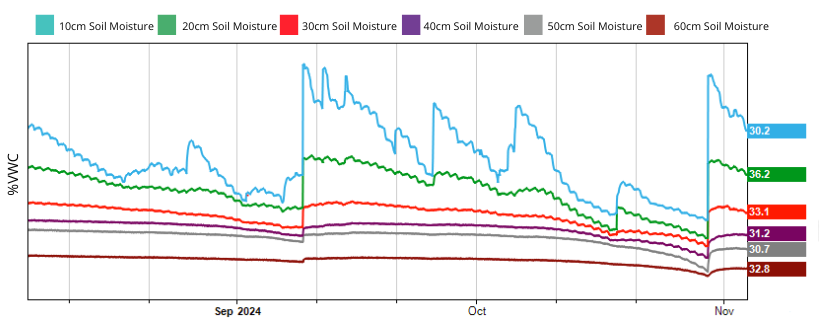
Figure 1. Stacked soil moisture (%VWC) at depths from 10 to 60 cm for (A) Soil Health Bay North and (B) Conventional Bay North, from September 2024 to November 2024. Source: Wildeye Remote Monitoring.
In Conventional Bays the effective root zone14The effective root zone is that part of the plant’s root zone where the main mass of a plant‘s roots that contribute to crop growth are found. Below the effective root zone there may be a few roots, but any water they extract is unlikely to be significant for the plant‘s growth.’ Department of Natural Resources and Environment Tasmania (NRE Tas), Water available in soil fact sheet (produced by Bill Cotching, Tasmanian Institute of Agriculture), November 2011, accessed 2 March 2026. did not extend into the subsoil below 30 cm, even within the site’s highly friable soil. Any moisture below 30 cm appeared to be associated with soil characteristics and the action of a minor percentage of roots penetrating below 30 cm, rather than active water uptake by the pasture. As a result, a significant proportion of moisture stored below 30 cm remained largely inaccessible to the plants, which also limited the volume of water that could be effectively infiltrated and stored following irrigation or rainfall.
Soil Health Bays consistently demonstrated active moisture use deeper in the soil profile, with evidence of working roots extending into the subsoil. Moisture drawdown occurred across multiple depths, suggesting roots were accessing water throughout the profile. This was associated with improved infiltration and recharge following irrigation and rainfall events, with water moving and being stored to greater depth (seen in the steeper spikes on the lines on Figure 1A compared to Figure 1B, especially for lower depths). These findings suggest that the strategies implemented at Kate and Peter’s farm could be a way to improve water use and boost climate resilience on irrigated farms.15Soil moisture monitoring results based on independent analysis by Jade Killoran of Healthy Farming Systems.
Soil health and nutrient snapshot
Soil testing carried out annually between 2019 and 2022, with additional samples from 2024, have shown small differences between conventional and soil health bays. Soil chemistry, particularly nutrient availability, tends to change slowly or inconsistently in early transition years. While the soil tests were limited in scope and timeframe, there were some modest differences between the bays that may point to early changes.
In the 2019–2022 soil tests, total nitrogen was slightly higher in the Soil Health Bays compared to the Conventional Bays, with values of 46 mg/kg and 29.53 mg/kg in years 2 (2020–21) and 3 (2021–22), respectively, versus 39 mg/kg and 26 mg/kg in the Conventional Bays. Despite lower nitrogen fertiliser application rates, the Soil Health Bays appear to have more efficient nitrogen cycling, potentially due to enhanced soil biology and a diversity of healthy plants.
Sulphur levels in the Soil Health Bays were higher than in Conventional Bays. Sulphur is essential for protein formation and overall plant health, and in regenerative systems it can become more available thanks to living roots, active microbes and rich organic matter.16OP Narayan, P Kumar, B Yadav, M Dua and AK Johri, ‘Sulfur nutrition and its role in plant growth and development’, Plant Signaling & Behavior, 2023, 18(1):2030082, doi:10.1080/15592324.2022.2030082. This suggests the soil health bays may be better primed to support resilient, high-quality pasture.
Aluminium in the Soil Health Bays was below detectable levels. While aluminium wasn’t at problematic levels in the Conventional Bays, this result could indicate that biological activity in the soil health bays may be binding aluminium into forms that are less available to plants, which could be a subtle but encouraging sign of improved soil chemistry.
Organic carbon, pH, electrical conductivity, calcium to magnesium ratios and other indicators of soil health were similar across both bays.
Results from a 2024 microbiometer test looking at microbial biomass (measured in microbial carbon per gram of soil, i.e. ug C/g) and the fungal to bacterial (F:B) ratio indicate Soil Health Bays have ~33% more microbial biomass than the Conventional Bays, with a 1:1 F:B ratio compared to 0.7:1 in Conventional Bays. While microbiometers are a relatively new technology that has yet to be fully calibrated or tested and still lacks robust benchmarks, higher microbial biomass and greater fungal dominance may indicate increased biological activity that supports nutrient cycling and soil aggregation.
Table 6. Microbiometer results between Conventional and Soil Health Bays, November 2024. Source: Kate Mirams.
| Microbiometer metric | Soil Health Bay | Conventional Bay |
| Microbial Biomass (ug C/g) | 536 | 402 |
| Fungi (%) | 50% | 42% |
| Bacteria (%) | 50% | 58% |
| Fungal: Bacterial Ratio (F:B) | 1:1 | 0.7:1 |
Based on these trial results, Kate and Peter were confident that soil health practices could be implemented across the whole farm without increasing costs.
Farm-wide observations
Economic outcomes
Dairy Farm Monitor Project
Over the past 20 years, Kate and Peter have participated in the Victorian Dairy Farm Monitor Project, which tracks the financial and production performance of 80 dairy farm businesses across Victoria. The project compares a range of financial indicators, including return on assets (ROA). For the 2024/5 financial year, Kate and Peter were ranked in the top 25% in the Gippsland region for ROA.17 For more information on the Dairy Farm Monitor Project see: https://agriculture.vic.gov.au/about/ agriculture-in-victoria/dairy-farm-monitor-project
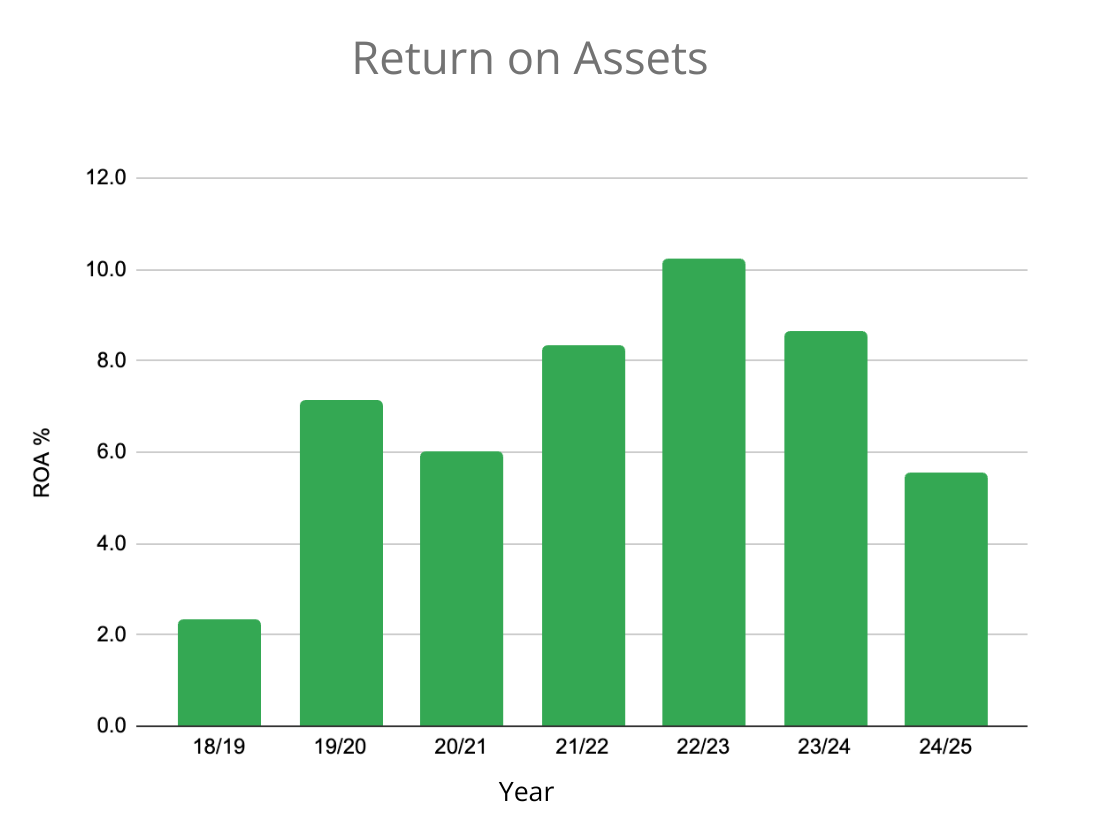
Figure 2. Return on assets for Neaves Mirams Agriculture over a 7-year period. Source: Adapted from data provided by Kate Mirams.
Figure 2 shows consistently strong ROA, with variations over time relating to fluctuating market conditions and the purchase of a 60 ha irrigated block in 2023–24. In 2022–23, the milk price was high at $9.66 per kilogram milk solids ($/kg MS) with moderate fodder costs, supporting strong returns. By 2024–25, the milk price had fallen to $8.33/kg MS, while fodder prices rose to $515/t compared to 2022–23 when it stood at $432/t, tightening margins and reducing ROA.
To manage this pressure, Kate and Peter reduced exposure to expensive purchased fodder by growing large multispecies crops for wintering dry cows, halving oaten hay purchases. So although ROA declined in 2024–25 compared to previous years, the farm still performed strongly relative to peers, to sit in the top 25% of the Victorian Dairy Farm Monitor Project for Gippsland. While ROA is a product of many factors, these results demonstrate that Kate and Peter have been able to maintain high profitability while focusing on improved soil health.
Benchmarking
Kate and Peter participate in a benchmarking group with nine other irrigated dairy farms in their region. This has allowed them to track their progress and compare financial performance against similar businesses over the past 5 years. The 2022–23 results showed that Kate and Peter have maintained among the highest levels of pasture consumption18Pasture consumption is estimated as the difference between the total metabolisable energy (ME) required by livestock over the year and the ME supplied by other feed sources, including hay, silage, grain and concentrates. See: Dairy Farm Monitor Annual Report 2024-25. in their group and achieved significantly higher levels of production, measured in tonnes of dry matter consumed per kilogram of nitrogen applied (t DM consumed/kg N applied) compared to the other participating farms. At the same time, they also recorded the lowest fertiliser costs across all nine farms.
Kate and Peter have managed to gradually and significantly reduce nitrogen applications over the years from 225 kg N/ha in 2018–19 to 29 kg N/ha in 2022–23 while still growing their benchmark 12 t DM/ha of feed. When compared with their benchmarking group, they observed that other farms were applying between 200 and 430 kg N/ha to produce the same amount of feed (Figure 3).
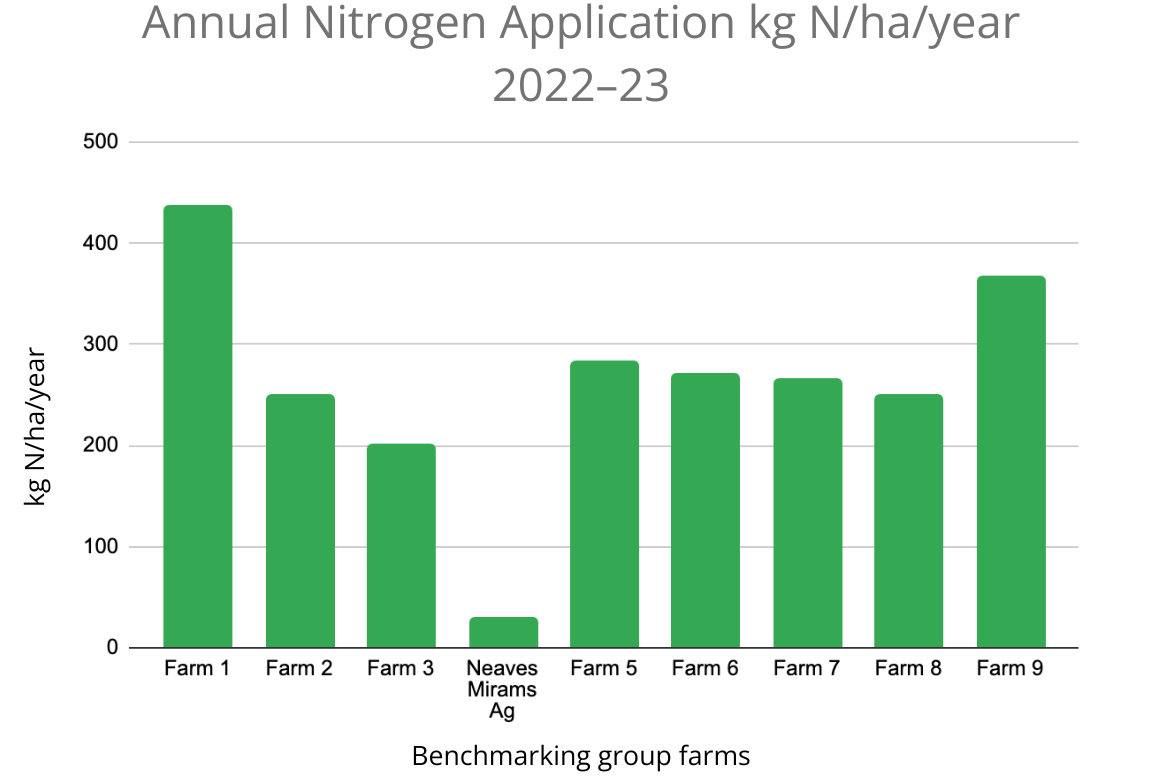
Figure 3. Comparison between Benchmarking Group Farms: annual nitrogen application (kg N/ha/year). Source: Adapted from data provided by Kate Mirams.
Kate and Peter are among the top four performers in their benchmarking group for pasture consumption, achieving 12.4 t DM/ha (Figure 4). Neaves Mirams Agriculture stands out even further when nitrogen efficiency is considered. The business far outperforms its peers in levels of production, sitting at 427 t DM consumed/kg N applied (Figure 5).
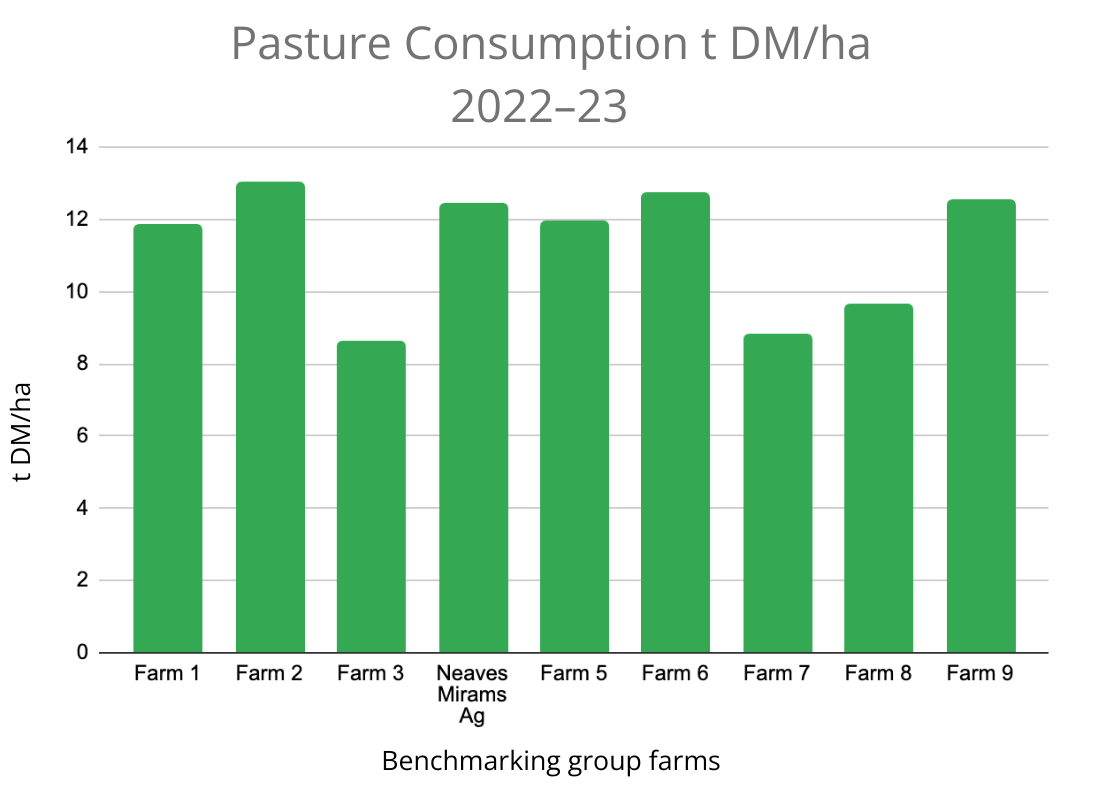
Figure 4. Comparison between Benchmarking Group Farms: pasture consumption (t DM/ha). Source: Adapted from data provided by Kate Mirams.
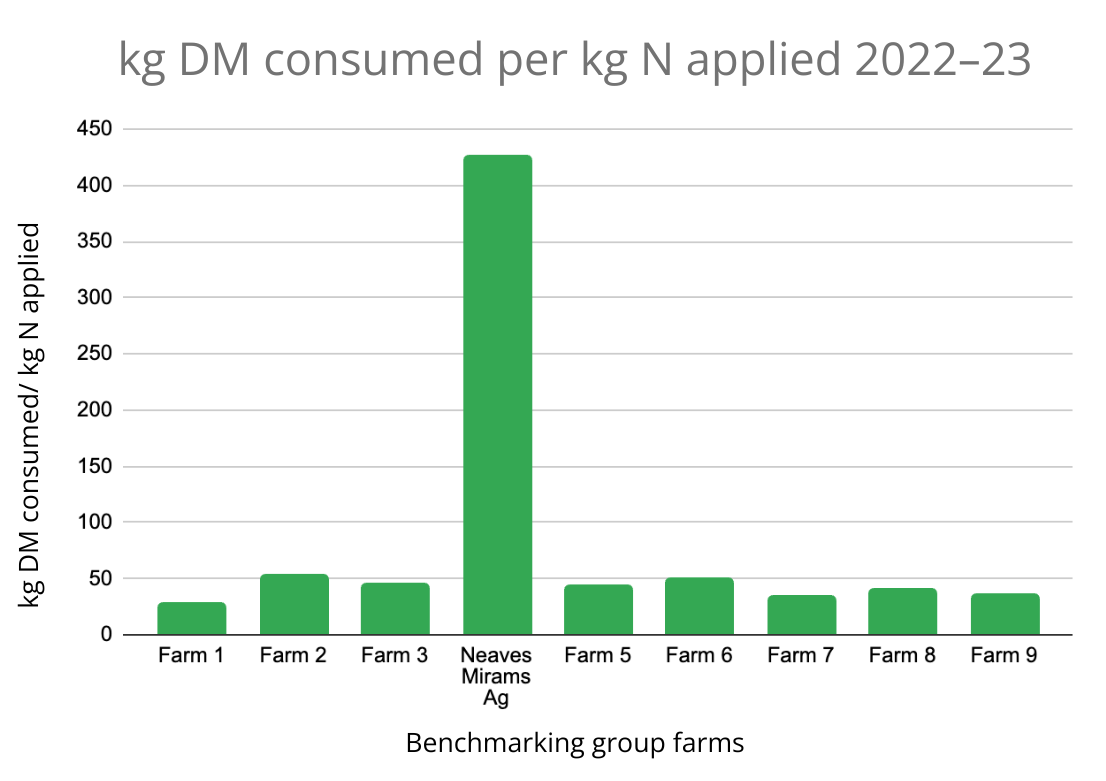
Figure 5. Comparison of Benchmarking Group Farms: Pasture consumed per kilogram of nitrogen applied (t DM consumed/kg N applied). Source: Adapted from data provided by Kate Mirams.
Fertiliser costs across the discussion group vary widely, with an average of $1129/ha in 2022–23. In that same year, Kate and Peter’s fertiliser spend was $432/ha (Figure 6). For them, this highlighted how much scope there is within a conventional dairy system to rethink fertiliser programs and redirect spending away from some inputs and towards others that better support soil function and efficiency while lowering costs.
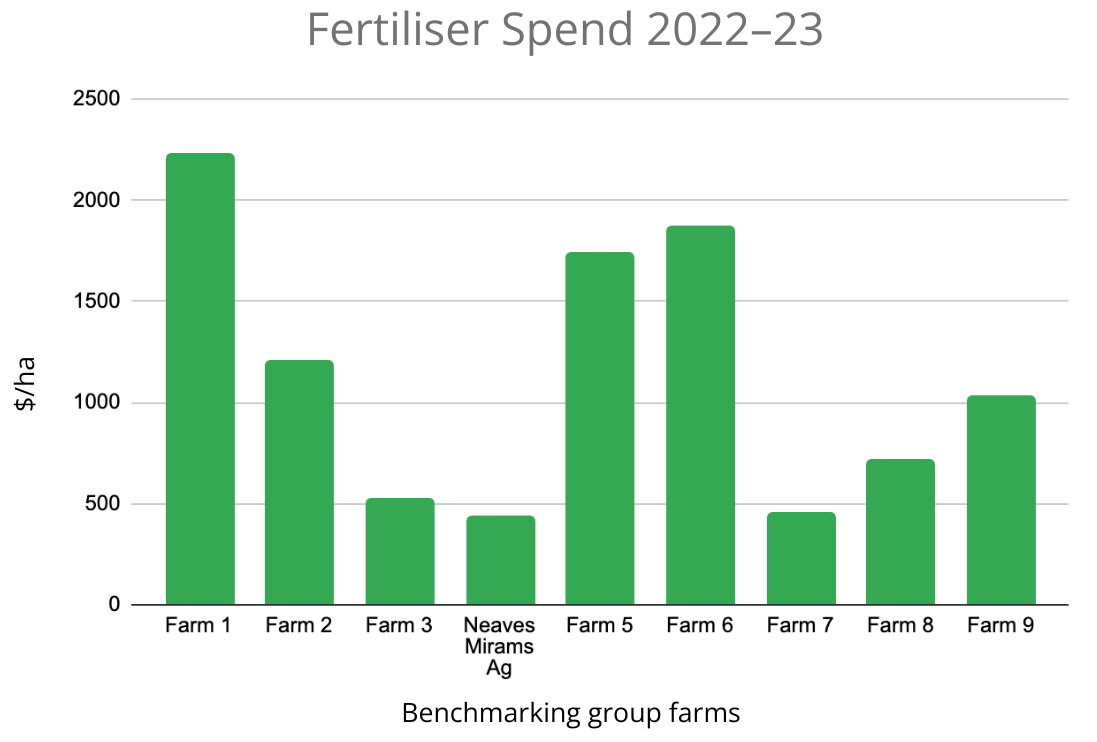
Figure 6. Comparison of Benchmarking Group Farms: fertiliser spend per hectare. Source: Adapted from data provided by Kate Mirams.
Increasing biodiversity and land regeneration
For the past four years, Kate and Peter have been tracking the impact of their management decisions through the Ecological Outcome Verification (EOV) program, managed in Australia by the Australian Holistic Management Cooperative.19For more information see: https://holisticmanagement.au/
The program assesses indicators across four ecosystem processes: water cycling, mineral cycling, energy flow and community dynamics, which includes bare soil, wind and water erosion, litter abundance, microfauna and seasonal grasses, to name a few.20 For a full list of indicators see: https://savory.global/eov/ For the past two years, Kate and Peter have received verification, with their scores consistently sitting in the top two tiers of the Ecosystem Process Index, indicating that their practices are maintaining the farm’s ecological functioning.
The independent EOV monitoring also confirms Kate and Peter’s own observations. Peter says, ‘We’ve seen a definite increase in insect life and bird life on the farm since we started these practices…particularly when there’s lots of flowering plants and a lot of variety of different plants, we see a lot of different insects in there.’
Personal outcomes
Moving away from the constant pressure to ‘produce more milk for less’, Kate and Peter have found they feel more ‘value and self-worth’ in learning how to heal soils, grow abundant pastures and support healthier ecosystems.
‘Certainly when we were just ryegrass clover farmers with nitrogen, there’s a certain sense of unease that maybe we were degrading the land and with this we feel that we are making it better… and it is much more exciting. You get outta bed a bit quicker.’ – Peter Neaves
Kate describes ecological farming as a creative process, one that requires listening closely to the land, learning from what does and does not work, and continually adjusting rather than chasing fixed outcomes. Farming has become an expression of who Kate is, and who she wants to be, as someone committed to ‘creating joy and abundance’.
To better understand how practice change on farm may influence different aspects of wellbeing, Soils for Life created a Wellbeing Survey.21This wellbeing survey combines questions from four sources: the Regional Wellbeing Survey (University of Canberra); Vanguard Business Services ‘People Perspective’ survey; Regenerative pillars (For the Love of Soil, Nicole Masters); and the personal Wellbeing Index 11 (Australian Centre on Quality of Life, 2020). The Wellbeing Index 11 indicators – used by researchers (Schirmer, Yabsley, Mylek, & Peel, 2016) and in the long-term broadscale Regional Wellbeing Covering six key themes with specific indicators, farmers are asked to reflect on their experiences before and after implementing practice change and to rate their overall feelings for each indicator using a seven-point scale: very unhappy (1); unhappy (2); mostly dissatisfied (3); mixed (4); mostly satisfied (5); pleased (6); to very pleased (7).
Table 9. The six themes and indicators of personal relationships in the Soils for Life wellbeing survey. Source: Soils for Life.
| Relationships with: | Indicators |
| Self |
|
| Family |
|
| Community |
|
| Farming |
|
| Land |
|
| Life |
|
Survey conducted by the University of Canberra (2020) – are considered important for holistically measuring the sustainability of farming systems (Brown et al., 2021).
Overall, Kate and Peter’s survey results reflect a positive shift post practice change across indicators of sense of health, sense of connection to land, life satisfaction, contentedness, sense of achievement, ability to make helpful and beneficial decisions about farm management, ability to cope with most difficult conditions on the farm and ability to achieve on farm goals.
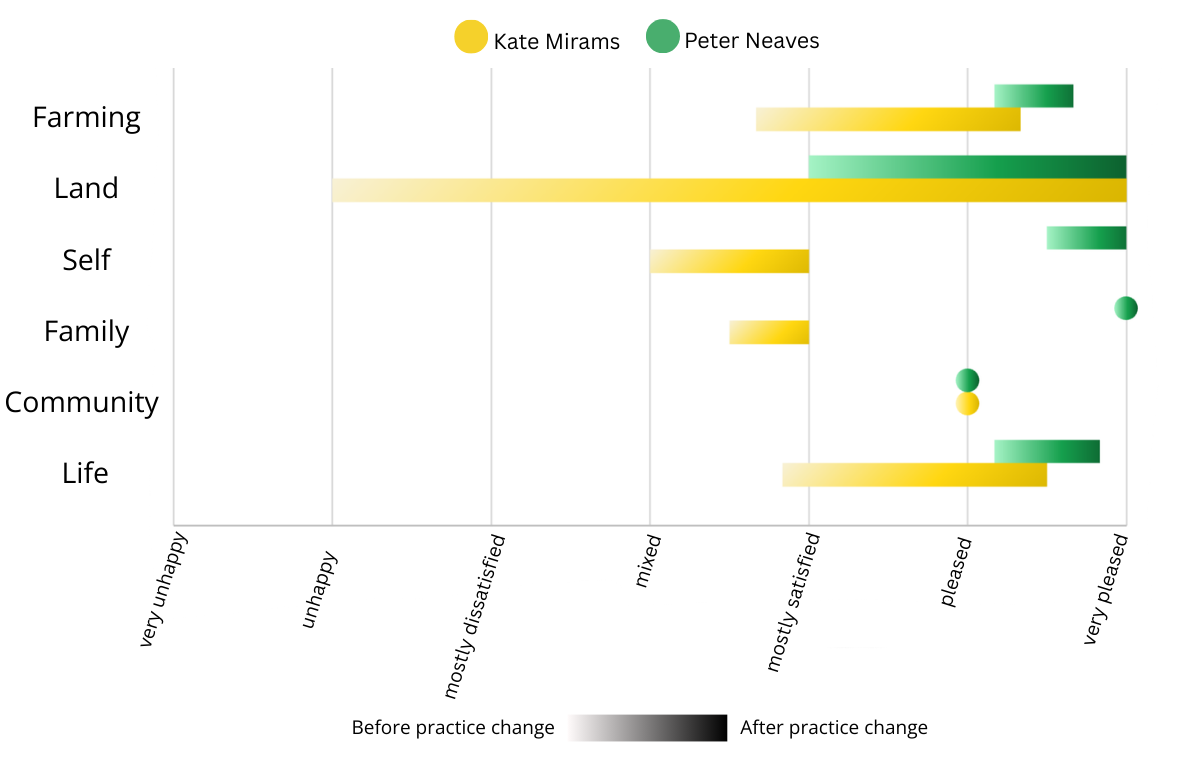
Figure 8. Changes in wellbeing survey responses following practice change from Kate Mirams and Peter Neaves. Source: Soils for Life.
Next steps
New water dynamics trial
After more than seven years, the trial at Kate and Peter’s property is now entering a new phase looking at water dynamics across the paired bays. With support from Agriculture Victoria, the new trial aims to investigate how pasture composition and soil management influence water use efficiency and nutrient retention.
Irrigation intervals will match the growth needs of each pasture type, while also including a control pair with the same interval for both. Soil moisture probes installed down to 2.5 m will track how deeply roots are drawing water and whether improvements in soil structure and root depth affect water retention or loss through the profile. Flumes at the base of the irrigation bays will measure surface runoff, allowing the team to quantify where water is going, and bulk density testing will provide additional insight into how soil structure influences water movement. Finally, water leaving the bays will be sampled after multiple irrigations to assess nitrogen and phosphorus losses.
Effluent microbe treatment
Keen to get more value from their dairy effluent, Kate and Peter are experimenting with beneficial anaerobic microbes. They aim to improve the quality of nutrients delivered through irrigation water (to which treated effluent is added), reducing weed growth and avoiding high-nitrate feed that cows are reluctant to eat. Kate sees this as another area where there is still much to learn, with significant potential in further harnessing microbial processes on the farm.
Boisdale property
Building on their experiences and practices at Newry, Kate and Peter are keen to tackle the challenging soils on their Boisdale property, which have low calcium, sulphur, boron, copper and selenium, with the aim of getting to a place where it is thriving and large amounts of feed can be grown.
Giving back
Looking ahead, Kate and Peter are keen to support other farmers to have a go and enjoy the learning process, building confidence in how improving soil health can help farms thrive. They see real potential for farmers to remain highly profitable by harnessing the power of microbes, and value opportunities to share what they have learnt so others can create resilient, abundant farming businesses of their own.
‘Increasingly we’ve got young people ringing or emailing or contacting us out of the blue to ask if they can come and spend some time here and learn stuff and that’s been a really exciting injection of energy.’ -Peter Neaves
Agroforestry
Kate and Peter are looking to integrate more trees into their paddocks, complementing the extensive riparian plantings throughout the property. Some early plantings are already underway, and one of their sons is interested in exploring a more layered, agroforestry-style approach. This includes trialling paddocks with multiple vegetation layers with a focus on species that are both productive and edible.
Looking to the future
Kate and Peter see the Australian dairy industry as being at a crossroads. Peter observes that the total milk pool has been declining each year, even when milk prices rise, and that family-run farms are becoming fewer as corporations scale up operations. He notes that this creates pressure for farms to increase volume to maintain profitability, often requiring more labour and infrastructure and leaving little room for experimentation or enjoyment.
‘I think it’s great if farmers remember that everybody’s farm is their own experiment and their own canvas to create whatever they want to create and that they’re not really beholden to what the industry wants.’ – Kate Mirams
They are keen to see an industry shift where milk prices reflect nutritional value, and feel the dairy sector is moving closer to this point where routine herd testing also includes omega-3 to omega-6 ratios and phytonutrients. When that happens, feedback to farmers could extend beyond production metrics to include guidance on feed and forage choices. This might mean growing specific crops, adjusting grain use or accepting lower volumes in exchange for higher nutritional value and a premium price.
Peter sees this as an opportunity for the dairy industry to move away from being a commodity supplier and towards milk being positioned as a premium health product, one whose value reflects both how it is produced and what it delivers to consumers.
About Soils for Life case studies
For more than a decade, Soils for Life has been producing case studies of farmers’ inspiring stories of transition to regenerating their soils and landscapes. It is the largest body of regenerative farming case studies in Australia. Each Soils for Life case study is an interwoven story supported by evidence about innovative, ecologically-informed land management. The case studies are holistic, documenting ecological, social and economic factors and change, with a strong focus on peer-to-peer support. The case studies have been used by farmers, researchers and policy makers around the country to inspire and inform new ideas and approaches in agriculture. Read more Soils for Life case studies here
Acknowledgements
This case study was produced by Soils for Life as part of the Dairy Resilience Project. The project is supported by the Australian Government through funding from the Climate-Smart Agriculture Program under the Natural Heritage Trust. Soils for Life acknowledges the significant, generous and time-consuming contribution of Kate Mirams and Peter Neaves in the development of this case study. We also acknowledge the investments made by Agriculture Victoria, the West Gippsland Catchment Management Association and GippsDairy to the trial discussed in this case study. Soils for Life remains solely responsible for all content, and the views expressed do not necessarily reflect those of the funder or contributors.