


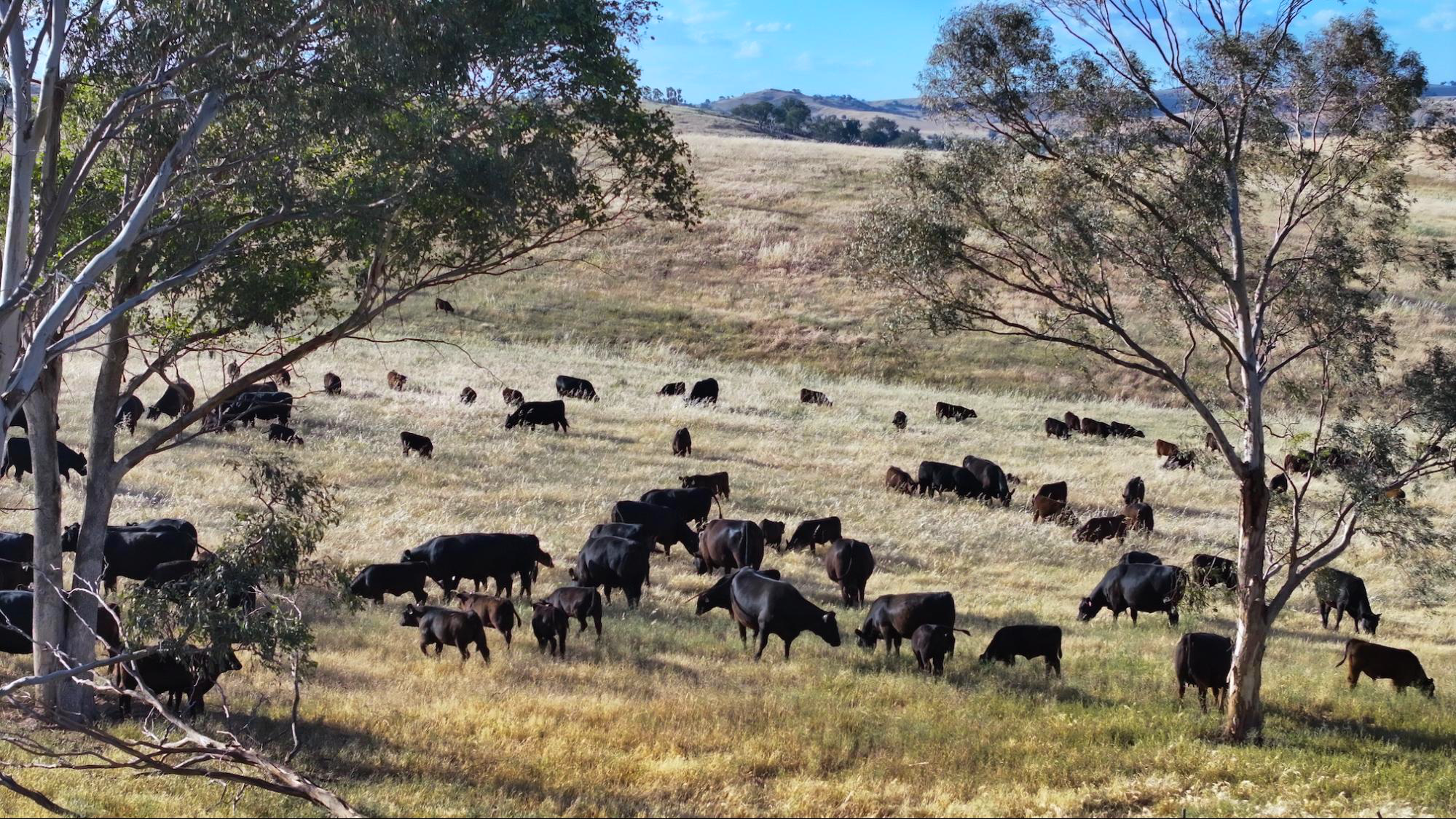
Practice Guide: Grazing for Soil and Landscape Regeneration
A PRACTICE GUIDE TO USE AS PART OF YOUR REGENERATIVE GRAZING TOOLSET
Published May 2026
In this guide
- What is regenerative grazing?
- Farmers that are practising regenerative grazing
- What are the benefits?
- Implementing regenerative grazing
- Planning animal moves
- Monitoring and adapting to changing conditions
- Redesigning infrastructure
- Rethinking livestock management
- Increasing diversity and adjusting enterprise design
Downloads
You can download the overview booklet for this practice guide here. In it you’ll find a snapshot of the key principles covered in the full guide, from planning animal moves and monitoring conditions, to redesigning infrastructure and rethinking livestock management.
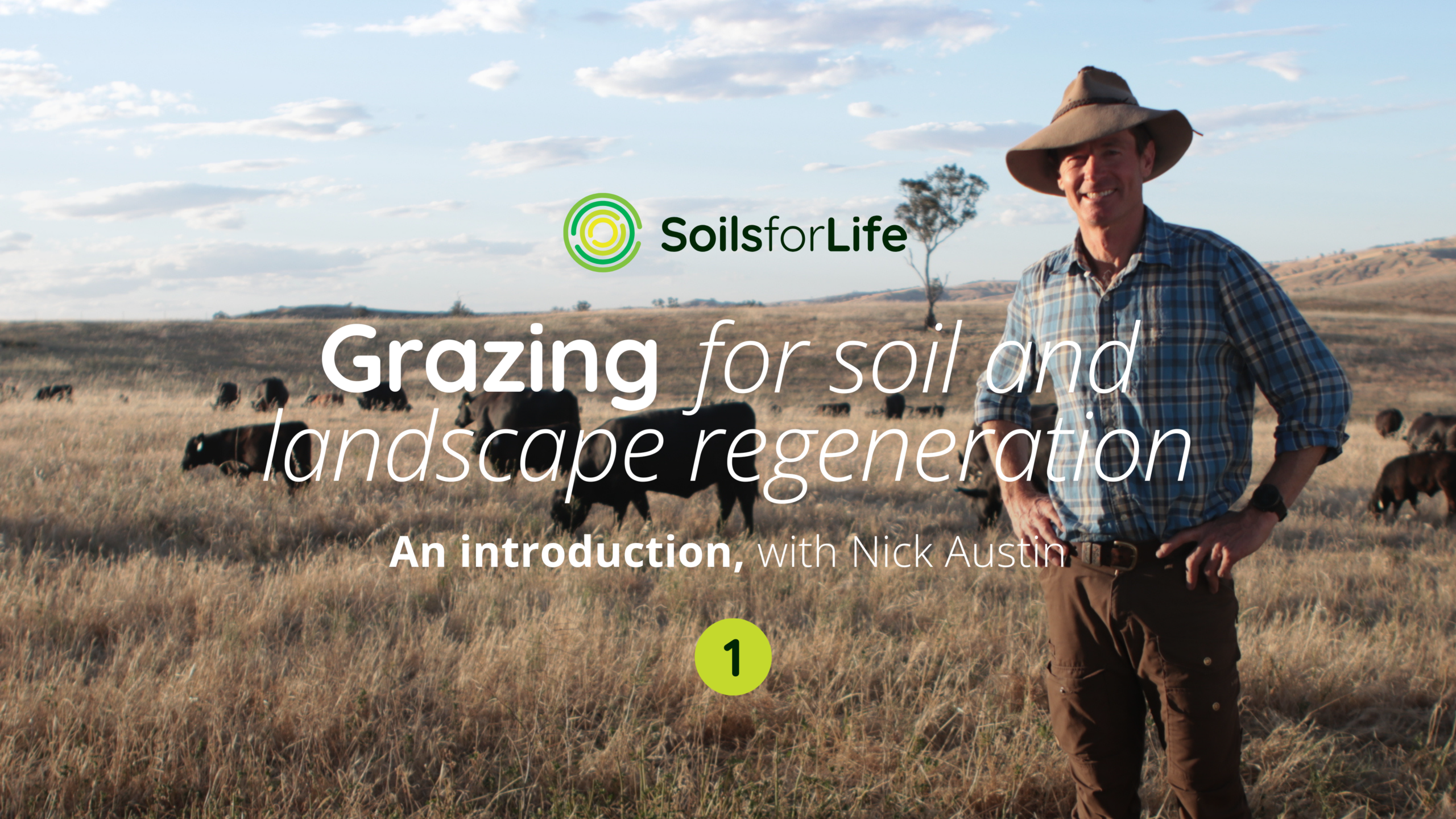
Regenerative grazing approaches aim to meet livestock needs through practices that build soil health, improve landscape function and support personal and business goals.
This guide provides an introduction to this approach to grazing management. As with any practice, implementation depends on the unique context of each farm. For this reason, the guide shares five farmer examples from around Australia, showing how grazing practices are being implemented differently in different circumstances.

Important: This guide is designed to provide general information only. It is not tailored to the context of any individual farm, person or business, and does not constitute advice. Before using the information, you should carefully evaluate its accuracy, currency, completeness and relevance for your purposes, and consider seeking advice from appropriate professionals who have taken into account your individual circumstances and objectives. As a nonprofit dedicated to supporting farmers, we work hard to ensure our information is useful and accurate. However, Soils for Life accepts no liability arising from any use or release of information in, or referred to in or linked to this guide, or any error, inaccuracy or omission.
We have a practice guide series!
If you are interested in learning about other regenerative land management practices, check out our other guides, case studies and resources
This guide was produced with funding from Twynam Investments and guidance from Judi Earl (Agricultural Information and Monitoring Services), Helen Lewis (Australian Holistic Management Cooperative), David McLean (RCS), Grahame Rees (KLR Marketing) and Brian Wehlburg (Inside Outside Management). We also acknowledge and thank the case study farmers profiled in this guide for their generosity in sharing their stories, knowledge and experience. Soils for Life remains solely responsible for all content, and the views expressed do not necessarily reflect those of the funder or advisers.
What does regenerative grazing involve?
Regenerative grazing approaches aim to meet livestock needs through practices that build soil health, improve landscape function and support personal and business goals.
How this is done varies depending on the circumstances of each farm and enterprise and goals of each land manager, but in all cases, livestock are seen and used as a tool for soil and landscape regeneration. This generally involves running fewer and larger sized herds and moving animals through paddocks in a way that provides beneficial animal impact and nutrient cycling, while also allowing time between grazes for plants to recover their energy. This enables the development of deep and dense grassland root systems that enhance pasture production, soil structure, biology, water infiltration and health.
The key practices utilised by farmers to support this approach to animal movement include:
- Regular planning of animal moves
- Monitoring and adapting to changing conditions
- Often, redesigning water and fencing infrastructure to facilitate larger mob sizes and longer recovery times.
Many graziers also aim to increase plant and animal diversity and improve ‘natural capital’, adjust the enterprise to better fit their regeneration goals, and shift their approach to stock handling, animal selection and genetics, and animal health and nutrition.
Regenerative grazing principles
Regenerative grazing does not come with a recipe that works everywhere. Every farm is different and success depends on the implementation of practices that fit each farm’s individual context. Many farmers find it useful to use a set of grazing principles to guide their decision making. There are several commonly used sets of regenerative grazing principles, but many farmers will pick and choose in a way that suits them. Maintaining a flexible, adaptive approach is often more helpful than using a prescriptive strategy.
Examples of regenerative grazing principles
RCS Grazing Principles
- Plan, monitor and manage your grazing activities.
- Give plants adequate rest to recover after grazing.
- Match your stocking rate to available carrying capacity.
- Manage livestock effectively for optimal performance.
- Use animal density as a tool for change.
- Manage for diversity of plants, animals and microbiology.
RCS, ‘The 6 RCS Grazing Principles’. n.d., accessed 30 March 2026.
Holistic Planned Grazing Key Principles
- Holistic planned grazing is a process not a recipe.
- Run as few herds as possible, one is best.
- Plan plant recovery times before you plan grazing times.
- Maximum density for minimum time.
- Overgrazing is linked to the time animals are present, rather than how many animals are there.
- Base stocking rates on the volume of forage available and how long it must last.
- Drought reserves are planned as time reserves, not areas of land.
- Plan on a grazing chart.
- Create one plan for the growing season before main growth starts.
- Create one plan for the non-growing season once grasses stop growing.
- Monitor the plan.
Savory, ‘Holistic Planned Grazing: Key Principles’, 2015, accessed 30 March 2026.
AIMS: Seven steps to improve productivity, land health and profitability
- Reduce the number of mobs.
- Increase the number of paddocks per mob.
- Base stock movements on herbage mass.
- Develop a grazing plan.
- Monitor pasture growth.
- Control pasture utilisation.
- Evaluate performance.
L Kahn and J Earl. ‘Grazing Management Fact Sheet 1. Getting started – develop a grazing plan’, 2009. Agricultural Information and Monitoring Services, accessed 30 March 2026.
👉 Find out more about the various metrics, acronyms and terminology used in grazing planning, including DSE, LSU, DDH and SDH. Click here to access a complete table of terms with explainers for each.
Farmers practicing regenerative grazing
Meet the farmers! These farmers have contributed to this practice guide, sharing how regenerative grazing practices are applied under different conditions.
Ben and Kim Simpson farm at Thistlebank, a multi-generational property near Aramac, Queensland where they run a grazing enterprise and have been shifting away from set stocking towards more planned approaches. Nick and Deanna Austin run cattle at Mundarlo in southern New South Wales, managing a breeding and trading operation shaped by Holistic Planned Grazing and a focus on flexible decision making. David and Ruth Read operate a beef cattle trading enterprise at Woodcote in East Gippsland, Victoria that gives them the flexibility to respond to changing seasonal conditions, and that supports their vision for a harmonious and ecologically regenerative system.
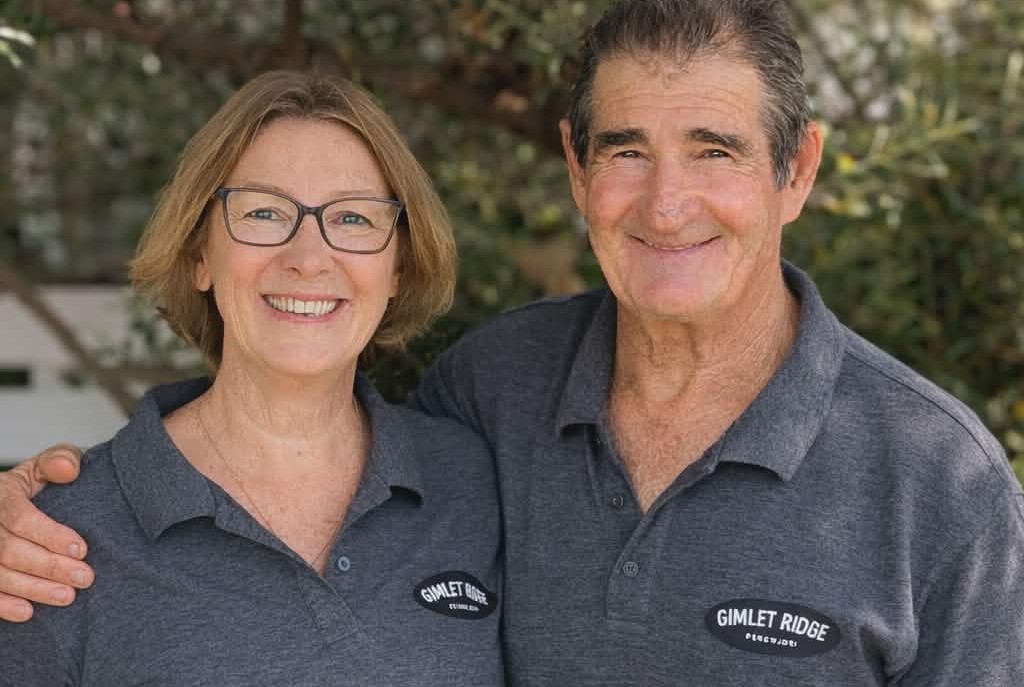
In Western Australia, Rod and Katrina Butler operate a sheep trading and opportunity cropping enterprise at Gimlet Ridge, using grazing planning to maintain groundcover and adapt their system over time. David, Robbie and Sophie Curtis run Bellevue Dorper Stud near Millmerran, Queensland and also produce organically certified Dorper prime lambs, using grazing management as part of their approach to improving animal health and managing parasite pressure.
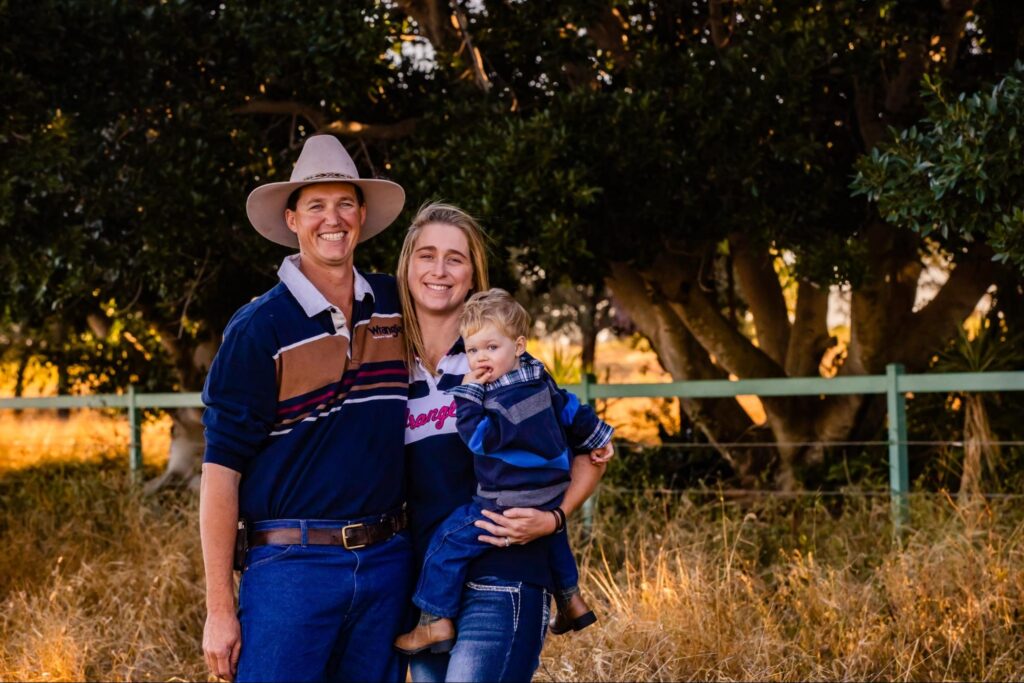
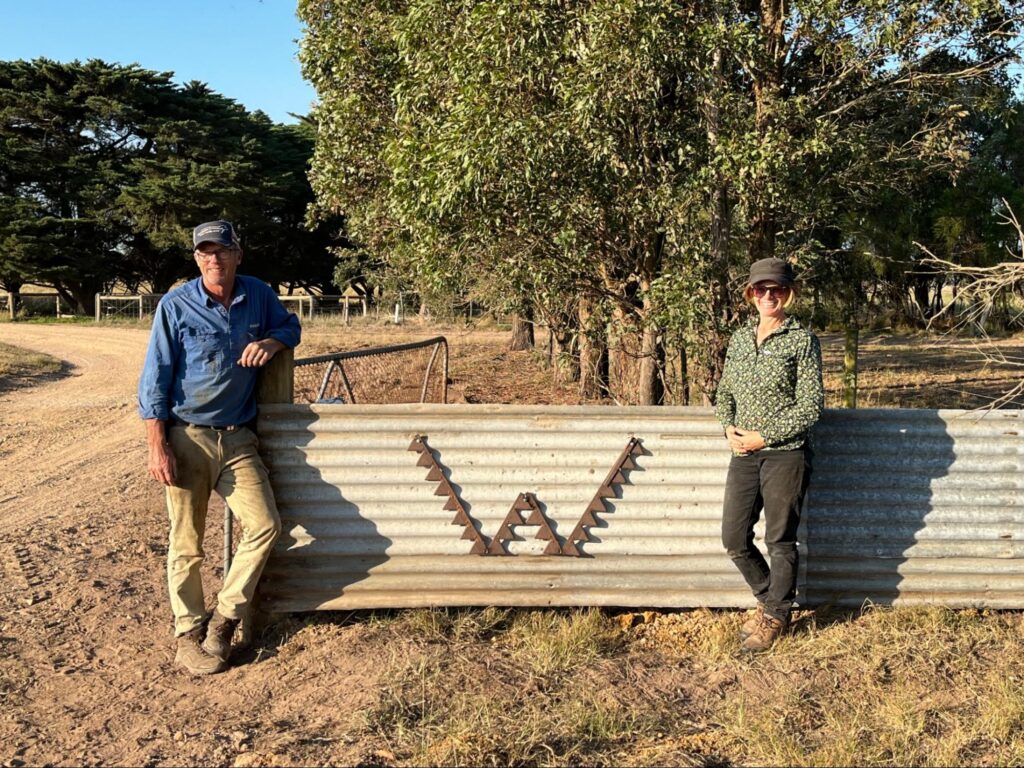
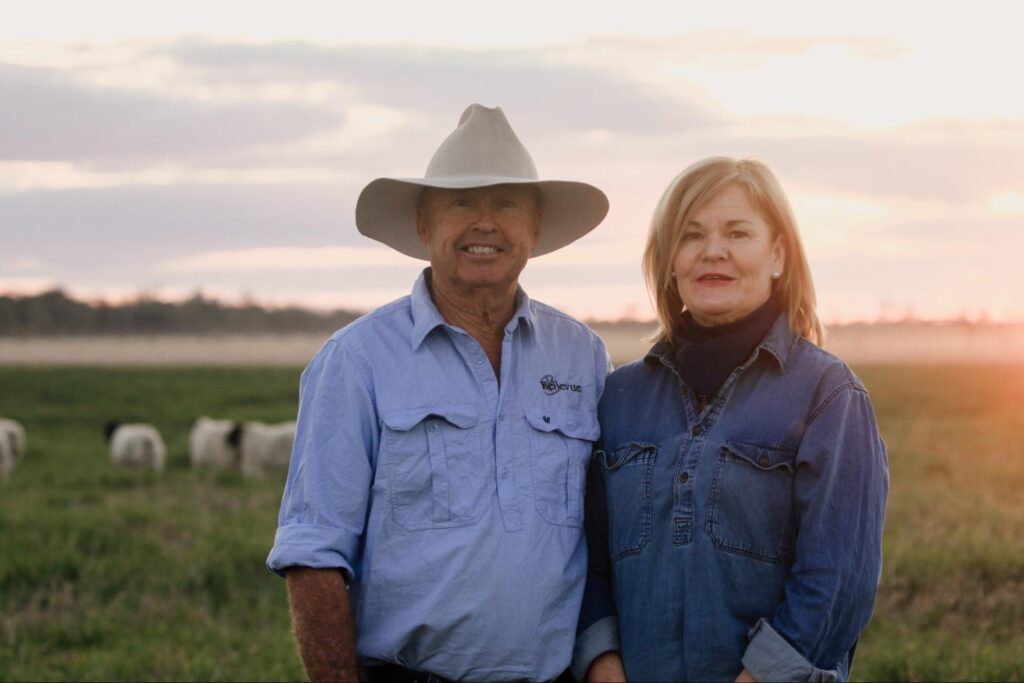
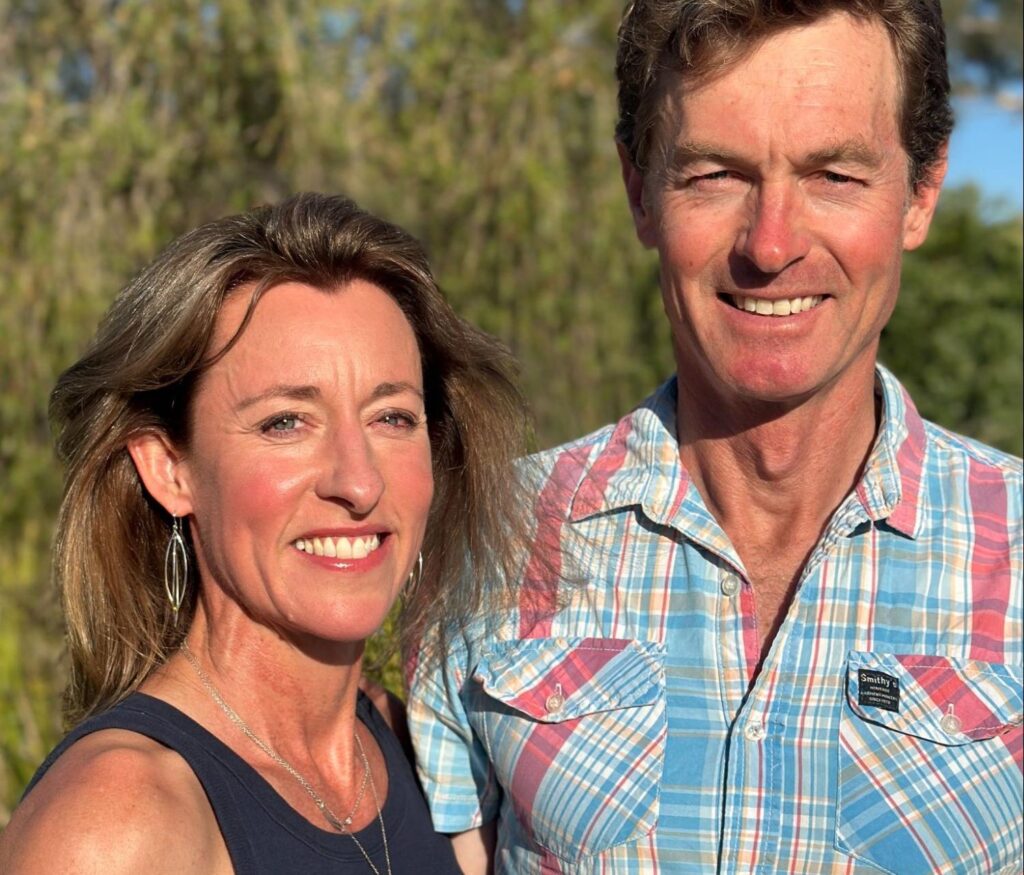
Ben and Kim Simpson
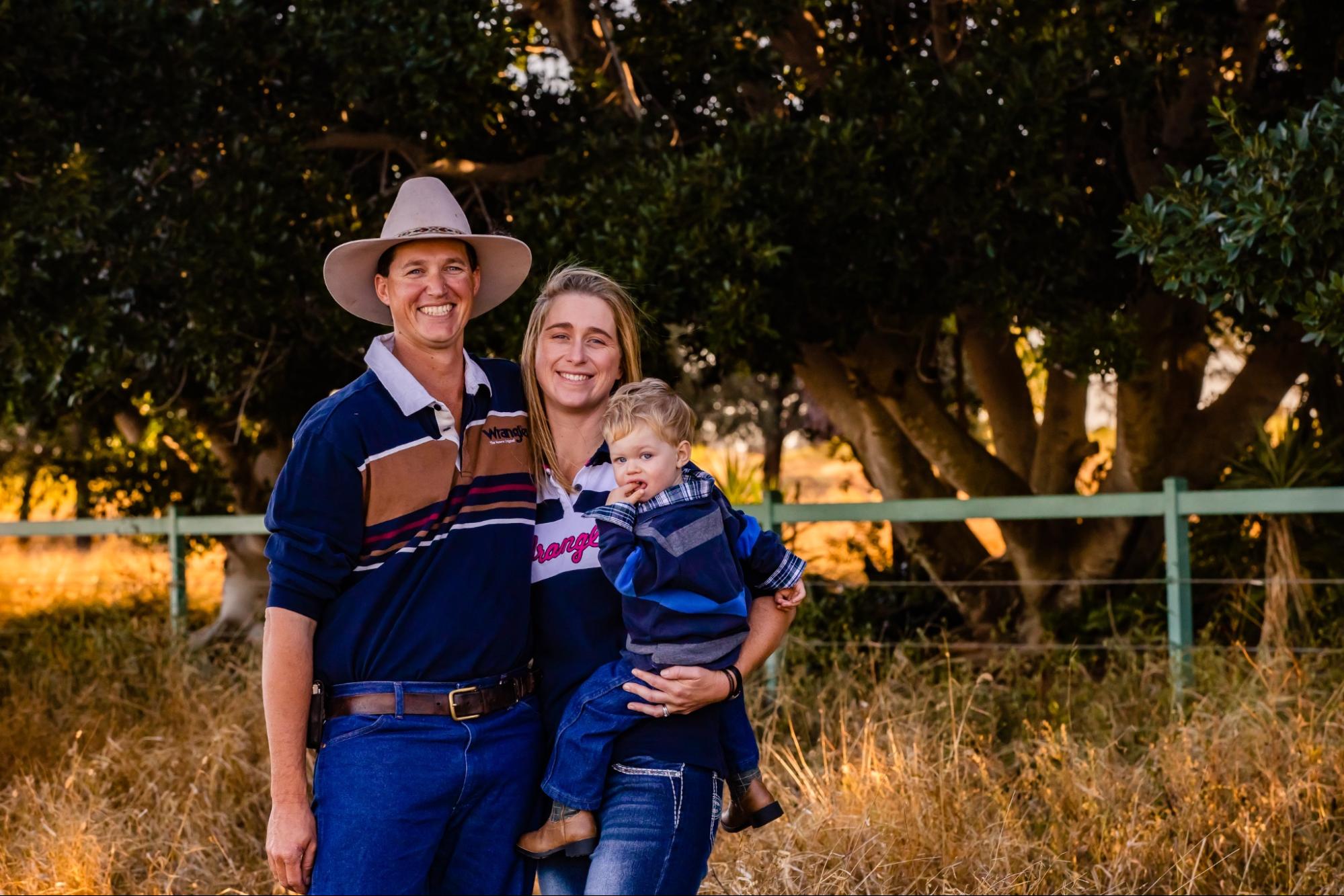
Ben Simpson has been running the property Thistlebank since 2010. Prior to this, he was working as a fitter and turner on the Gold Coast. He returned to Thistlebank to prepare the property for sale on behalf of his grandmother and ultimately decided to stay, purchasing the property himself. Thistlebank has been in Ben’s family for five generations, initially from 1914 until it was sold in 1965. His grandfather later bought it back in 1990, and a manager ran the property until his grandfather passed away in 2010, when Ben stepped into the role. Kim joined Ben on the property in 2014. Her family had also owned Thistlebank during the 1980s, giving the property a family connection for both of them. Luke and Jenna Orchard joined Ben and Kim at Thistlebank as employees in 2022 and stepped into the role of property managers in 2025.
Thistlebank had been set stocked until Ben and Kim began looking for ways to improve profitability. They changed their grazing management practices in 2022 after attending the KLR Marketing and the RCS Grazing for Profit training programs. Ben and Kim have since reduced the number of mobs, subdivided paddocks and improved water systems. They follow the RCS Grazing Principles and use data from their pasture budgets to make grazing and stocking rate decisions. They currently implement more intensive cell grazing management on a 6,000 ha area of the property and manage the remaining 16,800 ha of land in a less intensive rotational grazing approach. Two thirds of their cattle are now trading cattle, which gives them more flexibility to adjust stocking rates to seasonal conditions. They have restructured from 100% breeding cattle with a 1,100 head breeding cow herd to now running only 500 breeding cows, which is one third of their total herd. They also run 3,000 rangeland x boer goats set stocked in paddocks with woody weed regrowth. Ben and Kim have seen early improvements in carrying capacity, drought planning and responsiveness and profitability following the changes they have made to their grazing management.
Location: Iningai Country, Aramac, Queensland
Regional Climate: Hot summer, warm and dry winter; summer dominant rainfall
Average Annual Rainfall: 430 mm
Property Size: 22,800 ha
Elevation: 235 m
Social Structure: Family farm
Enterprise Type: Beef cattle, 500 breeding cows and 1600 trading cattle; 3000 first cross rangeland x boer goats
Grazing Strategies: Grazing management in line with RCS grazing principles, Cell grazing and rotational grazing
Soils: Vertosols
David and Ruth Read
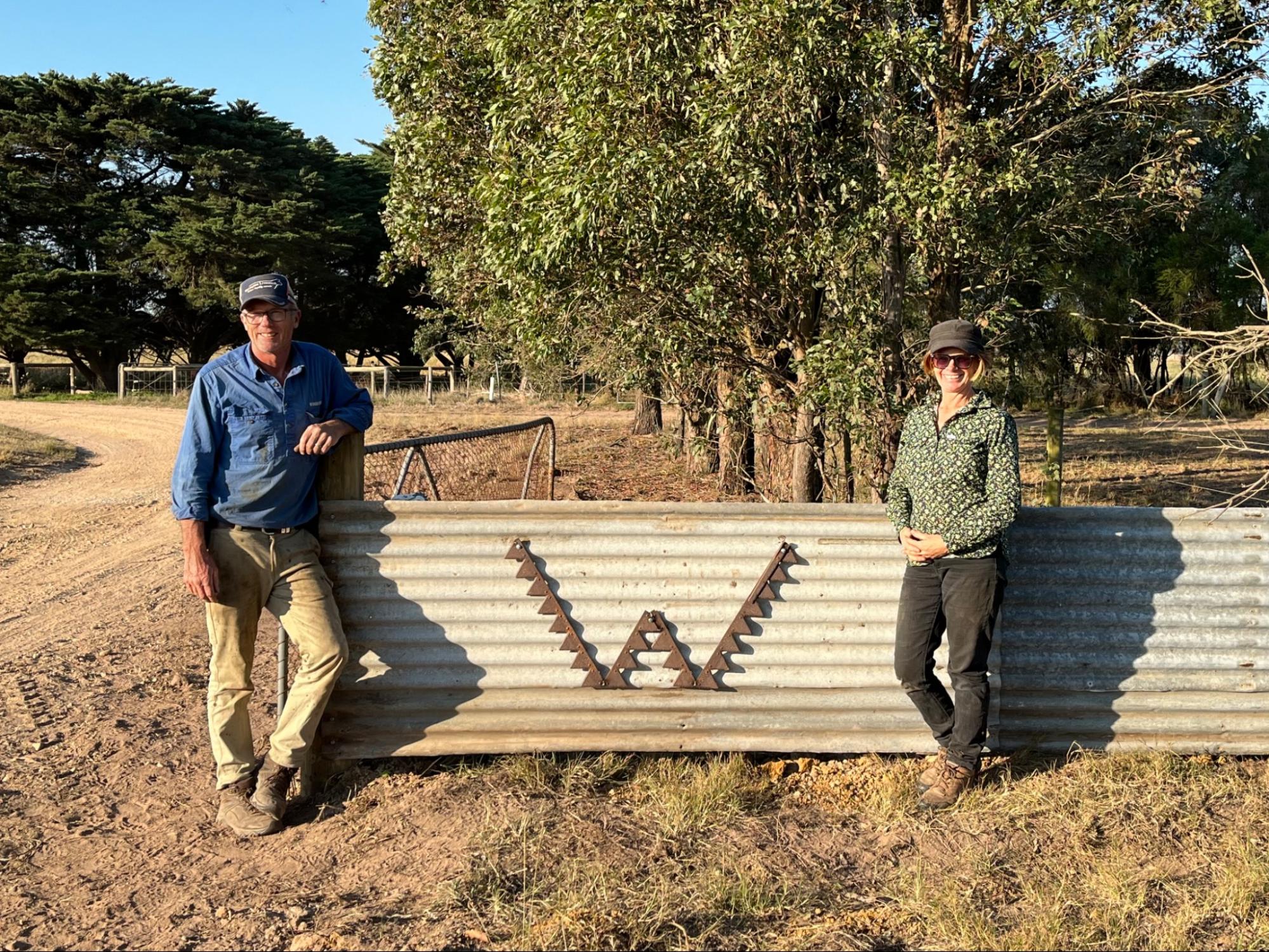
David and Ruth Read own and manage Woodcote, which Ruth’s father purchased in the 1950s. David came into the farm business in the 1980s and started working full time on the farm in the 1990s. Ruth’s sister Jen was also involved in the farming business and worked on the farm until she retired last year. This prompted a succession plan that sees David and Ruth now running the property.
Originally the property was a self replacing merino and angus cattle breeding operation. Livestock were rotated through paddocks and some were rested. During the Millennium drought, David remembers fencing with a contractor and having to stop work because they couldn’t see through all the dust and needing to clear dirt off a gate with a tractor to open it. The family decided they would not allow that to happen again.
Grazing management has been a priority since David attended the RCS Grazing for Profit course in 2001. Since this time, David and Ruth have continued to make time for ongoing learning, which has included Holistic Management, KLR Marketing, Low Stress Stock Handling and many other courses. They have reduced the number of mobs, improved fencing and water and begun to use strip grazing to increase the density of grazing. David and Ruth operate a beef cattle trading operation that gives them the flexibility to respond to changing seasonal conditions, and that supports their vision for a harmonious and ecologically regenerative system.
Location: Gunaikurnai Country, Perry Bridge area, near Stratford in East Gippsland, Victoria
Regional Climate: Temperate, warm summer, cold winter; uniform rainfall, with no dry season
Average Annual Rainfall: 600 mm
Property Size: 470 ha
Elevation: 40 m
Social Structure: Family farm
Enterprise Type: Beef cattle trading
Grazing Strategies:
Adaptive grazing based on RCS grazing principles, Holistic Management, Grazing Naturally and Real Wealth Ranching, strip grazing with electric fencing
Soils: Light sandy loam over clay subsoil
David, Robbie and Sophie Curtis
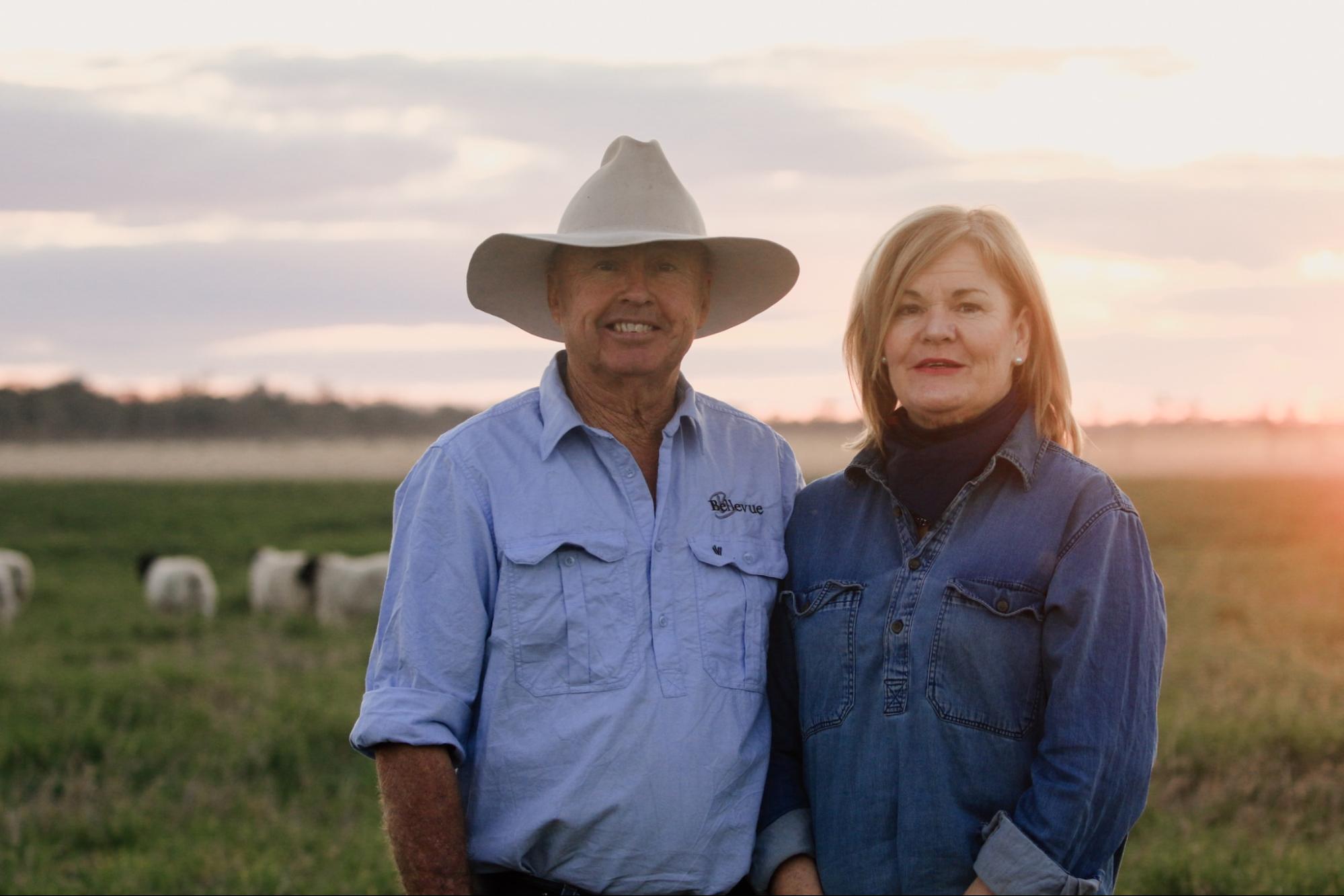
David and Robbie Curtis purchased Bellevue in 1985 after David had completed a Certificate in Animal Breeding at Longreach Pastoral College and worked on his family farm for a few years. The property had grown cotton previously and was heavily cleared and very unproductive when they arrived. They have since bought a couple of neighbouring properties. After the wool crash in 1989 and increasing challenges in finding shearers, the merino sheep they were running were no longer a viable option, so in 2006 they formed a joint venture with producers from Namibia to bring Dorper embryos from Namibia over to Australia. Foot and Mouth disease brought an end to importing embryos, but they have continued with the Bellevue Dorper Stud with two main sales per year.
David and Robbie’s daughter Sophie is now involved in managing the property. They converted to certified organic farming in 2016 due to their desires to stop putting chemicals into the food system for animals or people and to create a beautiful and healthy environment for their family. The Curtis’ motto is: ‘Where we produce food should be the healthiest place to live, so we feel a farming environment should be a healthy place to bring up kids and family. We also believe in growing where we are planted, and to do the best with the soil you have got or the scenarios you have got.’ David has aimed to get outside of what he calls the ‘bulk commodity swell’ so they are not just another bulk producer. Customer relationships are important: ‘Everything we produce goes to a customer, whether it is a ram, our lambs to customers or butchers, and our grain.’
Location: Giabal Country, Millmerran, Queensland
Regional Climate: Temperate, hot dry summer, cold winter
Average Annual Rainfall: 662 mm
Property Size: 2064 ha, with an additional 566 ha leased
Elevation: 477 m
Social Structure: Family farm
Enterprise Type: Organically certified Dorper prime lambs supplying directly to butchers, Bellevue Dorper Stud, Organically certified grain production
Grazing strategies: Rotational grazing
Soils: Sodosols
Nick and Deanna Austin
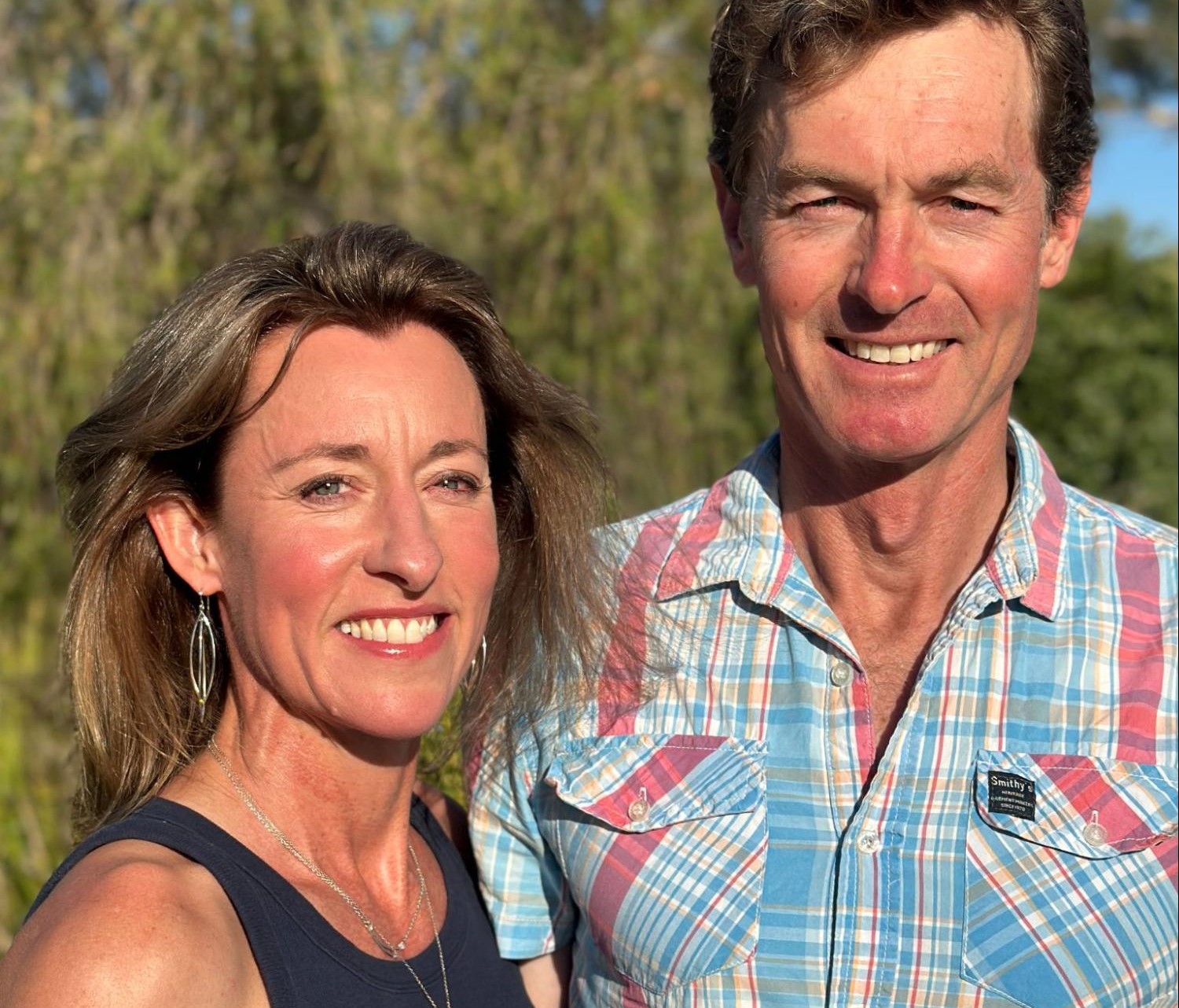
Nick and Deanna Austin run cattle on their property, Mundarlo, located on the Murrumbidgee river in New South Wales. Mundarlo has been in the Austin family since Nick’s grandfather bought the property in 1941 to start a grazing operation. Nick’s father then decided to run the property as a mixed livestock and cropping business. After a career as an engineer, Nick decided to return to the family farm in 2001 and now operates it again as a grazing property.
Nick was keen to do as many agricultural courses as he could when he came back to the farm. Attending a Holistic Management course in 2001 ‘shifted a lot of paradigms’ and introduced Nick to a whole new way of thinking and viewing the world. This learning was a foundation for the changes that Nick began to implement in 2010 after getting through the Millennium drought. The support from being part of the 8 Families farming discussion and support group (see the Soils for Life case study on the 8 Families) has been instrumental in changing practices and overcoming the challenges that arise. For Nick and Deanna, using their Holistic Context to guide their decision making has led to the creation of a flexible enterprise that creates the quality of life they are seeking and generates true profit that is not at the expense of the environment or other people.
The grazing enterprise has shifted over time from a breeding focus to a trading operation, to currently being a blend of breeding cattle and trading livestock. This captures the benefits of trading and the consistency of a breeding herd. The breeding herd can also utilise feed that the trading herd may not be suitable for.
Location: Wiradjuri Country, Between Wagga Wagga and Gundagai, New South Wales
Regional Climate: Mediterranean/temperate, wet cool season
Average Annual Rainfall: 570 mm
Property Size: 1400 ha
Elevation: 300 m
Social Structure: Family farm
Enterprise Type: Cattle breeding and trading
Grazing Strategies: Holistic Planned Grazing, Leader—follower grazing with a trading mob of cattle grazing ahead of the breeding mob of cattle
Soils: Kandosols, Kurosols, Sodosols, Rudosols and Alluvial Rudosols
Rod and Katrina Butler
Rod and Katrina Butler operate a sheep trading and opportunity cropping1Opportunity cropping involves sowing a crop whenever soil water reserves are adequate. P Hayman, D Freebairn, and A Huda, ‘Opportunity cropping on the Liverpool Plains: A comparison of risk assessment by farmers and simulation models’, n.d. accessed 30 March 2026. enterprise, Gimlet Ridge in the Mid West region of Western Australia. The property was farmed by Rod’s father and uncle until 1986, when the partnership split and a new partnership was established between Rod and his father and brother. In 1996, this partnership ended and Rod and Katrina started farming on their own. They began implementing organic farming practices and marketed organic grain, lamb, free range pigs and also set up a stone ground flour mill.
Rod and Katrina began adopting Holistic Planned Grazing2Holistic Planned Grazing is a process for planning grazing decisions based on the whole ecosystem including the people, soil, plants, livestock and wildlife. Savory Institute, ‘Holistic Planned Grazing: It’s more than rotational grazing’, January 29, 2020, accessed 30 March, 2026. in 1997 after completing Holistic Management training with educator Bruce Ward, and started making decisions designed to keep ground cover on the land. Rod and Katrina continued working with Bruce, and his mentoring in financial planning and context development helped them to shift their mindset, connected them with like minded practitioners and deepened their understanding and practice of Holistic Management. They decided to sell the organic sheep and stop pursuing organic marketing and trade sheep instead. Organic practices had not improved the land to where they knew it could and should be. Pursuing organic marketing saw them pushing the land beyond what it should have been to maintain their market. The organic market was driving their financial situation rather than their environmental situation and to them this felt ‘rule bound and limiting’.
Over time, operational costs have fallen and the landscape has changed considerably. Since changing their grazing management, they have observed increasing grass cover, pastures that stay green for longer and trees and birds coming back into the landscape. The farm has become easy to manage and low cost to run with stocking rates increasing. With all of these changes, Rod and Katrina feel that they have much more choice and control.
Location: Badimaya Country, Perenjori, Western Australia
Regional Climate: Arid, hot dry summers, cold winters
Average Annual Rainfall: 288 mm
Property Size: 880 ha
Elevation: 310–360 m
Social Structure: Family farm
Enterprise Type: Trading sheep with opportunity cropping
Grazing strategy: Holistic Planned Grazing, water and minerals are moved around to get animal impact where it is most needed
Soils: Red loamy clays, red cracking clays, lighter gravels, lighter sandy gravels and some dark ironstone country.
What are the benefits?
Regenerative grazing approaches aim to build ecosystem health as the foundation of improved outcomes for the farmer and public benefits for the wider community. These outcomes and benefits include improvements in:
In this section
- Soil and landscape health
- Productivity and profitability
- Personal wellbeing.
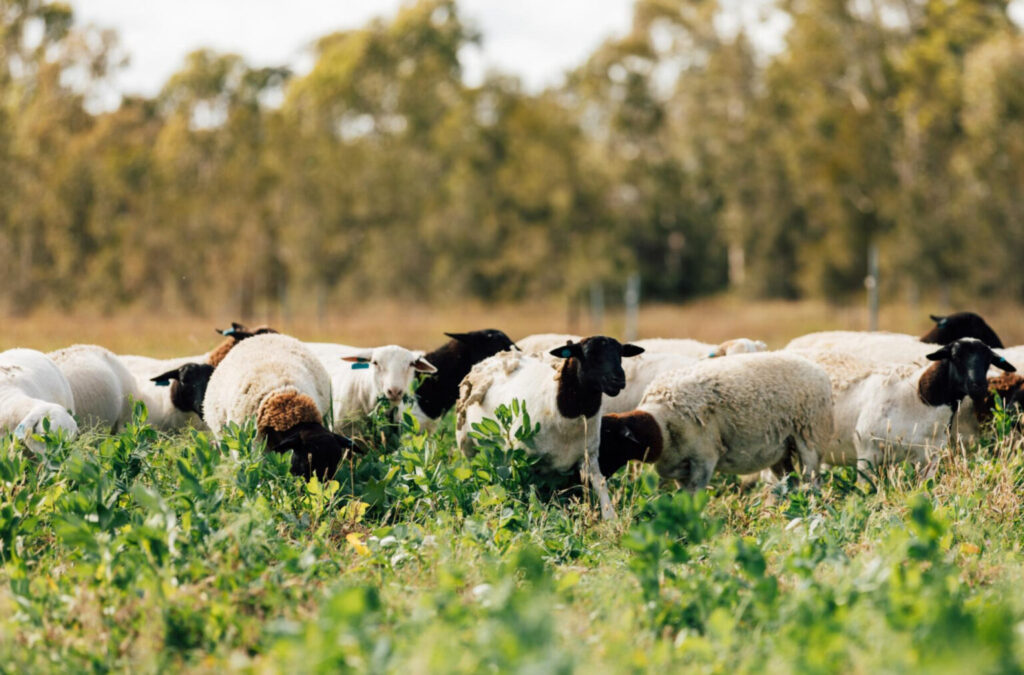
Soil and landscape health
Livestock graze plants, spread manure and urine and trample plant material to incorporate it into the soil. When grazing is continuous, or when insufficient recovery time is provided for pastures, these impacts can degrade ecosystem health. But careful planning of grazing and recovery periods can make beneficial use of these impacts for ecosystem regeneration.
Planning grazing and recovery periods effectively can help plants maximise energy utilisation through photosynthesis, allowing the plants to produce more sugars, a portion of which can be sent out through the roots to feed soil microbes and improve soil organic matter and soil health.3C Jones. ‘Light farming: restoring carbon, organic nitrogen and biodiversity to agricultural soils’ [PDF 632KB], n.d., accessed 31 March 2026.
Studies have shown that regenerative grazing can reverse ecosystem degradation by decreasing bare ground, increasing water infiltration rates and soil water storage capacity, reducing surface water run off, increasing fungal to bacterial ratios and increasing soil carbon.4R Teague and U Kreuter. ‘Managing grazing to restore soil health, ecosystem function, and ecosystem services’, Frontiers in Sustainable Food Systems, 2020, 4:534187, https://doi.org/10.3389/fsufs.2020. 534187 ,5R Bartley et al. ‘Do regenerative grazing management practices improve vegetation and soil health in grazed rangelands? Preliminary insights from a space-for-time study in the Great Barrier Reef catchments, Australia’, The Rangeland Journal, 2022, 44(4), 221–246, https://doi.org/10.1071/RJ22047 ,6S McDonald et al, ‘Grazing management for soil carbon in Australia: A review’, Journal of Environmental Management.’ 2023, Volume 347, https://doi.org/10.1016/j.jenvman.2023.119146.
Research in temperate native grasslands and grassy woodlands in south-eastern Australia has shown that continuous grazing reduces native plant diversity and groundcover, reducing habitat for birds, reptiles and beneficial insects. Managing grazing pressure to avoid overgrazing and allowing paddocks to rest and recover from grazing helps maintain native grasses and habitat structure, supporting stronger biodiversity on farm.7I Lunt, Technical Report 18. ‘Effects of Stock Grazing on Biodiversity Values in Temperate Native Grasslands and Grassy Woodlands in SE Australia: A Literature Review’ [PDF 433KB], Environment ACT, Canberra, 2005, accessed 31 March 2026.
Explainer: Supporting the four ecosystem processes
Explainer: Supporting the four ecosystem processes8Savory Institute, ‘A framework for managing complexity’, https://savory.global/holistic-management/, accessed 31 March 2026.
Holistic Management identifies four ecosystem processes that can be used to guide grazing management decisions that will support and strengthen these processes:
- The water cycle: The movement of water from the atmosphere to the soil or oceans, where it nourishes plant and animal life, and eventually back to the atmosphere.
- The mineral cycle: The movement of mineral nutrients from soil to plants and animals and back to soil again.
- Energy flow: The conversion of sunlight through green, growing plants (photosynthesis) to a form of energy that sustains all life.
- Community dynamics: The ever-changing plant and animal populations within a biological community due to the constant interplay of species, changing composition and changing micro-environment.
👉 Find out more
Holistic Management, by Allan Savory, provides information on these four ecosystem processes and how they are used as part of the Holistic Management decision making framework.
🥾 Farmer examples: Soil and landscape health
David and Ruth Read
David and Ruth have observed improvements to their pastures and water infiltration through regenerative grazing practices. ‘We can get up to 60 mm of rain before water runs off our paddocks, whereas we see water running off neighbouring land after 20 mm of rain,’ says David. Retaining more moisture in their soils means they stay green longer in dry times. They observe that water quality improves as water moves through their property.
David, Robbie and Sophie Curtis
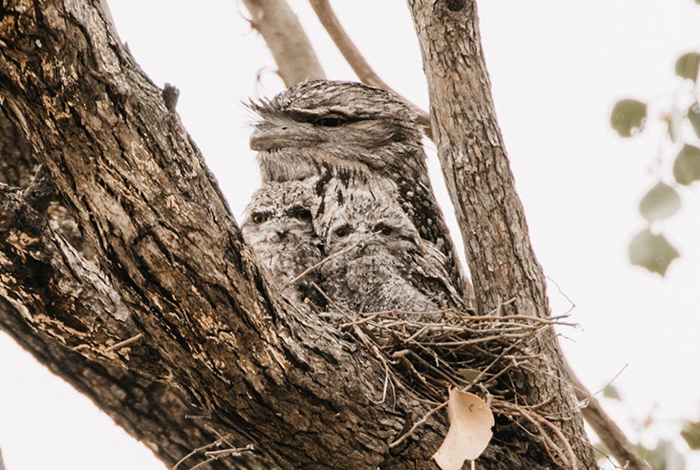
Image 6. A tawny frogmouth (Podargus strigoides) nesting at Bellevue. Source: Sophie Curtis.
Nick and Deanna Austin
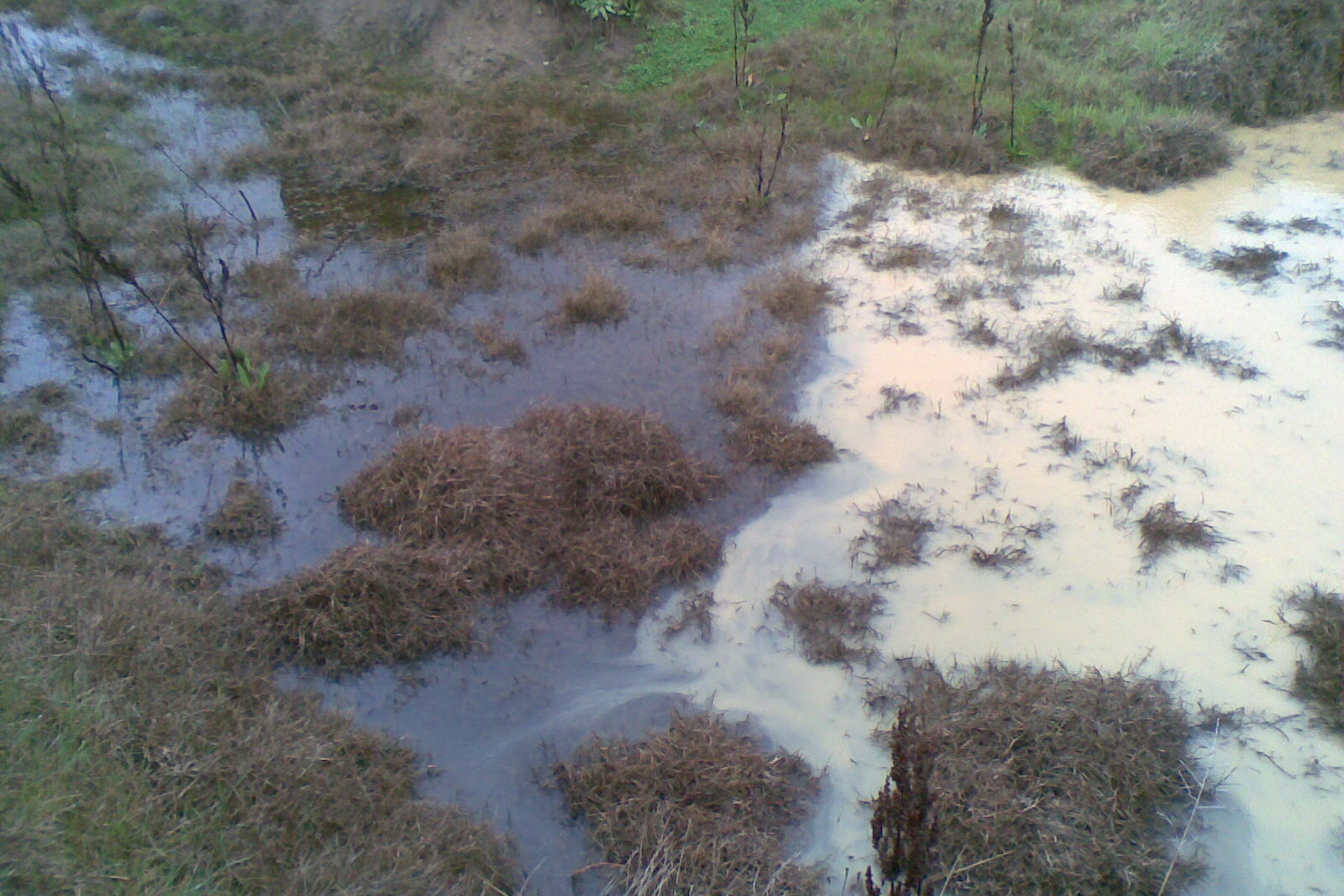
Image 7. Nick Austin has observed crystal clear water running out of his property (left) when it rains, as compared to the water it runs into from a neighbouring property (right). Source: Nick Austin.
Rod and Katrina Butler
Rod and Katrina have observed a process of succession of species, where certain plants come in and do their job until another plant succeeds them. They have observed how ‘low succession’ weedy plants that they once thought were a pest are a message that the soil was bare. The vegetation has shifted over time and there are now perennials like Mulla Mulla (Ptilotus spp.), creeping wanderrie (Eragrostis lanipes), broad leaf wanderrie (Monachather paradoxus), curly windmill grass (Enteropogon ramosus) along with annual herbs and grasses, clovers and medics. Rod and Katrina have observed that soil colour has become darker in the topsoil, which has also increased in depth from 2–5 cm to 7–10 cm in depth. They believe that improved soil water capture and storage is helping perennials stay green for longer, perennial species are coming back, and ground cover and plant density are increasing.
Productivity and profitability
Increased productivity
Regenerative grazing practices involve planning and managing how long livestock graze to ensure enough leaf remains for plants to continue photosynthesising, to minimise damage to plant roots, and to allow adequate time for plants to recover from grazing before being grazed again. This can lead to healthier and more diverse pastures and improved ground cover.
Studies have shown that regenerative grazing can increase forage production in pastures, potentially increasing livestock carrying capacity.9 D Johnson, R Teague, S Apfelbaum, R Thompson, P Byck, ‘Adaptive multi-paddock grazing management’s influence on soil food web community structure for: increasing pasture forage production, soil organic carbon, and reducing soil respiration rates in southeastern USA ranches’, PeerJ, 2022, Jul 19;10:e13750. https://doi.org/10.7717/peerj.13750, 10R Teague and U Kreuter. ‘Managing grazing to restore soil health, ecosystem function, and ecosystem services’, Frontiers in Sustainable Food Systems, 2020, 4:534187, https://doi.org/10.3389/fsufs.2020.534187 Analysis of data from more than five million hectares of grazing land spanning multiple bioregions and production systems from the Atlas Grazing platform shows that paddock subdivision and increased stock density have produced an average 26% increase in pasture yield.11These findings are based on analysis of grazing records captured through the Atlas Grazing platform (from 2026, Atlas Grazing), using before-and-after comparisons of subdivided paddocks with yield outcomes adjusted for rainfall over at least 12 months. The dataset includes grazing enterprises of varying scale across multiple bioregions and production systems globally. These practices can also reduce selective grazing, which occurs when livestock select only the most nutritious grass species, leading to those species disappearing over time.12 R Teague and U Kreuter. ‘Managing grazing to restore soil health, ecosystem function, and ecosystem services’, Frontiers in Sustainable Food Systems, 2020, 4:534187, https://doi.org/10.3389/fsufs.2020. 534187 Reducing selective grazing can help to ensure a diversity of plants with differing plant heights and leaf architectures remains in the paddock. Regenerative grazing has also been found to reduce bare ground and increase the number of perennial species in pastures, which can extend growing seasons and reduce the need to seasonally resow pastures.13H Gosnell, S Charnley, P Stanley, ‘Climate change mitigation as a co-benefit of regenerative ranching: insights from Australia and the United States’, Interface Focus, 2020, 10 (5): 20200027, http://dx.doi.org/ 10.1098/rsfs.2020.0027 This also enhances soil carbon sequestration, which can support improved water holding capacity and improved rainfall use efficiency, ultimately improving climate resilience.14 H Gosnell, S Charnley, P Stanley, ‘Climate change mitigation as a co-benefit of regenerative ranching: insights from Australia and the United States’, Interface Focus, 2020, 10 (5): 20200027, http://dx.doi.org/10.1098/rsfs.2020.0027 Planning and managing grazing to match stocking rates to pasture quality and quantity also enables destocking decisions to be made early, better protecting the natural resource base through dry periods and allowing grass to respond faster when it rains.
🥾 Farmer examples: Increased productivity
Ben and Kim Simpson
Ben monitors ground cover using satellite imagery from the Queensland Government’s Long Paddock website.15The Long Paddock is a Queensland Government website with Climate risk information for rural Queensland. After he changed his grazing management in 2022, minimum ground cover across the three lots that make up Thistlebank increased from around 40% in 2022 to around 60% in 2024 (see Figure 1, red dots), and maximum ground cover also increased. In 2024, they ran double their previous stocking rate compared to 2022, with half their average annual rainfall. While they are only a few years into changing practices, these early results are encouraging.
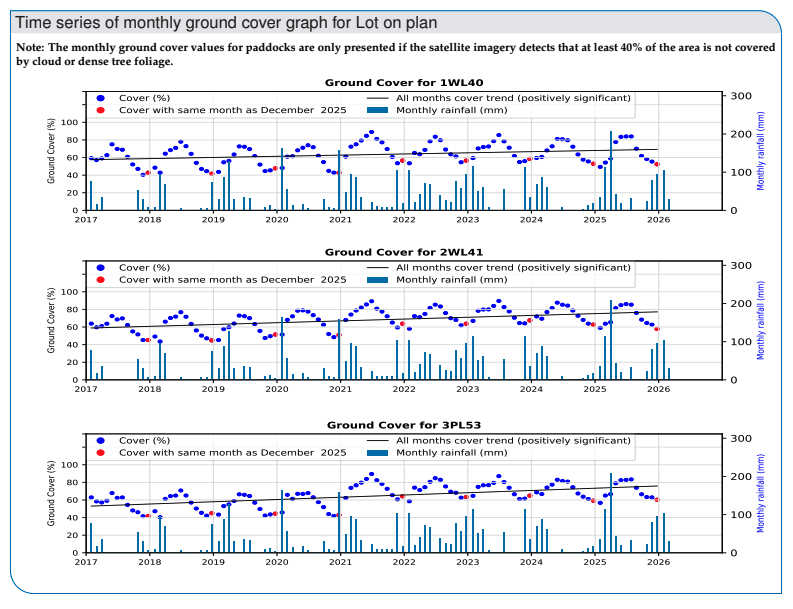
Figure 1. Thistlebank ground cover (%) and rainfall (mm). The cell grazing occurs on half of Lot 3PL53. Rotational grazing occurs on half of Lot 3PL53, Lot 1WL40 and Lot 2WL41. Source: The Long Paddock, Qld Government.
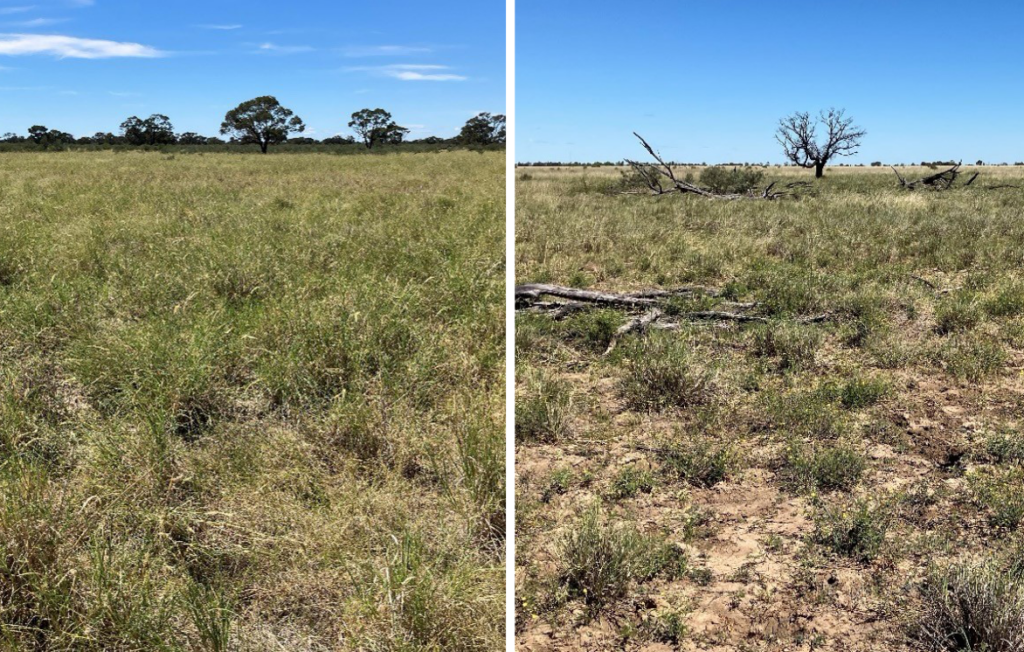
Images 8 & 9. The cell grazed paddock (Image 8) and set stocked paddock (Image 9) at Thistlebank on 21 April, 2024. Source: Ben Simpson
Ben has also seen promising improvements in carrying capacity since changing management in 2022. Under their previous set stocking system, they were running 0.125 head/ha, whereas now they are running 1 head/ha, an increase of 700% despite low rainfall. Their benchmark carrying capacity has increased from 6 stock days per hectare per 100 mm of rain (SDH/100 mm) and is now 15–20 SDH/100 mm.
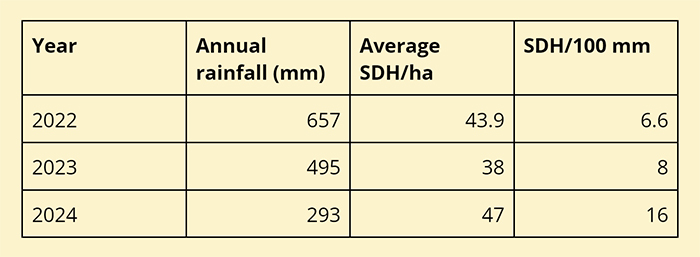
Table 2. Improvements in carrying capacity to the cattle breeding enterprise since implementing improved grazing management at Thistlebank.
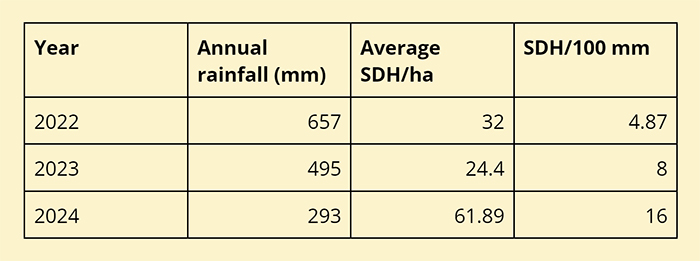
Table 3. Improvements in carrying capacity to the 6,000 ha cattle trading enterprise since implementing improved grazing management at Thistlebank.
David and Ruth Read
Along with his change in management practices, David has found brix readings16Brix is a unit of measurement used to determine the sugar (sucrose) concentration of a food or solution. It is measured in degrees Brix, with the sugar content of a 100 g solution containing 1 g of sucrose at 20oC defined as 1oBx. Brix is measured using a portable refractometer. See: https://taylorandfrancis.com/knowledge/Engineering_and_technology/Chemical_engineering/Brix/ have improved over time, indicating grasses are increasing in nutritional density and optimising photosynthesis. ‘We were often at 3–4 when we started measuring brix, now we can see levels of 8–9 at times,’ explains David.
David, Robbie and Sophie Curtis
Rod and Katrina Butler
Improved animal health
Many farmers using regenerative grazing practices see improvements in animal health. Regularly moving livestock means that they are observing animals frequently and can pick up any issues quickly, while calm livestock handling techniques and an understanding of animal behaviour can reduce animal stress. Health can also be improved by breaking parasite life cycles through planning grazing to allow longer breaks before grazing the same paddock again.17C Ruiz-Huidobro et al, ‘Cell grazing and Haemonchus contortus control in sheep: lessons from a two-year study in temperate Western Europe’, Scientific Reports, 2019, 9:12699, doi: 10.1038/ s41598-019-49034-y
Livestock have been found to self medicate in diverse pasture systems and increased species diversity in grasses, legumes and herbs allows livestock to meet their nutritional requirements, resulting in improved livestock nutrition.18J Villalba, F Provenza, ‘Self-medication and homeostatic behaviour in herbivores: learning about the benefits of nature’s pharmacy’, Animal, 2007, 1(9):1360-1370. https://doi.org/10.1017/S17517311070 00134 ,19R Distel, J Arroquy, S Lagrange, J Villalba, ‘Designing Diverse Agricultural Pastures for Improving Ruminant Production Systems’, Frontiers in Sustainable Food Systems. 2020, 4:596869, https://doi.org /10.3389/fsufs.2020.596869 Studies have shown that sheep with access to diverse pastures have heavier liveweights and better body condition scores, and lambs grazing diverse pastures require less drenching for worms.20C Grace, M Lynch, H Sheridan, S Lott, R Fritch, T Boland, ‘Grazing multispecies swards improves ewe and lamb performance’, Animal, 2019, 13(8) p 1721-1729, https://doi.org/10.1017/S1751731118003245 Improved pasture diversity has also been linked to improved milk composition in dairy cows.21R Kostovska, B Horan, G Drouin, J Tobin, T O’Callaghan, A Kelly, L Gómez-Mascaraque.,‘Effects of multispecies pasture diet and cow breed on milk composition and quality in a seasonal spring-calving dairy production system’, Journal of Dairy Science, 2024, 107:10256-10267. https://doi.org/10.3168/ jds.2024-24975
🥾 Farmer examples: Improved animal health
David, Robbie and Sophie Curtis
Nick and Deanna Austin
Improved profitability
Farmers implementing regenerative grazing approaches have seen improvements in profitability through increased productivity, reduced costs, improved control and responsiveness to market and seasonal conditions and, at times, access to price premiums. Reduced costs can include reduced costs for fodder, supplementary feeding, animal health and labour. There are also emerging opportunities for price premiums through certifications or direct to market opportunities. Regenerative grazing approaches can also build soil carbon, opening up opportunities for earning revenue through the carbon market.22Soil4Climate Inc, ‘Hope below our feet. Peer reviewed publications on well-managed grazing as a means of improving rangeland ecology, building soil carbon, and mitigating global warming’, Regeneration International, 2021, accessed 31 March 2026. ,23D Rowlings et al, ‘Time-controlled grazing for soil C sequestration and improved ecosystem services’ [PDF 2.8MB], Meat and Livestock Australia, 2024, accessed 31 March 2026. ,24 S McDonald et al, ‘Grazing management for soil carbon in Australia: A review’, Journal of Environmental Management.’ 2023, Volume 347, https://doi.org/10.1016/j.jenvman.2023.119146. ,25The Australian Carbon Credit Union Scheme administered by the Clean Energy Regulator encourages people and businesses to run projects that reduce emissions or store carbon. See: https://cer.gov.au/ schemes/australian-carbon-credit-unit-scheme
The combination of planning, monitoring and adapting can also provide more financial control through more proactive risk management, with a focus on managing factors within the farmer’s control and basing decisions on up-to-date information. Trading livestock is generally one of the enterprises used in regenerative grazing systems to provide the flexibility to adjust stocking rate quickly in response to changing seasonal conditions. Planning grazing and ensuring there is sufficient feed on hand to meet livestock requirements helps with making early decisions to change stocking rate. This helps to avoid the situation where livestock need to be bought or sold at low prices when markets are flooded, and buying at high prices when there is an increased restocking demand.
A study of 15 regenerative grazing operations in NSW found that these methods can be at least as profitable, and at times more profitable, than typical grazing management whilst maintaining and enhancing grassy woodland biodiversity. Profitability in these types of enterprises was found to be higher than other grazing operations in a dry year, with lower variability in income.26S Ogilvy et al, ‘Graziers with better profitability, biodiversity and wellbeing: exploring the potential for improving environmental, social and economic outcomes in agriculture’, 2018, doi:10.13140/RG.2.2. 11329.36966
🥾 Farmer examples: Improved profitability
Ben and Kim Simpson
The financial data Ben captures in Farmeye is used to analyse enterprises and make decisions about whether to ‘axe it or explore what needs to happen to make it perform. This helps you focus, and know what is and isn’t working in the business.’ Within two years of changing grazing management in 2022, carrying capacity at Thistlebank increased by 520 livestock units (LSU). Ben calculated that with his gross margin of $529/LSU, this increase in carrying capacity delivered an increase of $275,000 in the total gross margin. Taking into consideration the cost of practice change, this equates to a 259% return on the investment (Table 4).
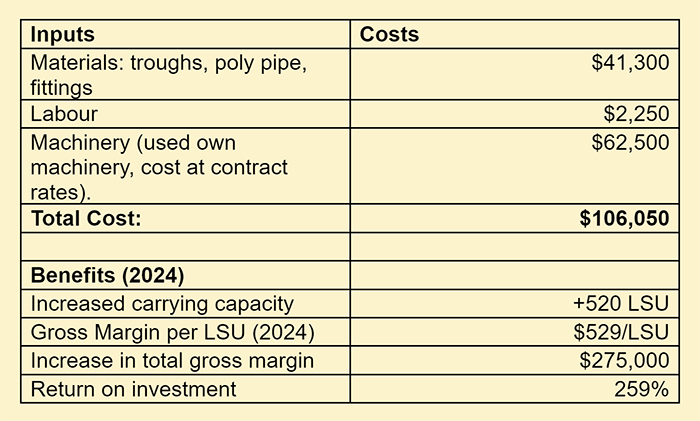
Table 4. Costs and benefits of practice change made at Thistlebank in 2022.
David and Ruth Read
David and Ruth Read have a flexible approach combining marketing and grazing management that allows them to run a profitable business. ‘Every year is different in terms of the grazing and rainfall and what happens with the season, so we have to be adaptive,’ says David.
David and Ruth explain that ‘we probably wouldn’t be farming if we didn’t have KLR and the grazing management we have at the moment’. Using the KLR Marketing process helps them to see opportunities in markets, understand what is overpriced and underpriced and to destock early so they can come into the market when everyone else is ‘panicking’. ‘If you have grass, you can trade. It doesn’t matter how many livestock you have, you must always have grass to be a trader,’ explain Ruth and David. ‘You can never have too much grass, or too much money, but you can have too many cattle.’
‘There is no wishing and hoping that the market goes up or that the animals will be worth something later, it’s irrelevant. Once you have bought an animal, the price is irrelevant as we profit when we buy,’ explains David. David and Ruth feel they have more financial control through their decision making process and knowing when an animal is overpriced to them. Ruth says, ‘You are reacting to the markets rather than waiting until you have no grass at all and being forced to sell or forced to buy feed.’ Financially, David explains that ‘it is about what you don’t have to buy, not running out of grass reduces hay and fodder costs. Having plants that are able to capture and utilise every rainfall event, and being able to carry more animals also improves the financial results.’
After implementing long recovery periods between grazes in 2010, carrying capacity increased by 5%. A further 16% increase in carrying capacity has occurred since implementing strip grazing in 2024. This has increased earning potential, along with reducing the cost of carrying one animal per week, which has improved profitability (Table 5).
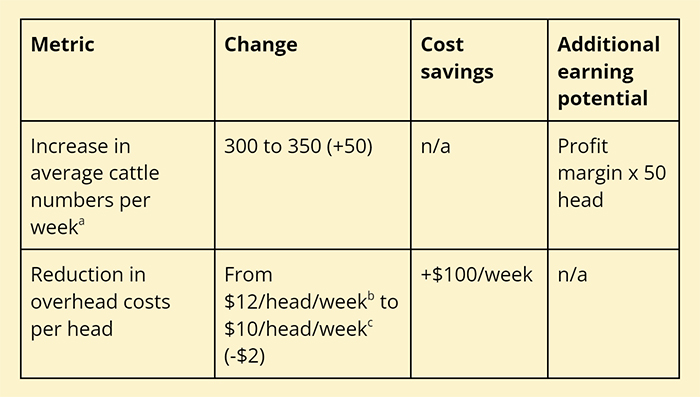
Table 5. Summary of financial improvements on Woodcote since 2024.
a Note: this is a long term average. Actual cattle numbers are adjusted according to rainfall and pasture growth
b $12/head/week x 300 head is $3,600 per week
c $10/head/week x 350 head is $3,500 per week.
David, Robbie and Sophie Curtis
Before going organic 15 years ago, David, Robbie and Sophie Curtis were spending $100,000 per year on chemicals. Today they do not spend anything on these inputs, which David estimates would cost double that now if they had continued, while the health of the country would have declined. Being able to stop drenching the sheep due to improved animal health and better grazing management to disrupt parasite life cycles has also reduced time and labour costs in addition to input cost savings. Lowering costs means ‘we are not going into battle, we are working with what we have without massive inputs so there is not a big downside in bad years, making this approach more suited to a variable climate’.
David also gains financial benefits by drilling multispecies seeds into their pastures to feed stock through winter. ‘I remember when we used to run merino wethers and feed corn in winter, a tonne of corn might last a thousand sheep a week, but if you can drill a tonne of seed into the ground you will feed them for a month.’ David explains that ‘getting seeds into the ground has been such a game changer for us. It’s rocket fuel for the lambs as well, once they get on it they hit their straps, their weight gains are fantastic and they get beautiful fat cover and you are turning them out the gate quicker.’
Profitability is also improved through their ability to receive premium prices for their lamb, along with excellent feedback they receive from their customers. David supplies lamb to two top end butchers in Brisbane each fortnight, and says ‘getting good feedback on your lamb from high end butchers’ is an indication of success. As repeat customers, these butchers like the meat to bone ratio and carcass yield in David’s lamb. The Curtis family has also achieved regular awards for their lamb at the Royal Queensland Show (the Ekka) in Brisbane including Overall Paddock to Plate Champion in 2023 and 2024.
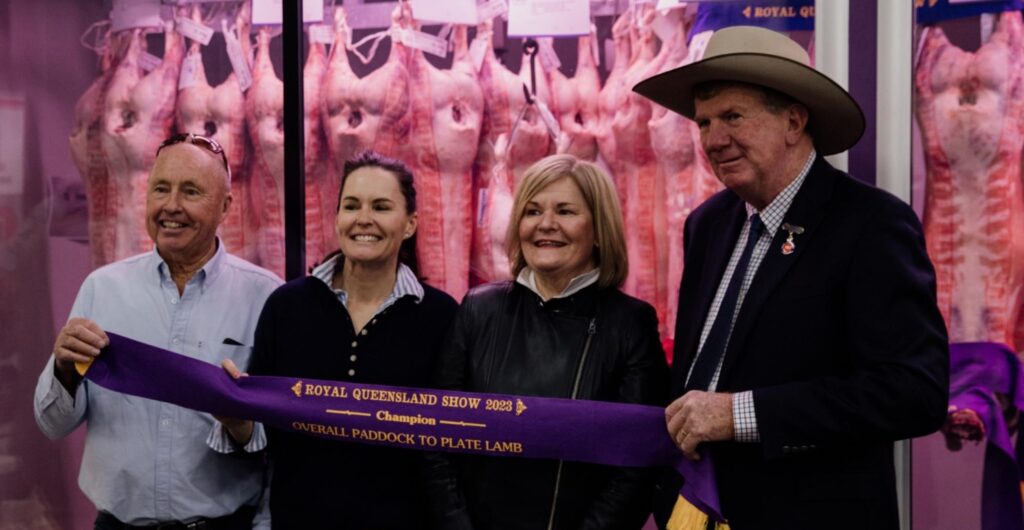
Image 10. David, Sophie and Robbie Curtis being awarded Champion for Overall Paddock to Plate lamb from Pat McMahon at the Royal Queensland show in 2023. Source: Sophie Curtis.
Nick and Deanna Austin
Nick explains that ‘when we were cropping we had a lot of costs, it felt out of control, we spent all this money and waited eight to nine months to get a return, which may not happen. Now we have a good cash flow, we make money and budgets seem to fall into place.’ Profitability was more up and down before they stopped cropping and started focusing on improving grazing management, but since 2009 they have been profitable every year. Nick focuses on profitability and landscape health over maximising production, choosing to run fewer animals to build a buffer instead of sitting at the edge of their carrying capacity.
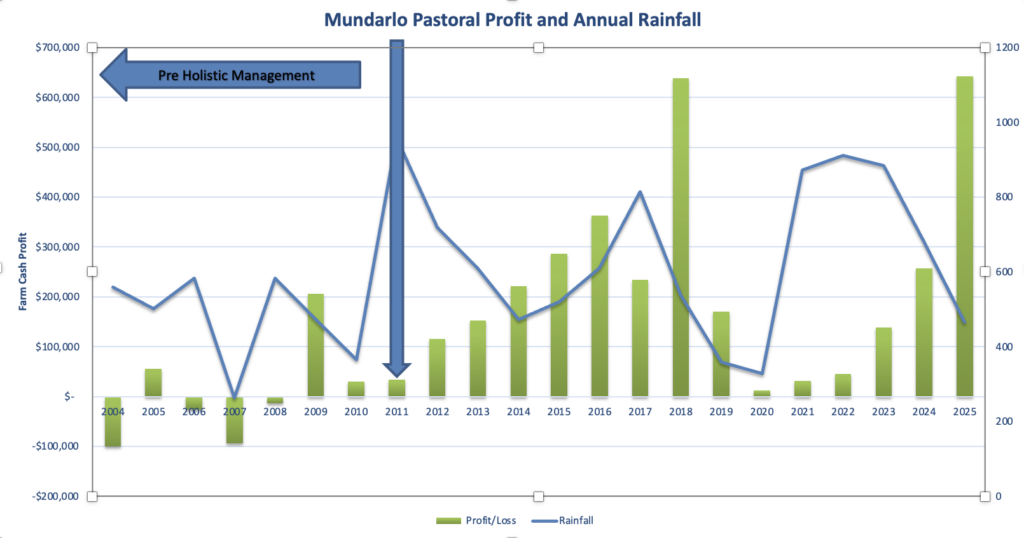
Figure 2. Mundarlo profit and annual rainfall since changing grazing management practices in 2011. Source: Nick Austin and Soils for Life.
Rod and Katrina Butler
Personal wellbeing
Changing grazing practices can lead to improvements in quality of life. Studies indicate that regenerative grazing practices are linked to improving the physical health, mindset and quality of life of farmers, as well as building farmers’ ability to feel in control of their management and adapt to changing conditions.28 K Sherren, et al, (2022). “Adaptive multi-paddock grazing and wellbeing: uptake, management practices and mindset among Canadian beef producers. Agroecology and Sustainable Food Systems’, 2022, 46(9):1304–1329. https://doi.org/10.1080/21683565.2022.2107597 29K Brown, J Schirmer, P Upton, ‘Regenerative farming and human wellbeing: Are subjective wellbeing measures useful indicators for sustainable farming systems?’ Environmental and Sustainability Indicators, 2021, 11:100132, https://doi.org/10.1016/j.indic.2021.100132 30S Ogilvy et al, ‘Graziers with better profitability, biodiversity and wellbeing: exploring the potential for improving environmental, social and economic outcomes in agriculture’, 2018, doi10.13140/RG.2.2. 11329.36966 Improved wellbeing and decision making capacity can also lead to improved climate resilience.31 K Brown, J Schirmer, P Upton, ‘Can regenerative agriculture support successful adaptation to climate change and improved landscape health through building farmer self-efficacy and wellbeing?’, Current Research in Environmental Sustainability, 2022, 4:100170, https://doi.org/10.1016/j.crsust.2022.100170
🥾 Farmer example: Personal wellbeing
Nick and Deanna Austin have improved their financial situation and their quality of life and enjoyment in farming. They have been able to support two children through boarding school and set up an off-farm business enterprise. Nick feels more in control because he is able to make decisions proactively and has the time to work on the business. He manages the grazing on his own, and having fewer mobs takes less time to manage because he can move them in about an hour, leaving plenty of time for other work. He also saves time by choosing to destock instead of feeding animals in dry times, as well as not needing to cut hay or tend to as many animal health issues since changing his management.
Implementing regenerative grazing practices
Regenerative grazing approaches aim to meet livestock needs through practices that build soil health, improve landscape function and support personal and business goals.
How this is done varies depending on the circumstances of each farm and enterprise and goals of each land manager, but in all cases, livestock are seen and used as a tool for soil and landscape regeneration. This generally involves running fewer, larger sized herds and moving animals through paddocks in a way that provides beneficial animal impact and nutrient cycling, while also allowing time between grazes for plants to recover their energy. This enables the development of deep and dense grassland root systems that enhance pasture production, soil structure, biology, water infiltration and health.
The key practices utilised by farmers to support this approach to animal movement include:
- Regular planning of animal moves
- Monitoring and adapting to changing conditions
- Often, redesigning water and fencing infrastructure to facilitate larger mob sizes and longer recovery times.
Many graziers also aim to increase plant and animal diversity and improve ‘natural capital,’ adjust the enterprise to better fit their regeneration goals, and shift their approach to stock handling, animal selection and genetics, and animal health and nutrition.
In this section
- Getting started with regenerative grazing
- Use grazing plans
- Monitor and adapt grazing decisions as conditions change
- Infrastructure (wire and water)
- Diversity and enterprise design
- Livestock management
💡 Tips and tricks
Before trying something new, it is important to consider your unique context and goals. What are you trying to achieve? Soil, grazing and landscape ecosystems are complex, and no two farming systems are the same – what worked for one farmer may not work for you. So consider starting small, monitoring the results and allowing some room for trial and error. There is no one size fits all approach to grazing management, so think about how these practices apply in your situation.
Getting started with regenerative grazing
Getting started with a new approach to grazing management can feel overwhelming. The farmers profiled in this guide have provided these tips:
- Seek out information and support: There are many sources of information and providers of training, education and support, both free and paid (see Further learning section for a list of commonly used resources and providers). Many graziers have benefited from finding a supportive network of like-minded peers.
- Clarify your vision and goals: Getting clear on what you’re trying to achieve for yourself, your family, your business and the health of the land will help you to make better decisions.
- Try things in a ‘safe to fail’ way: Set up a trial on a small part of the property to experiment with different grazing practices and observe the results before rolling things out more widely. Grazing educator Graeme Hand’s Guide to planned grazing explains one approach to setting up a grazing trial in line with Holistic Management principles. David and Ruth Read used this approach, grazing a half hectare heavily, allowing recovery and coming back to observe the response after 30, 60, 90, 180 and 270 days.
- Keep it simple and low cost: Consider starting out by reducing the number of mobs and ensuring adequate water for the larger mob size. Then consider installing some low cost temporary fencing to start creating more smaller paddocks, introducing a few low cost additional pasture species, and easing off costly chemical inputs.
- Build from a solid base: If possible, get started in a good season when there’s an adequate feed resource base. Making initial changes to grazing management in a good season can deliver good results and provide a foundation for bigger changes to be implemented.
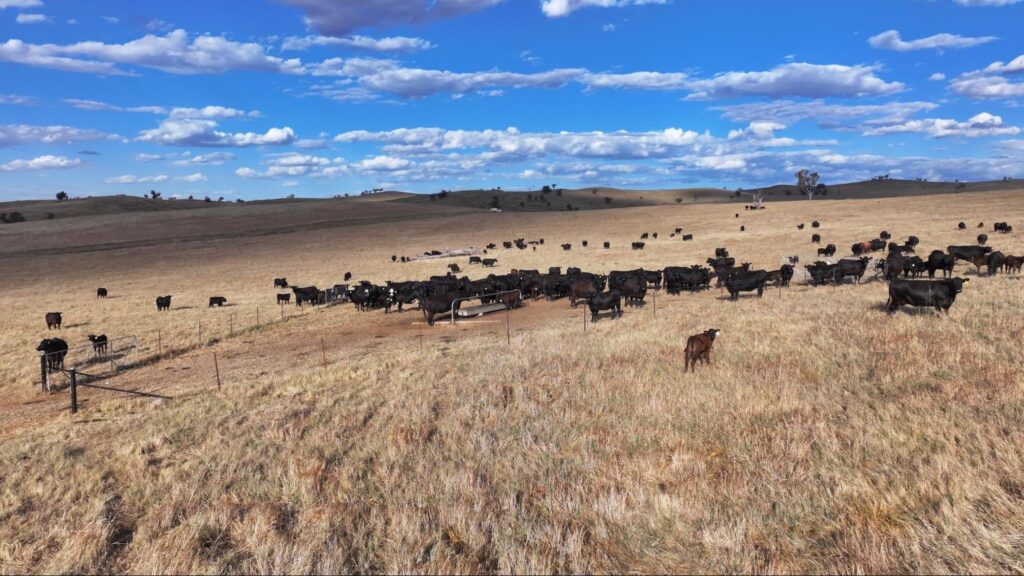
🥾 Tips from farmers: Getting started
Ben and Kim Simpson
Ben recommends getting good mentors and education when starting ‘so you know where you are at and what to improve on. You have to know your business. The majority of producers are still subsidising their business with free labour or going backwards.’
David and Ruth Read
David and Ruth Read say that it ‘took us ten years to understand how to apply the principles of regenerative grazing’. Over this time, they undertook ongoing education, which eventually shifted their focus ‘from rotation to recovery’. David attended the RCS Grazing for Profit course in 2001 and they have also been involved in RCS’s Graduate Link and Executive Link programs. David explains that ‘the RCS training was an instigator for change, taking a whole business approach helped, as did meeting people and broadening their horizons’. David and Ruth have continued to make time for ongoing learning, which has included Holistic Management, KLR Marketing, Low Stress Stock Handling and many other courses. ‘We are always searching for something else we can trial and see if it works,’ says David.
David and Ruth recommend going to people’s places to look at what they are doing and being part of a learning community with others. Ruth also suggests inviting people to come onto your own farm and hosting field days ‘because someone will ask you a question you don’t know, and you get different people’s perspectives’.
Rod and Katrina Butler
Rod and Katrina Butler started making changes after attending Holistic Management and KLR Marketing training. It was a steep learning curve and took time as they gradually learned to leave grass behind after grazing, got more confident mobbing up stock and learned to use the KLR Marketing principles. Being supported through mentoring from educator Bruce Ward helped them to stay the course.
Rod and Katrina remember the new grazing management system feeling a bit clunky for a while as they shifted their mindset away from the livestock eating everything. ‘We were focused on the animals and we had to start thinking about what the animals and plants do together. It took a while to see this relationship. You want the animals to grow, but more importantly want your grass to grow and the soil to improve,’ they explain. Katrina suggests when starting out to ‘keep in mind your vision for the landscape you want to create. Then monitor each paddock after grazing and ask: is this taking me towards where I want my land to be or not, and adjust as you go into the next paddock.’
Nick and Deanna Austin
Nick Austin was keen to do as many agricultural courses as he could when he returned home to the farm. Attending a Holistic Management course in 2001 ‘shifted a lot of paradigms’ and introduced Nick to a new way of thinking, but it was not until nine years later that Nick began to make changes on the farm. Nick says, ‘From 2001 to 2010, I was really just managing. I was trying to get through the Millennium drought and that was what cracked my mindset, I realised we had to change.’ He had reached the point where he realised he could not keep going the way he was, financially or mentally. ‘You can’t force people to change, you’ve got to get to a point where there is no other option. If you are making money and you are happy and cruising along, why would you change?’
A large barrier to changing was fear. Nick says, ‘It was a pretty isolating experience, there weren’t many people in my area who were practicing it. That great fear of the unknown, taking a multigenerational farm and sending it down the gurgler is a bit of a monkey on your back.’ Having the support of the 8 Families discussion and support group has been instrumental in helping Nick and Deanna to adopt and sustain these practices and ‘to keep moving forwards and making sure we are on the right track’.
Use grazing plans
Simply put, grazing planning involves creating a plan that outlines where and when livestock will be moved. Grazing plans are updated when conditions in the paddock and management logistics change. Many farmers aim to update their grazing plans at least twice a year, before and after each growing season.
Why plan?
A regenerative grazing plan generally aims to meet the needs of livestock, while also preventing overgrazing (and undergrazing) and giving desirable plants both the animal impact and adequate rest time needed to improve soil and landscape health and function.
Grazing plans are not intended to be rigidly followed, but instead provide a starting point that is reviewed and revised over time based on changing seasonal conditions and other factors (see Monitoring and adapting section). Creating a grazing plan supports better decision making by allowing you to see the impacts that different decisions might have in the future.
Explainer: Rest, recovery and overgrazing
Overgrazing occurs when plants are grazed while they are recovering, which is when they are using energy stored in their roots and base and produced in their remaining leaves to regrow. When plants are grazed severely and there is insufficient green leaf remaining for photosynthesis, they must draw on the energy stored in their roots to recover, slowing both leaf and root growth. These root energy reserves are replenished when the new leaves have regrown and begin to photosynthesise, but if plants are overgrazed frequently without adequate recovery time, root biomass declines, plants weaken and their numbers in a paddock reduce32J Johnson, ‘Grazing affects plant root growth’. Noble Research Institute, n.d., accessed 31 March 2026. . A severely grazed plant with 90% of the leaf removed will therefore lose more roots and recover from grazing more slowly than a plant with 40% of the leaf removed (Figure 3). The severely grazed plant then produces less forage in a given recovery period compared to one that is less severely grazed33A Savory with J Butterfield, ‘Holistic Management. A new framework for decision making.’ Island Press. 1999..
Overgrazing is linked to the amount of time animals are grazing within a paddock, rather than how many animals there are. This can happen when:
- plants are exposed to grazing animals for too many days and they graze the plant as it is trying to regrow using root energy
- animals return to a previously grazed area and regraze a plant before it has recovered from the last grazing, while it is still using energy stored in the roots and base to regrow leaves.
The growing season is when plants can be damaged from overgrazing, because it is when plants are trying to replenish their energy reserves and recover from grazing. There is less danger of overgrazing plants in the non-growing season when they are dormant.
Recovery is the process by which plants regenerate enough leaf area and root biomass to fully recover from grazing before they are grazed again. This is sometimes assessed by observing when the plants look similar to ungrazed plants nearby. Some people fence off a cage to leave an area ungrazed to give them an area to help monitor recovery.
Rest is the absence of any major physical disturbance on the environment (including livestock) and is seen as a tool to give plants enough time to recover from grazing, before they are grazed again.
Different environments and different plants respond to grazing and rest differently, so observing plants and seasonal conditions in your location is more useful than using time periods suggested by others.
Overrest is when a plant has been ungrazed for so long that dead plant material accumulates and prevents light from reaching growth points at the plant’s base, limiting new growth.
Grazing and recovery periods are always linked. Every time you shorten a grazing period, you also shorten the recovery period of all the paddocks in the rotation. This can increase the risk of overgrazing more plants. Adapting the grazing period in the growing season based on the rate of pasture growth can minimise overgrazing and optimise recovery time. There may be times, however, that grazing decisions require compromises, including grazing plants before they are fully recovered for various reasons.
🥾 Farmer example: Why plan
David and Ruth Read describe how the biggest learning process has been understanding the difference between rest and recovery. David explains that ‘rest is a period of time, for example 60 or 90 days. Recovery is when the plants have whatever time is needed to replenish themselves, give a little to the soil and regain a bit in reserves, then it’s time to be eaten again. Recovery is dictated by the plant, not the calendar. In some years it could take 400 days for recovery, in a year with a good spring this recovery time could be much shorter, around 150 days.’ They watch for signs that the pasture is ready to be grazed, aiming to see everything mature and green underneath the pasture canopy.
Understanding context and goal setting to guide decision making
There is no one-size-fits-all approach to grazing for soil and landscape regeneration. Every farm is unique, as are the vision and goals of the farmer. What works on one property is not necessarily going to work elsewhere, and sometimes something that can work well in one location can create unintended negative impacts somewhere else. For this reason, a critical part of the planning process is to consider what you want to achieve and why, taking into account the people, climate, landscape, soils and seasons, as well as the time, energy and resources available.
Doing this can help:
- develop goals to track progress towards, enabling celebration of successes and keeping everyone motivated to continue
- provide direction and focus, improve decision making and help to avoid overwhelm by giving clear goal posts against which to evaluate options (Is this option the best option to get me closer to my goals?)
- align team members so everyone is working towards the same outcomes.
👉 Find out more: Educational programs focused on context
RCS: Clarifying visions, values and goals for the business is seen as a foundation for farm managers applying the RCS principles of regenerative grazing in their location and business. The vision is the overall dream for what the farmer wants the business to look like. The values are the guide posts that help with decision making and culture to keep you on track. The goals are the meaningful steps along the way to achieving the vision.
RCS delivers a range of training programs that support farmers to apply the principles of regenerative grazing in their context.
Holistic Management: Holistic Management uses the concept of a Holistic Context34The Holistic Context is part of the Holistic Decision Making process used in Holistic Management., see: https://savory.global/introduction-to-holistic-decision-making/ accessed 31 March 2026., which involves the development of a detailed vision of the future which can include the farm business, landscape and quality of life amongst others. This vision is used as the ‘guiding light’ towards which any decisions or actions are evaluated through a series of questions (e.g. ‘Does this action address the root cause of the problem, or merely a symptom?’).
The Holistic Management Educators of Australia and New Zealand deliver training in Holistic Management. The Australian Holistic Management Cooperative supports land managers with tools and access to communities of peers.
🥾 Farmer examples: Understanding context and goal setting Our business builds family prosperity and allows freedom to live in and enjoy the present moment with family and friends. We are profitable, sustainable and resilient, with a regenerative and holistic management approach. Our business innovates, inspires and is industry leading at what we do. So that we can share our story with others, show that it can be done. So the business can be passed on to future generations, if they so choose. Nick explains that ‘the hardest thing for a lot of people is drawing up their context and putting it down on paper. It’s one of the hardest things you can do because it really is questioning everything you value, or making sure you find everything that is of value to you and your family. Once you write it down and make decisions towards it, it becomes very powerful. If you don’t have that context you’re really just making decisions to suit other people, what you think is right but not what you really, really want.’ Rod and Katrina Butler’s Holistic Context, as of August 2025: Values… We have balanced and loving connections, reflecting mutual respect and integrity. We live fun, healthy, abundant, and connected lives with those we love and care for. We are nourished by leading and inspiring others. We embrace and share knowledge to improve our world and express ourselves with confidence. We are healthy, strong, and energetic. We have a sense of belonging in our community and have fun. We have balanced relationships with family and friends and freedom to make choices and take time out to replenish and enrich ourselves. We have financial certainty and reward for our work. Vision…We are respectful, caring, engaging, loving, energetic, searching and environmentally open to embrace positivity. Interesting and interested, lively, committed, respectful, loving, generous, healthy, patient, wise and considerate. Our community is welcoming, proactive, embraces diversity, energetic, offering vibrant community activities and involvement and is biologically alive and regenerating. It builds prosperity socially, environmentally and economically. Our infrastructure is functional and organised. Our spaces are calm and tranquil, aesthetically pleasing, and complete. Our home is peaceful, relaxing, welcoming, serene, and beautiful. Our farm is prosperous, thriving, rebuilding, cared for and vibrant. There is a diversity of species, perennial grasses and other forbs that are nutritious and soil building. Our trees and bushes are growing vibrantly and reproducing, with remnant vegetation getting thicker. Our soil has a solid cover of green and growing plants with deep composting litter. Our ground is soft to walk over, hydrated, and alive with microbes and other small organisms. Wildlife is diverse, abundant, and interdependent. The animals on our land thrive and are managed carefully to sequester soil carbon and promote our vision for our land and provide an income for those managing the land. It is an example of our practices and a place to learn from and teach others. Our water and fences are fully functionable and reliable. Our sheds are purposeful and well set out. Our home environment is vibrant, healthy, and life-giving, organised, calm, tranquil and welcoming to all.
Ben and Kim Simpson
Ben and Kim Simpson’s vision, August 2025: Nick and Deanna Austin
Rod and Katrina Butler
How to plan
Before grazing planning, the first step for many graziers shifting to a regenerative approach is mobbing up, or reducing the number of mobs to make it easier to implement more frequent moves and longer recovery periods.
Many farmers create or update grazing plans twice a year, before and after each growing season, although some plan more or less often depending on when conditions in the paddock and management logistics change. This usually involves:
- Feed budgeting: Estimating feed availability and quality in order to inform planning of livestock moves
- Planning livestock moves: Planning livestock moves to meet livestock needs and other business goals while building soil health and allowing for plant recovery.
Mobbing up
Mobbing up is often the first step that farmers take when shifting towards a regenerative grazing approach. It involves reducing the number of mobs to make moving animals simpler and less labour intensive. This increases stock density, which, in combination with good grazing management, can increase nutrient cycling and reduce selective grazing pressure on desirable plants. Mobbing up also makes it easier to implement more frequent moves and longer rest periods.
Mobbing up can be started using existing paddocks and water infrastructure to the extent they are able to support larger mobs, but eventually most graziers will require changes to water, fencing and other infrastructure, such as yards. It is particularly important to avoid stretching water systems beyond their capacity (see Infrastructure section for more detail).
When breeding programs make it difficult to have animals in one mob for the whole year, animals can be combined in one mob for as long as possible and then separated as needed (see Livestock management section for more detail).
Explainer: Stock density and high intensity grazing
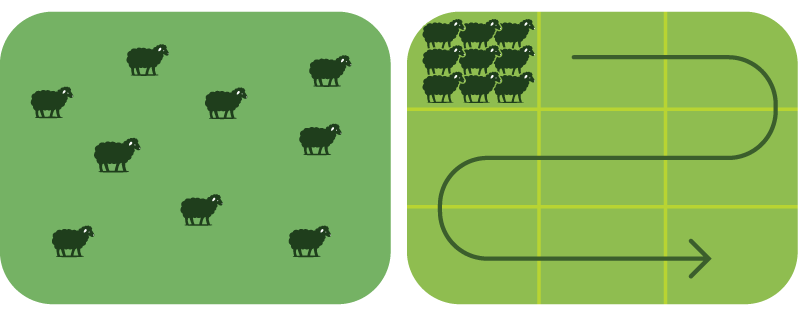
Stock density is a measure of the amount of livestock grazing an area of land at any given time. It is often expressed in terms of livestock units (LSU) per hectare or dry sheep equivalent (DSE) per hectare, but can also be calculated as head/ha or kg/ha to reflect the fact that it is the number of hooves and mouths that creates stock density. Higher stock density can be achieved by increasing animal numbers, grouping animals into a larger mob, or grazing a mob in a smaller area of land (Figure 3).
Higher stock density can be used to increase the rate of change in soils and ecosystems. Higher density can lead to more even grazing, where most of the plants in a paddock are grazed at a similar level rather than the most desirable species being grazed much harder. It can also create more animal impact within a shorter grazing period, which can increase nutrient cycling through urine and manure and assist with breaking soil surface crusts. This impact can open up pastures to allow sunlight in and incorporate organic material into the soil through trampling.
Stock density is an important grazing management tool, but its impacts can be positive or negative depending on how it is applied. With good planning, short duration, high density grazing can speed up land improvement by increasing these animal impacts. This can lead to improved pasture diversity and soil health. But in other conditions, or if poorly executed, it can cause damage to land and animals.35 A Savory, ‘Holistic Management Handbook’, Island Press, 2006. Grazing plans should aim to achieve optimal stock density and animal impact to fit the unique circumstances of each farm.
Figure 3. Comparison of stocking rate and stock density. Source: Judi Earl, AIMS Agricultural Information and Monitoring Services.36 L Kahn and J Earl, ‘ Grazing Management Fact Sheet 4. Stocking rate, stock density & using DSE values to estimate pasture intake’ Agricultural Information and Monitoring Services, 2009, accessed 31 March 2026.
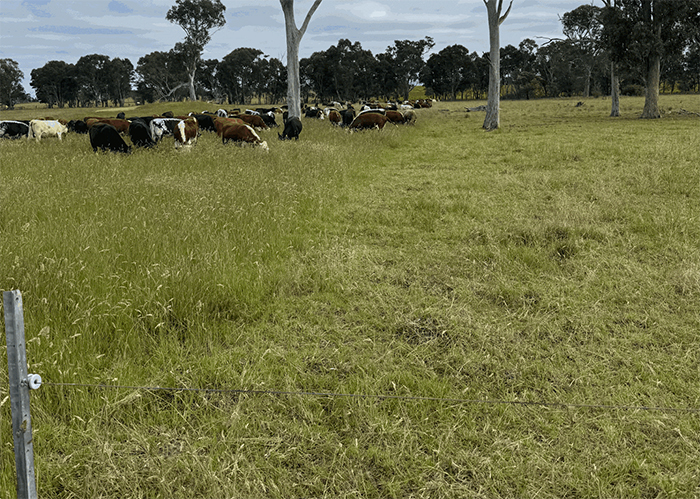
🥾 Farmer examples: How to plan Mobbing up cattle means it takes Ben much less time and labour to process cattle at weaning and pregnancy testing. It used to take up to eight weeks to bring in all of the mobs using bikes. Now they are able to use a chopper to muster the larger paddock areas and bring cattle into the yards, which can now be completed within one day, with a further one or two days for processing. In the area of the property with subdivided paddocks, cattle are moved easily by opening the gates up and doing a quick check on bikes the next morning to pick up stragglers. Image 11. David and Ruth Read’s cattle strip grazing at Woodcote. Source: David and Ruth Read.
Ben and Kim Simpson
David and Ruth Read
David, Robbie and Sophie Curtis
Rod and Katrina Butler
Feed budgeting
Feed budgeting (also sometimes referred to as ‘pasture budgeting’ or ‘grass budgeting’) is usually the first step in grazing planning. It involves estimating the quantity and quality of feed across all paddocks and calculating how much feed the animals will require in order to match feed supply with animal demand and stocking rate with carrying capacity. Feed budgeting is often done at the end of the growing season in order to inform the next grazing plan.
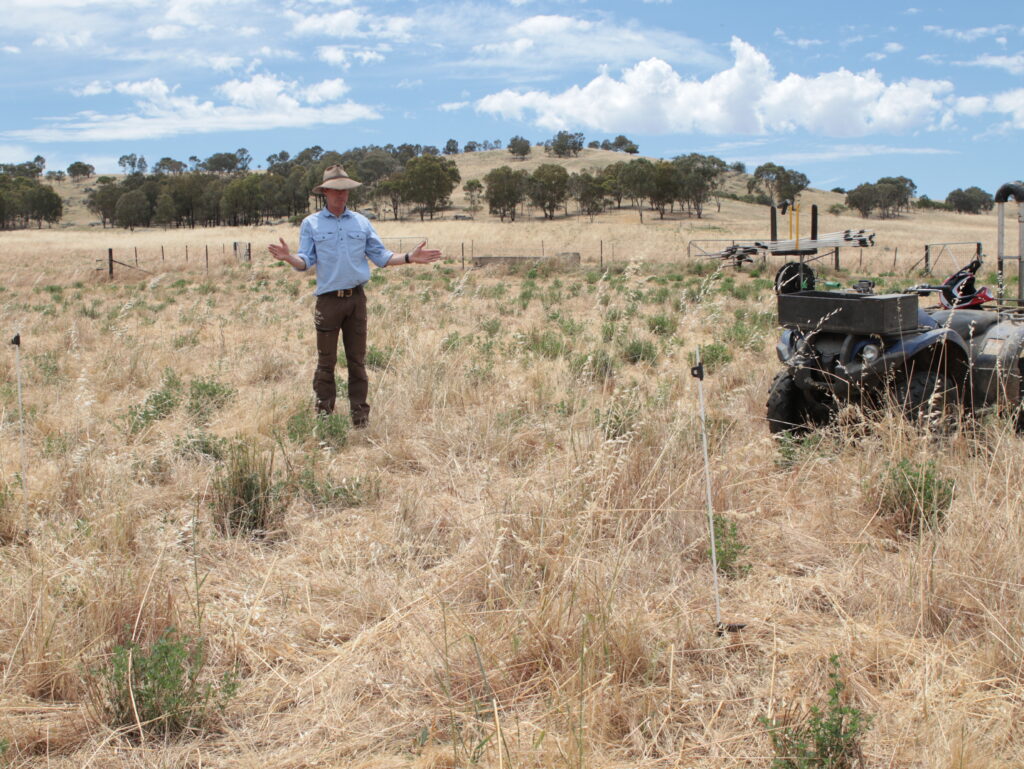
There are many methods for feed budgeting. While there are increasing numbers of technology-enabled tools (see here for some commonly used tools), perhaps the simplest method is ‘stepping out the square’, where the area required to feed one LSU or DSE per day is estimated and converted to stock days per hectare (SDH) or DSE days per hectare (DDH).37David McLean, ‘Time for feed budgeting’, RCS Toolkit Series, accessed 31 March 2026. Some farmers use grazing charts to record feed estimates, some use technology tools and some work by eye, informed by previous experience.
👉 Find out more about commonly used tools to support grazing planning, including grazing charts, spreadsheets, computer software and phone apps.
- AIMS Grazing tools, including pasture checklists, pasture checklist calculator, grazing plan calculator
- RCS Grazing charts for recording livestock, rainfall and grazing data to plan your grazing
- Downloadable Savory Grazing chart
- Atlas Grazing grazing management software
- AgriWebb livestock management software
- AgCommander farm management software
🥾 Farmer examples: Feed budgeting
Ben Simpson
Ben Simpson does a feed budget on each paddock at the end of the growing season to work out how much grass is there for the non-growing season. Ben started by cutting 50 cm x 50 cm quadrants and drying and weighing grass, but with practice he now simply estimates what the livestock have taken out and compares this to what is left by eye. ‘After you do this a few times you get better at it,’ Ben explains.
David, Robbie and Sophie Curtis
David Curtis’ approach combines observation with understanding the specific needs of the livestock and matching these needs to the best paddock, while also managing barber’s pole worms. David aims to keep ‘100% ground cover, 100% of the time’. He explains that ‘I don’t get too hung up. I know some courses want you to keep the grass within a certain grass stage but I think anything above ground is great, especially heading into winter. I don’t want grass chewed down to the height of a beer can, I find that the taller the grass is, the less the ground is affected by wind and the more protection there is for the multispecies plantings.’
Nick and Deanna Austin
Nick Austin does pasture assessments38 The terms ‘feed’ and ‘pasture’ are used interchangeably throughout this document. during both the growing and non-growing seasons so he knows how much feed is on hand. Nick uses the Atlas Grazing app to get an indication of how long this feed will last in the current conditions. He explains, ‘It is really helpful throughout the year to go out and calculate the feed on hand for every paddock to make sure you have enough grass on hand for the animals you want to run, whether it’s for 3 months, 6 months or 12 months.’
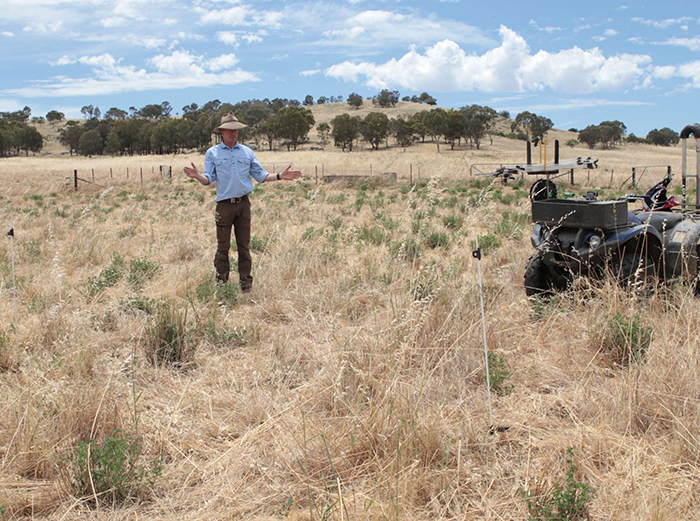
Image 12. Nick Austin demonstrating how to step out a square for feed budgeting. Source: Grow Love Project.
Rod and Katrina Butler
Rod and Katrina Butler create a feed budget by estimating how much feed one sheep will eat for one day and calculating the area of land needed to supply this. To do this, they measure out a square by placing an object in an area that is representative of the rest of the paddock, then they each step away from the object on the diagonal until they feel comfortable that there is enough feed in the area between these points to feed one sheep for one day. They then go home to do the sums. Katrina explains that they budget based on utilising one third of the feed on offer, ‘not the feed that you guess will grow’. Katrina says that this skill is built by practice over time, and that ‘ground truthing the results by monitoring after you have been through paddocks helps you see if you are accurate, which is just as important as the initial assessments’.
Planning livestock moves to allow for plant recovery
Grazing plans outline when and where livestock will be moved to meet livestock needs and other business goals, while also building soil and plant health. Grazing plans need to take into account many variables, but the key consideration in a regenerative grazing approach is achieving the desired level of animal impact and allowing enough time between grazes to enable plant recovery (see Rest, recovery and overgrazing explainer).
Grazing plans should be updated when conditions in the paddock and management logistics change. Many farmers aim to update their grazing plans at least twice a year, before and after each growing season.
During the growing season, grazing plans tend to focus on maximising forage production by allowing sufficient recovery periods. In general, the faster the growth, the shorter the recovery time required, and the slower the growth, the longer the recovery time. Once growth slows, a grazing plan is made for the non-growing season.
During the non-growing season, grazing plans need to ration the forage grown during the previous growing season, while also returning any old, standing forage to the ground through animal impact (where it can be incorporated) and enhancing mineral cycling. Grazing plans for the non-growing season are made by assessing the forage available and, where required, adjusting the stocking rate to match the forage on offer. Most non-growing season grazing plans have a defined end date, which is often one month (or, depending on the context, sometimes much longer) after the estimated time of year when growth is expected to begin again, which ensures there is a buffer factored in in case of a late start or drought.39A Savory, ‘Holistic Management Handbook’, Island Press, 2006.
There are many paper-based and technology-enabled tools to support grazing planning (see Commonly used tools and resources section).
💡 Tips and Tricks: Grazing planning rules of thumb
While every grazing plan will be different, many graziers develop their own rules of thumb, especially early on, in order to reduce complexity and provide a starting point that can be adjusted based on observation and data. It’s very important to remember that rules of thumb should not be used as hard-and-fast rules or ‘set and forget’ strategies, and that what works for one farmer in their context won’t necessarily work in yours.
Days of rest:
- Ben Simpson’s starting point is to rest his cell grazed paddocks for 60 days during the wet growing season, and once the growing season ends, these paddocks get a 90–120 day rest. This rule of thumb is constantly being adjusted by Ben.
- Nick Austin has a rule of thumb of 100 days of recovery between grazing, which is based on observation and working out what he felt was right for the plants and the soil. This is adjusted each year depending on conditions.
Number of grazes:
- Ben Simpson aims for the stock to never graze a paddock more than twice through the non-growing season.
Frequency of moves:
- In his rotationally grazed area, Ben Simpson tends to find that weekly moves through 1,000 ha paddocks works during the growing seasons, slowing to three to four weekly moves during the non-growing season.
How much to leave behind:
- Ben Simpson aims to leave behind approximately 30% of the total forage in a paddock after grazing, with Mitchell grass (Astrebla spp.) at least 150 mm high.
- Rod and Katrina Butler budget this for using one third of the feed on offer, not the feed that they guess will grow.
🥾 Farmer examples: Planning livestock moves to allow for plant recovery
Ben Simpson
Ben Simpson enters the data from his feed budgets into a grazing chart so he can see ‘stock flow, grass demand and when the grass will run out’. Using a grazing plan calculator spreadsheet, he puts in how many stock days per hectare are in each paddock, the paddock size and the desired rest period. The calculator then indicates how often he needs to move livestock.
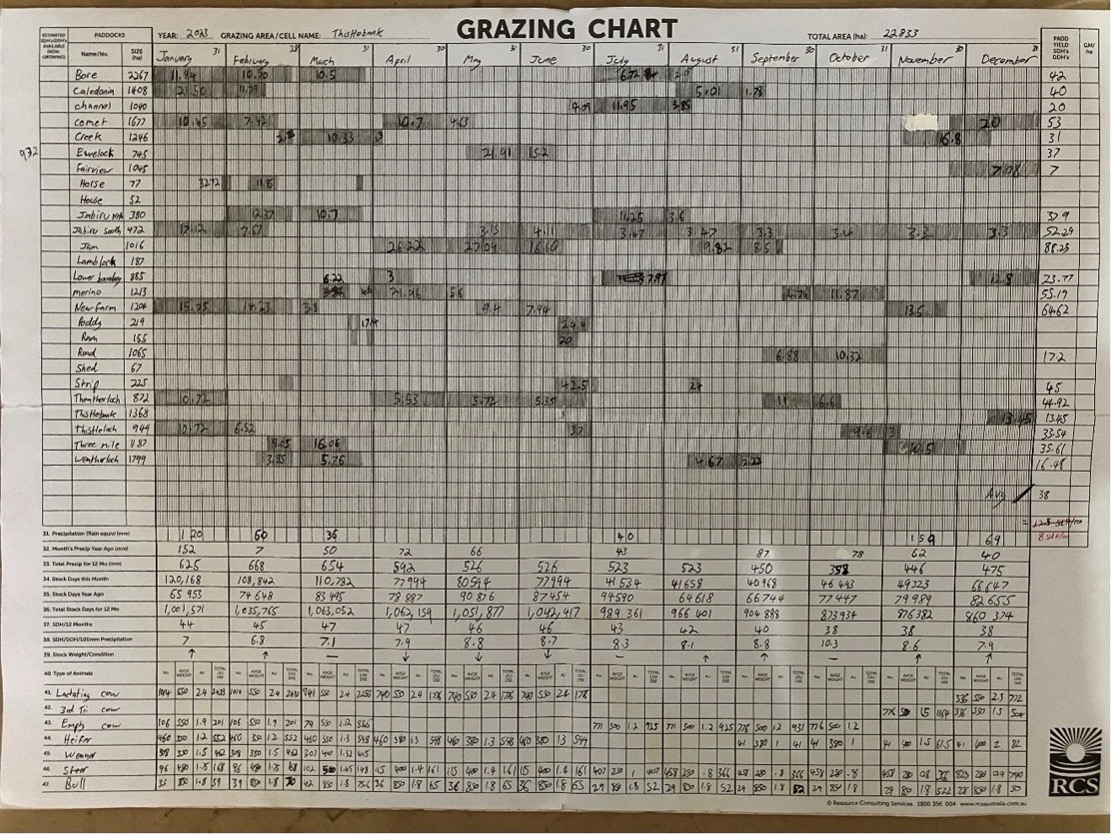
Image 13. Ben Simpson’s 2023 grazing chart. Each large column is a five day period and the shaded areas indicate the time that stock is in the paddock. Paddock numbers and sizes for each row are listed on the left hand side. Rolling rainfall and stock days for the last 12 months are recorded on the bottom of the chart. Source: Ben Simpson.
Given the scale of Ben’s property, at the moment he doesn’t see intensive management across the whole area as feasible. At this stage, he is implementing more intensive cell grazing 40 Cell grazing is where large mobs are moved through a greater number of smaller paddocks for shorter periods to get high stock density and increase grazing impact. See: https://www.maiagrazing.com/blog/grazing-strategies on 6,000 ha and managing the remaining 16,800 ha of pasture in a less intensive rotational approach.41 Rotational grazing is where stock is rotated around paddocks to allow rest and regrowth. See: https://www.maiagrazing.com/blog/grazing-strategies
The cell grazing has more grazing impact and higher stock density. In the cell grazed area, Ben matches the grazing and rest periods to the grass growth. During the growing season, which is usually from December to March, the cell grazing rotations speed up. Paddocks in this area average 250 ha in size and get around 60 days of rest during the growing season. In a short growing season, the stock may get through the cell grazed paddocks only once. When the growing season is longer, they can get through them twice. Once the growing season ends, the rotation slows down and paddocks get around 90 to 120 days of rest from grazing. Ben aims for the stock to only graze a paddock twice through the dry season.
In the 16,800 ha rotational grazing area of the property, Ben rotationally grazes and often moves livestock by the calendar, as he finds the large paddock sizes and scale, along with limited access due to flooded creeks, make it harder to implement a more adaptive approach. Over the last two years, the cattle have moved weekly through 1,000 ha paddocks during the growing seasons, slowing down to three to four weekly moves in the non-growing season. Ben is planning to improve access and paddock subdivisions in this area, which will enable him to move the cattle every two to three days in the growing season and weekly in the non-growing season and allow for longer rest periods.
David and Ruth Read
David and Ruth Read update their grazing chart every month to stay up to date with rolling annual rainfall and carrying capacity trends. Daily mob moves are recorded into farm record keeping software Ag Commander.42 Ag Commander is a farm record keeping software. See: https://www.agcommander.com/ They continually adapt as they compare the information in their grazing plan with what they see actually happening in the paddock. ‘We are constantly considering where the animals will go next, where the best grass is, and what’s going to be the most balanced feed that we can get the most out of and let the other paddocks fully recover to be ready for grazing,’ says David. David and Ruth incorporate the Grazing Naturally43 Grazing Naturally is a grazing system developed by Dick Richardson. See: https://www.naturesequity.com.au/?srsltid=AfmBOorDXakQq1uPDoGEUeal8DdcV0mrZn4WIQ3mo2bQhzp7U9Fm5KEn approach of dividing the property into seven, and leaving one seventh each year for an approximately one year long recovery period in order to allow different ecological processes to take place, building soil and landscape health.
David and Ruth set a target stocking rate of 66% of their carrying capacity to give them time to respond when conditions change. This buffer allows them to finish the animals for sale rather than sell stock because they have run out of feed. ‘We like to keep our stocking rate below carrying capacity so we have flexibility and reactive time,’ says Ruth.
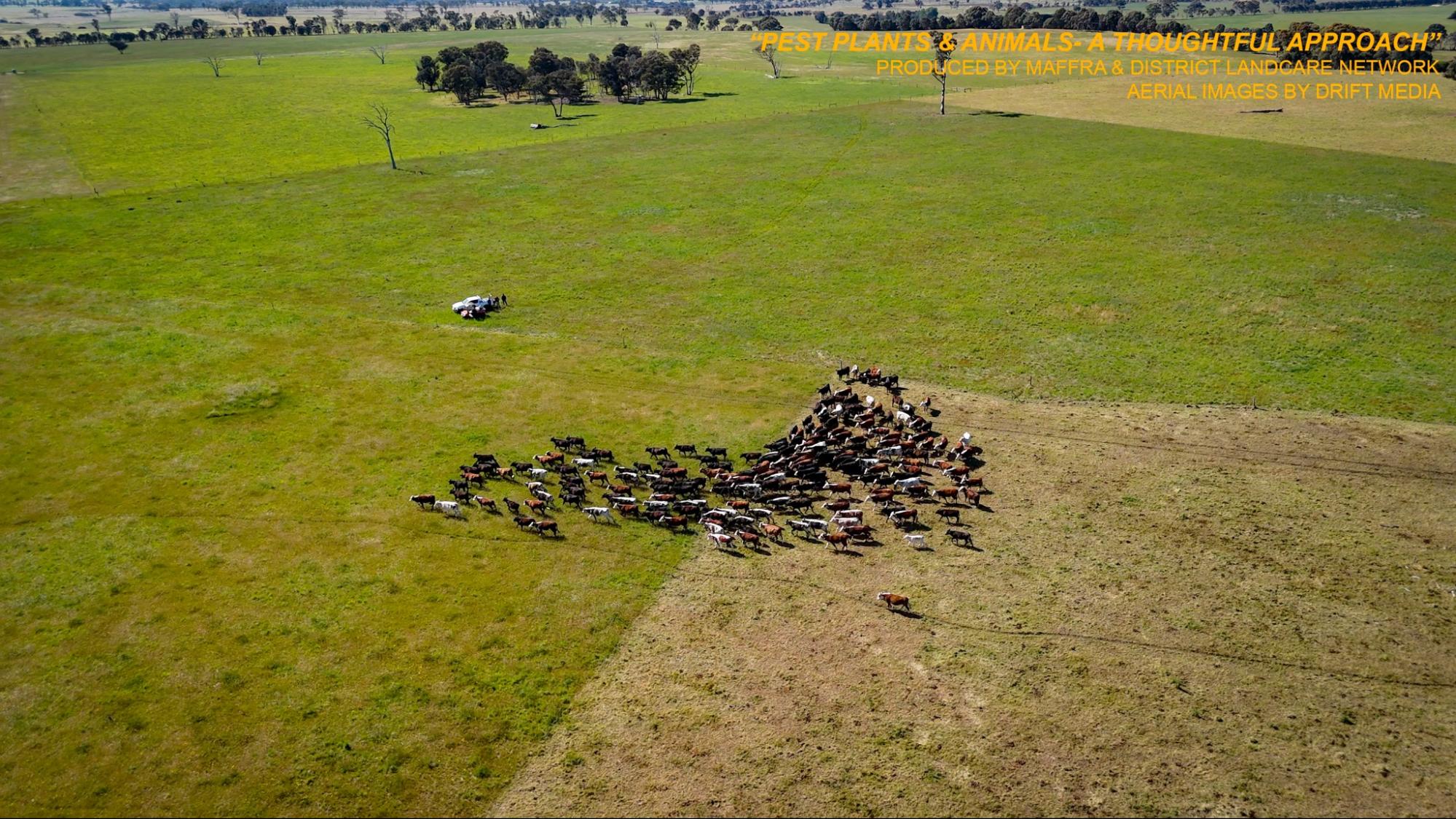
Image 14. Cattle moving paddocks underneath the solar-powered automatic poly wire lifter at David and Ruth Read’s, showing the impact made by grazing and the recovery in the paddock before being regrazed. Source: Michael Green, Drift Media.
David, Ruth and Sophie Curtis
David Curtis aims to keep 100% of the ground cover, 100% of the time. He moves the sheep regularly through 70 paddocks, each of which are 40 ha in size. In the summer growing season this may speed up and then slow down again as pasture growth slows in winter.
Nick and Deanna Austin
Nick and Deanna Austin use grazing charts for planning and as a recording system. ‘The grazing chart is the plan for the season ahead, showing where the cattle will be on a certain date, which paddocks you don’t want to graze, and you can include holidays and events as well,’ Nick explains. ‘It helps you see where you have had the livestock at certain times of the year so you are not coming back to the same place at the same time of year. But the plan always changes. If you start moving cattle faster than you expected, it is a tap on the shoulder to make a change.’
Nick also uses Atlas Grazing in combination with his written grazing charts to monitor pasture budgets. Atlas Grazing predicts how long the grass will last with the current amount of stock, estimating the property’s carrying capacity for the season ahead. The grazing chart outlines the planned livestock moves, and if Nick needs to move the cattle faster than the plan, then this is an early warning sign that the predicted carrying capacity may be too high and adjustments to the plan may be necessary.
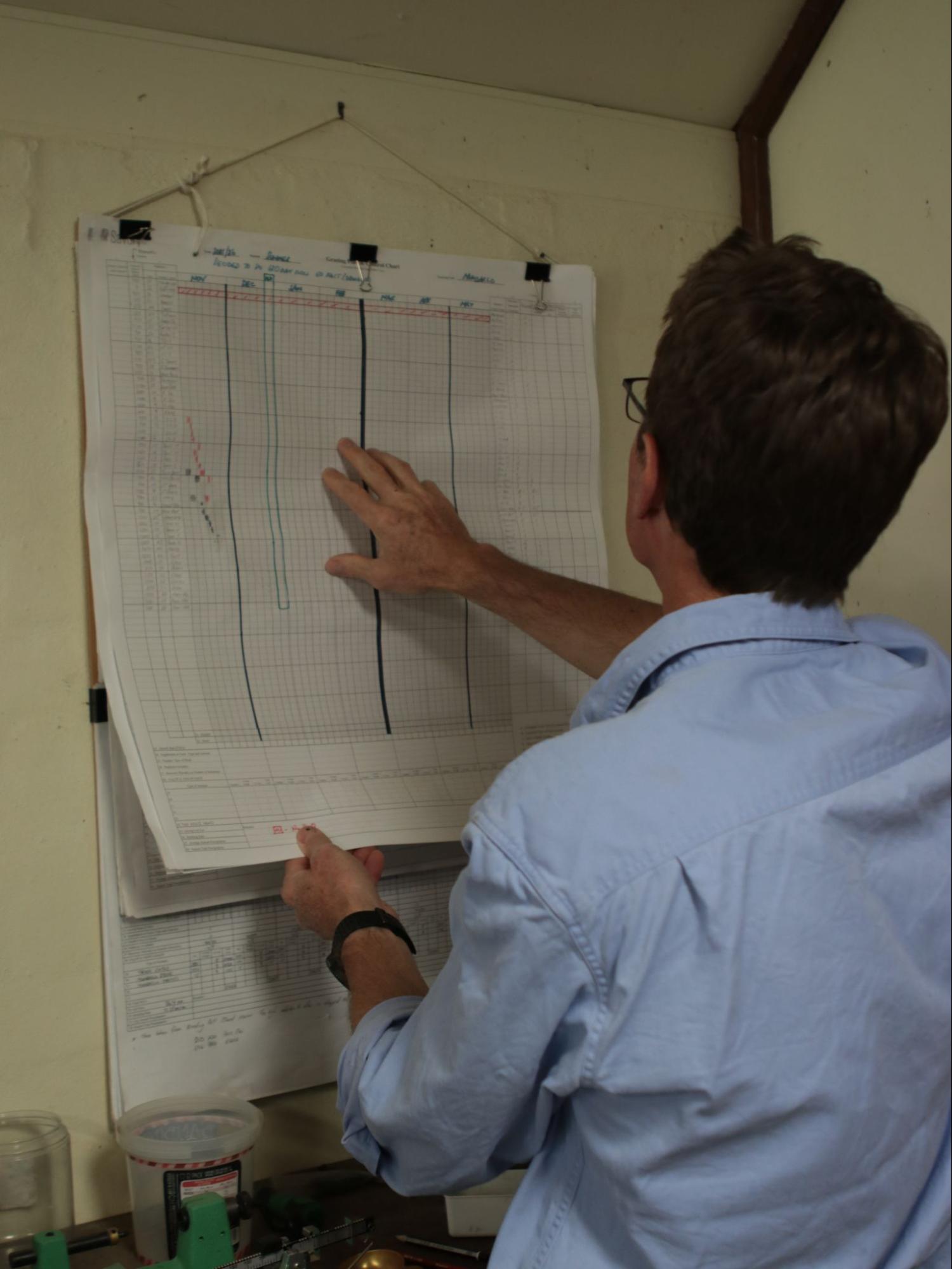
Image 15. Nick Austin’s grazing chart. Source: Grow Love Project.
Rod and Katrina Butler
Rod and Katrina Butler use their handwritten grazing chart as a valuable planning tool. They suggest to ‘put a lot on there, look at how things make sense for you, and keep it flexible’.
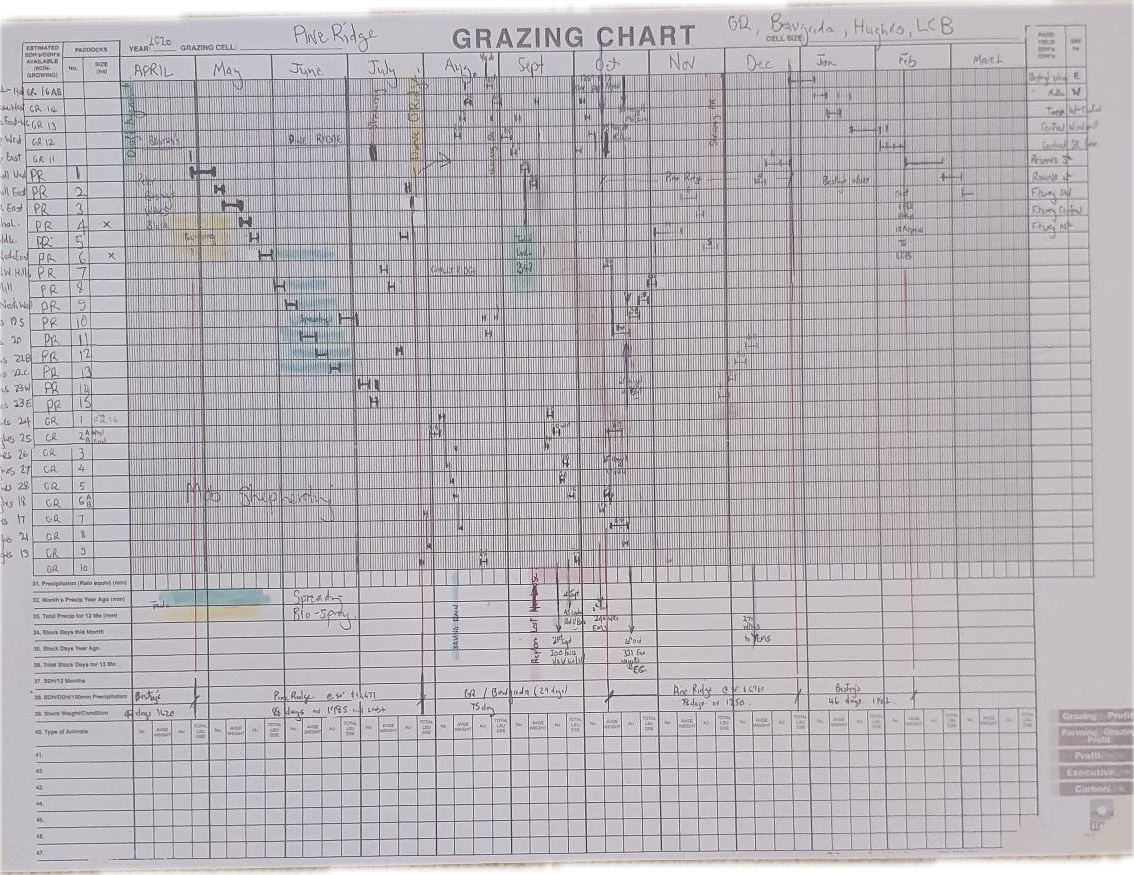
Image 16. Rod and Katrina Butler’s grazing chart. Source: Rod and Katrina Butler.
Other factors to consider in the development of a grazing plan may include:
- Trading versus breeding stock: accommodating joining periods for breeding stock and utilising trading stock to provide flexibility to change herd numbers in response to seasonal conditions
- Breaking parasite lifecycles: designing rest periods long enough to prevent reproduction of problem parasites44Paraboss, ‘Grazing management as a tool for worm control’, 2022, accessed 31 March 2026.
- Labour availability: ensuring staffing is available to move animals when required, noting that while more frequent moves do need resourcing, many graziers working this way find that planning and larger mob sizes actually result in lower overall labour requirements
- Lifestyle factors: planning around holidays.
🥾 Farmer examples
Combining cattle breeding and livestock trading for seasonal adaptability: Ben and Kim Simpson & Nick and Deanna Austin
Ben and Kim Simpson were running a 1,100 head breeding cow herd before they changed their grazing management. Now they run 500 breeding cows and 1,600 trading cattle. Trading cattle give them more flexibility to adjust stocking rates according to seasonal conditions.
The breeding cows run in the rotational grazing area. At calving in December and January, the cows go into two paddocks opened up into one larger paddock so they don’t have to move during calving. When Ben first tried moving the cows and calves he found it didn’t work well at the start, so they adjusted the method to work for them and their infrastructure. ‘The cattle were not used to moving and the paddock design with troughs in the centre of paddocks was also a problem,’ explains Ben. ‘The cattle naturally gravitate to the trough for water when moving and having water so far away in the new paddock led to more mismothering of calves and we were more likely to miss cattle in the scrub when mustering.’ After calving, when the cattle start rotating through the paddocks again, Ben moves the rotation in the direction of the cattle yards to get the cattle in for branding. Then they are moved out into a shorter loop so they are close to the yards for weaning and pregnancy testing. The rotation then loops out further from the yards for the rest of the year.
Nick and Deanna Austin have a blend of breeding cattle and trading livestock, which combines the flexibility of trading and the consistency of a breeding herd.
At the beginning, Nick worked with the late educator Bruce Ward to simplify the grazing system, allocating each herd its own area on the farm. They ran the breeding cows on the hilly country and the trading herd on the better country, as this was more suitable for growing cattle. Nick sold the breeding herd in a dry period in 2017 and was left with the weaners and trading stock.
Nick has now changed from running the trading and breeding herds through two separate areas to a leader-follower system, which allows a longer paddock recovery once all the animals have moved through. Nick keeps the breeders in one mob all year round, taking out the steers at weaning to go into the trading mob. The breeding herd follows the trade herd, as the breeders can utilise feed that might not be suitable for the trading herd. Ideally the breeding herd would be one day behind the trading herd, but some paddocks have one trough that supplies four subdivision paddocks, so Nick keeps a few paddocks between them to avoid having them all watering on the same trough. During joining, keeping a few paddocks between mobs also helps to keep bulls out of the trade mob. The trade mob runs about 12 days in front of the breeding mob.
Although Nick acknowledges that this creates a risk of overgrazing some plants that may already have begun to regrow, he sees this as a management compromise that makes it easier to bring the trade mob in to weigh and draft on his own, and it helps to keep bulls away from trade heifers. He also skips paddocks when necessary to get more recovery. Nick says, ‘Chasing perfection means you never get anything done,’ but being EOV accredited reassures him that the country is regenerating. In the future as he continues to develop fencing, he may be able to draft in the paddock by setting up a drafting yard in water pounds and use Optiweigh technology 45 Optiweigh technology makes it possible to measure animal weights in the paddock. See: https://www.optiweigh.com.au/ to weigh cattle in the paddock.
When the cows are calving, the rotation does not slow down, but when Nick opens the gates to let them into the new paddock he leaves the gate open so that if a cow or calf stays behind, they have time to come through. Nick tags the calves at birth so he can find the mother if needed. Having all the cows in one mob makes this process quicker.
Being flexible and supporting lifestyle: David and Ruth Read
David and Ruth Read operate a beef cattle trading operation for flexibility. David explains, ‘Grazing management was a challenge when we had breeders. They were either pregnant or about to lamb or calve, so we couldn’t react quickly enough and overgrazed the paddocks. Then we had to put them in stock containment areas and feed them.’
David and Ruth manage their strip grazing subdivisions daily when they are home, and when they go away they leave the stock in a larger area and reset again when they return. ‘We are flexible because we want to do other things than just be a slave to the grazing management. One of the flexibilities is that you don’t have to do it all the time, even though the more you do it the better. We get 40% better utilisation when we manage the grazing,’ says David, ‘It has to regenerate the landscape, but it also has to regenerate us as well.’
Managing stud sheep: David, Ruth and Sophie Curtis
David Curtis finds that grazing stud sheep adds complexity to his grazing planning because at times, he needs to split up his mob into several smaller ones for joining and lambing. David uses pregnancy scanning to split mobs depending on whether they are single or twins to prioritise feed for the ewes with twins, while ewes with single lambs get the drier grass paddocks. Smaller mobs at lambing increase lamb survival for twins. David explains, ‘For lambing it is important to have more access to water, with water points spread out and paddocks that have trees for privacy.’ Planning tight joinings of 35 days means that the lambs are born within a month. As soon as possible after lambing, the sheep are put back into one big mob to allow paddocks to be rested and keep the sheep moving around.
When the ewes are lambing, David moves the sheep by leaving the gate open and allowing them to move out at their own pace without any rush, being careful to go back and check that none are left behind. The lambs establish a strong bond with their mothers within 48 hours and they are okay to move.
Shifting enterprise type to meet business and landscape goals: Rod and Katrina Butler
Rod and Katrina Butler changed from organic certified grain, lamb and free-range pigs to focus on trading sheep when they implemented regenerative grazing practices. Trading sheep fits well with their goal to improve the health of the land. Rod and Katrina have found that ‘running livestock as one mob has made their farm so much easier to manage’.
💡 Tips and Tricks: ‘Keeping the paddocks guessing’
Agroecologist Nicole Masters uses the phrase ‘keep the paddocks guessing’ to remind farmers to be alert to when they’re getting into a repeated pattern of management. According to Nicole, problems will tend to arise when a paddock is exposed to the same management practices over and over again. The same concept can be applied to livestock, so it is important to mix things up to avoid them getting too used to a single pattern.
Nick Austin likes to do something different every year to avoid falling into a predictable system. ‘Maybe every year you skip a paddock, or a few paddocks and use your grazing chart to work out which ones to skip,’ says Nick. At the moment Nick is running a trade mob around small paddocks to open up a phalaris (Phalaris spp.) monoculture and provide an opportunity for other plants to grow before he gives these paddocks a long recovery. ‘It’s so easy to fall into a system, but if you start repeating things at the same time every year, you can fall into the same trap as a set stocker.’ Keeping good records using a combination of grazing charts and the Atlas Grazing platform helps Nick work out grazing and recovery times and ensure he is not falling into doing the same thing each year.
David and Ruth Read like to ‘add a bit of chaos’. Ruth says, ‘As humans we like structure and so we can get repetitive with our grazing plans. Imagine the wagon wheel is a pizza, we don’t eat all the slices. We did at one point in time until someone said “where do all the insects, birds and lizards go?” So we do a mosaic and we will go to different areas so there are different levels of grass and species in each area. For ease of movement they might be diagonally opposite the water. We wouldn’t eat more than half of the paddocks around a water point before we move to a different area on the farm’. David and Ruth also leave one seventh of the property out of the grazing rotation for a long, approximately one year recovery period.
Rod and Katrina Butler embrace change as an overarching principle to prevent them from creating patterns with their grazing. They explain that grazing a paddock at the same time each year promotes the same grasses and plants, so changing that pattern helps encourage diversity.
Monitor and adapt grazing decisions as conditions change
Grazing plans are just a starting point. Regenerative grazing approaches involve constant monitoring, and using this monitoring information to adjust plans in a way that reflects changing conditions.
Commonly, graziers will monitor:
- Feed on offer, feed utilisation and plant recovery
- Soil surface, ground cover and compaction
- Animal behaviour, gut fill and manure.
Based on these observations, a range of adjustments can be made to ensure animals’ needs are met, soil and landscape goals are achieved and plant recovery time is provided. These can include:
- Changing the timing of grazing and rest periods
- Adjusting stocking rate up or down to match carrying capacity
- Changing paddock sizing with temporary wire to adjust livestock density
- Adjusting desired goals and pasture residuals from upcoming grazes
- Changing animal classes in the mob.
How often monitoring occurs can depend on your situation. Many graziers observe livestock performance and grazing impact when livestock are moved and aim for monthly updates to feed budgets and grazing charts to keep grazing plans on track.
The complexity of managing a grazing business in the context of constantly changing conditions means there are no perfect grazing decisions and often compromises need to be made. Using monitoring data to make informed decisions helps to make the best possible plan with the information you have at the time.
Feed on offer, feed utilisation and plant recovery
In the non-growing season, feed utilisation is monitored by estimating how much feed is left after grazing in a similar way to how estimates are made when the grazing plan is created (see Use grazing plans section). These estimates are used to update the feed budget to ensure you don’t run out of feed.
In the growing season, the grazing impact, growth, recovery and availability of the desirable and palatable species are monitored, along with pasture growth rates. This usually involves visually assessing how far down plants have been grazed along with the percentage of the available feed that is left behind, and assessing whether planned recovery times are appropriate to minimise the risk of overgrazing plants. Some farmers create grazing enclosures or cages that keep stock out of a small, representative area as a comparison to help estimate feed utilisation and pasture growth rate.
🥾 Farmer examples: Monitor and adapt grazing decisions as conditions change
Ben Simpson
Ben Simpson double checks feed estimates visually every time he moves the cattle, focusing on the growth, recovery and availability of palatable plants, which in his environment include Mitchell grass (Astrebla spp.), Queensland bluegrass (Dichanthium sericeum) and Flinders grass (Iseilema spp.), and any legumes and forbs. He then updates his grazing plan calculator and the stocking rate carrying capacity spreadsheets monthly so he can use this data to make decisions. He also does monthly updates and reconciliations to the financials and puts these into the FarmEye platform, which analyses stock flows and financials to provide business data including financial ratios, stocking rates and cost of production. Ben has found that ‘the first few times you may be out but you keep doing it and get better at it’. Ben uses this information for enterprise analysis so he can see whether trading cattle or breeding cattle is more profitable, find ways to improve profitability and watch trends over time so he can pick up issues early.
David and Ruth Read
David and Ruth Read constantly adapt their grazing approach to their changing context. ‘Every year is different in terms of the grazing and rainfall and what happens with the season, so we have to be adaptive,’ says Ruth. David and Ruth make daily observations as they walk the paddocks to wind up and put up electric fences for strip grazing. They adjust paddock sizes based on their observations of remaining pasture, dung scores and gut fill (see Animal behaviour, gut fill and manure section). They know they have grazed too far down if there are damaged plants and bare ground left behind. David and Ruth plan their grazing at least three months in advance so they can be confident that every animal arrives with at least three months feed ahead of them, and review their grazing plans at least monthly.
Rod and Katrina Butler
Rod and Katrina Butler continually monitor and adapt their grazing plan. ‘It is easy to do a check on five to six paddocks to see if you are happy with the effect of the grazing, and see how much feed was eaten compared with what you expected so you can adjust the pace of moves for the rest of the grazing plan,’ Katrina explains. ‘It’s hard to get your head around how much to leave behind to start with. That is where the monitoring comes into it, so its monitor, monitor, monitor, observe what’s happening. Are you happy with this much left behind? Go back and have another look at your grazing plan, it’s all done in pencil so you can rub it out and do it again so that’s fine. It’s worth the work of rubbing it out and doing it again rather than the heartache of another 12 months until you get the opportunity to leave cover on the ground again. A couple of hours of work in rubbing it out and doing the grazing plan again is nothing.
Nick and Deanna Austin
Nick Austin bases his grazing decisions around allowing the most desirable plant species that he wants to encourage in the paddocks to be fully recovered before he moves the cattle back in. Describing his approach to assessing recovery of desirable plants as follows, Nick explains, ‘Ideally a mature plant that has recovered from grazing will be showing no signs of the previous graze, and will have at least five tillers with leaves and enough plant matter that the leaf will hit the ground and stay on the ground when walked on.’ Nick moves the cattle more quickly when the grass is growing faster than expected.
Soil surface, ground cover, compaction
The earliest changes to land health tend to occur at or near the soil surface. These can include changes in plant spacing, soil litter cover, soil density, soil aeration, soil organic content, insect activity, seedling establishment and quality of water run off 46 A Savory, ‘Holistic Management Handbook’, Island Press, 2006.. Monitoring changes at or near the soil surface often involves assessments that can be made easily in the paddock, using simple tools like a shovel and water infiltration ring.
🥾 Farmer examples: Soil surface, ground cover, compaction
David and Ruth Read
David and Ruth Read observe ground cover daily. ’We feel our soil a lot as we are always putting electric fence posts out, which makes you look and think and feel the country a bit better,’ says David. They also capture brix readings regularly to see what sugars are in the plants, which can give an indication of how effectively the plant is photosynthesising.
David, Robbie and Sophie Curtis
David, Robbie and Sophie Curtis do regular paddock tours, where they take brix readings and dig with the shovel to see what is happening under the ground, observing plant root systems and looking for earthworms.
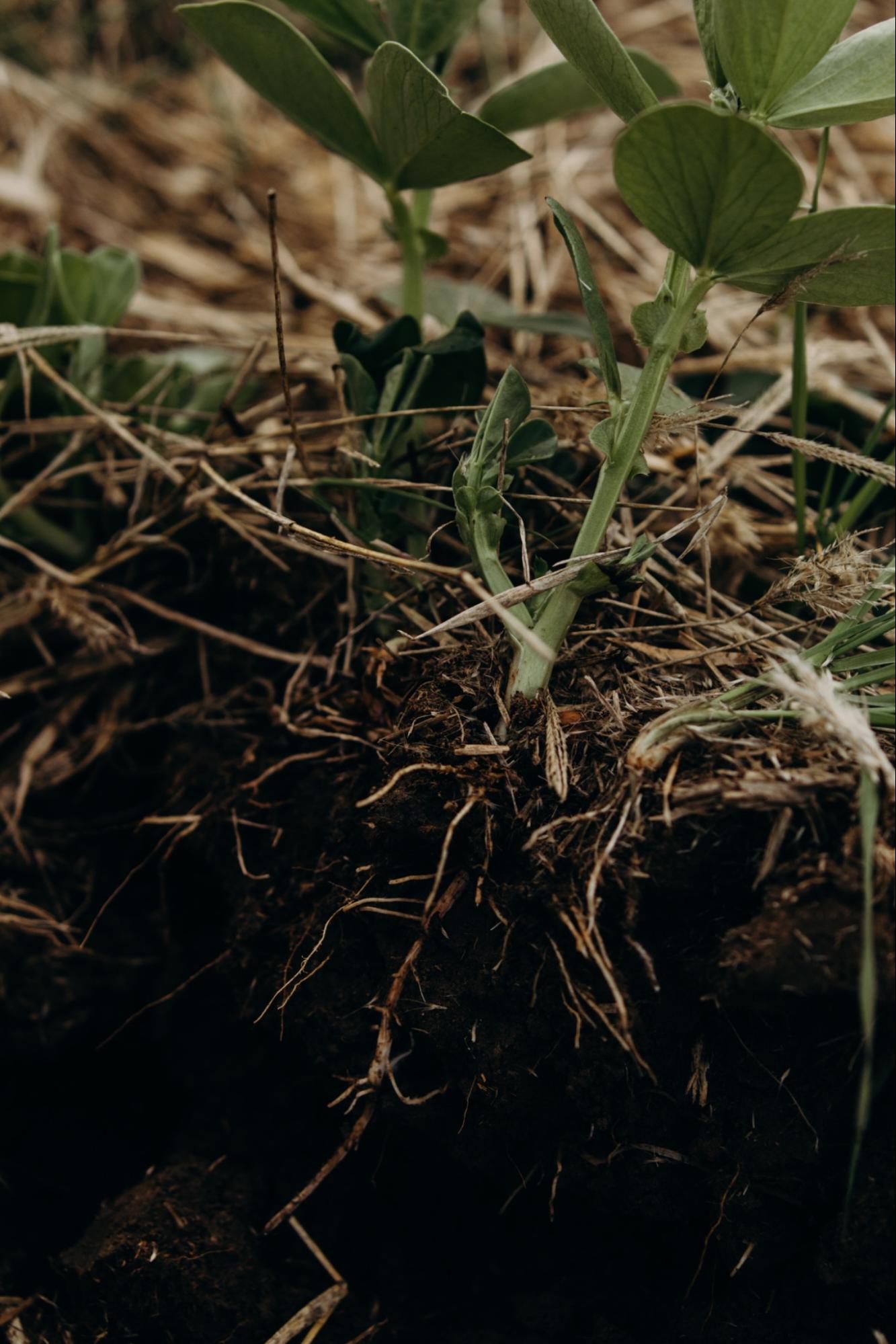
Image 17. Digging a hole to inspect plant root systems at Bellevue. Source: Sophie Curtis.
👉 Find out more
Check out Soils for Life’s soil health monitoring resources to find out more about how to monitor soil health and function.
Animal behaviour, gut fill and manure
Monitoring livestock condition and performance regularly is essential. Many graziers monitor gut fill, which can indicate whether livestock are getting enough to eat and if there is a good match between the rumen condition and the feed available. Gut fill on cattle is observed by checking the left hand side of the animal between the last rib, the spine and the hip bone, noting that there can be quite a lot of variability between individual animals. Generally when this area appears sunken it indicates low gut fill. It is more difficult to observe gut fill in sheep and may only be possible for a couple of months after shearing due to their fleece.
Manure scores are obtained by observing fresh dung and scoring it according to its appearance. This indicates how well the stock is digesting the grass, how well the grass has recovered from the previous grazing and if there is a good balance of protein, fibre and energy (carbohydrates) in the pasture. For cattle, ideally dung will look like a pie, stacked up to 5 cm high with a small depression in the middle. This indicates a good match between the feed being selected and rumen conditions, and that animals are in good health. If dung scores are poor, decisions may need to be made to improve the availability of different balanced sources of nutrition.
Observing livestock behaviour and noticing their contentment, cud chewing and gate can also help inform grazing decisions. Contented animals that are calm, grazing steadily and regularly resting and ruminating indicates their nutritional needs are being met. Stressed or restless behaviour, or stock waiting at the gate, can indicate feed is insufficient for their needs. Paying attention to these signs can help to inform the timing of moving livestock, feed budgeting and stock density decisions, and will help to build a trusting relationship with livestock so they are less likely to break out of paddocks looking for feed.
🥾 Farmer examples: animal behaviour, gut fill and manure
David and Ruth Read
David and Ruth Read observe dung scores and gut fill daily and adjust paddock sizes based on whether the animals are getting enough energy and protein. ‘Manure changes quickly in response to energy and protein, and you can correct it quickly as well,’ says David. ‘You have got to be flexible, when you talk grazing it is hard to give a recipe.’ They also use animal weight gain data from Optiweigh scales to verify how the animals are going and if there is something else they need to look at.
Rod and Katrina Butler
Rod and Katrina Butler have learned to slow down and take pressure off stock, reading animals and not looking for a quick result. Rod remembers his Dad saying, ‘If the animals are spread out, the paddock is buggered, if they are fairly tight there is plenty of feed.’ Katrina explains how ‘keeping animals together in close mobs makes them easier to move around, protects them from predators and ‘the more happy the animals are being bunched together, the easier the whole system is’.
👉 Find out more about monitoring gut fill and manure scores in the Guide to planned grazing prepared by NRM South in collaboration with educator Graeme Hand.
Landscape health monitoring
Monitoring the landscape as a whole helps ensure that changing grazing management is creating long term resilience through improving ecosystem health.
🥾 Farmer examples: Landscape health monitoring
David and Ruth Read
David and Ruth Read carry out photo monitoring in the middle month of each season. They keep their monitoring approach simple, taking photos at set locations looking down at ground cover and also across the landscape. They use these photographs to observe changes in ground cover and plant composition changes over time. In some paddocks, they have watched capeweed (Arctotheca calendula) disappear and observed kangaroo grass (Themeda triandra) establishing.
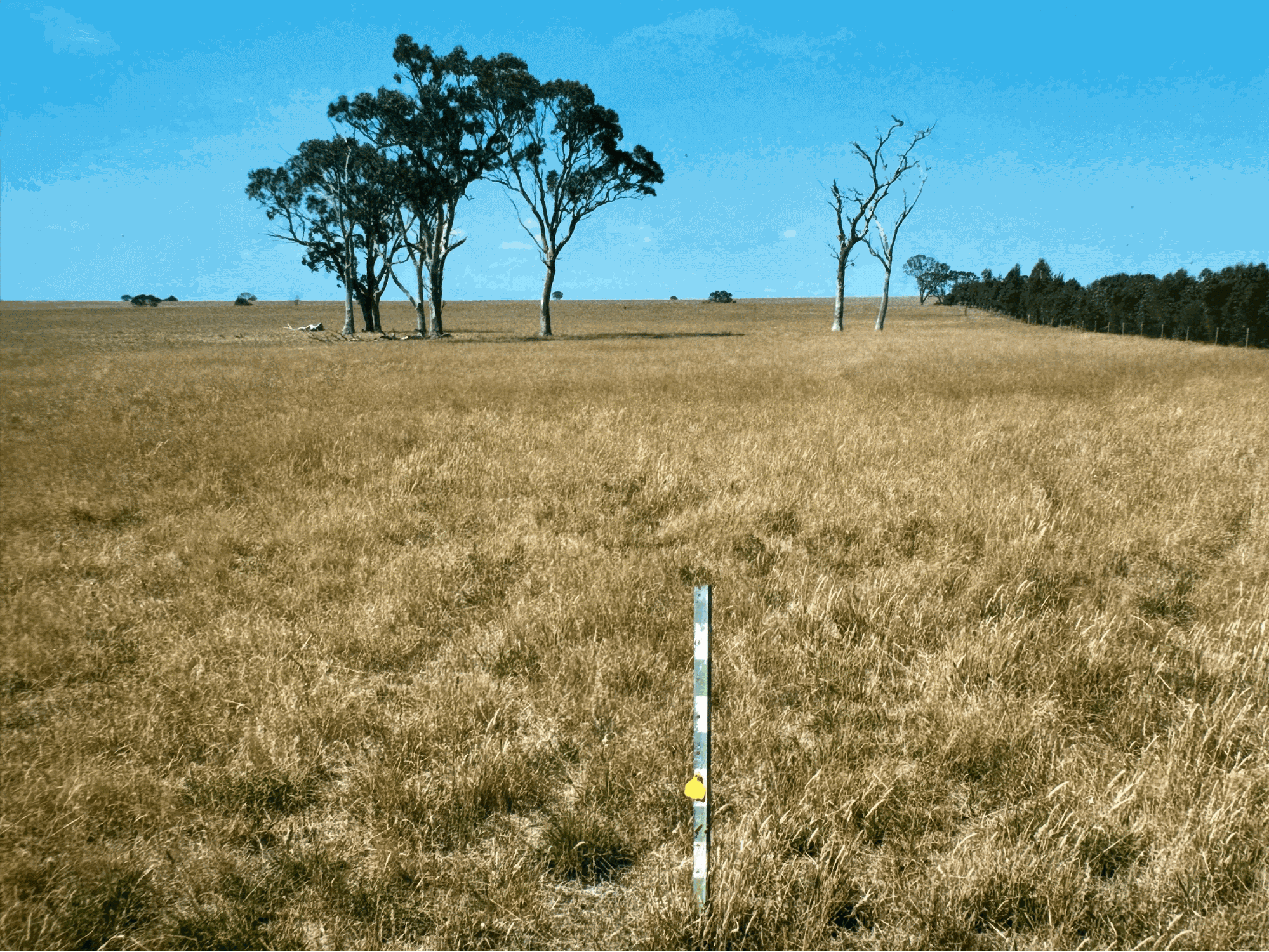
Image 18. A photo monitoring point recorded in 2006. Source: David and Ruth Read.
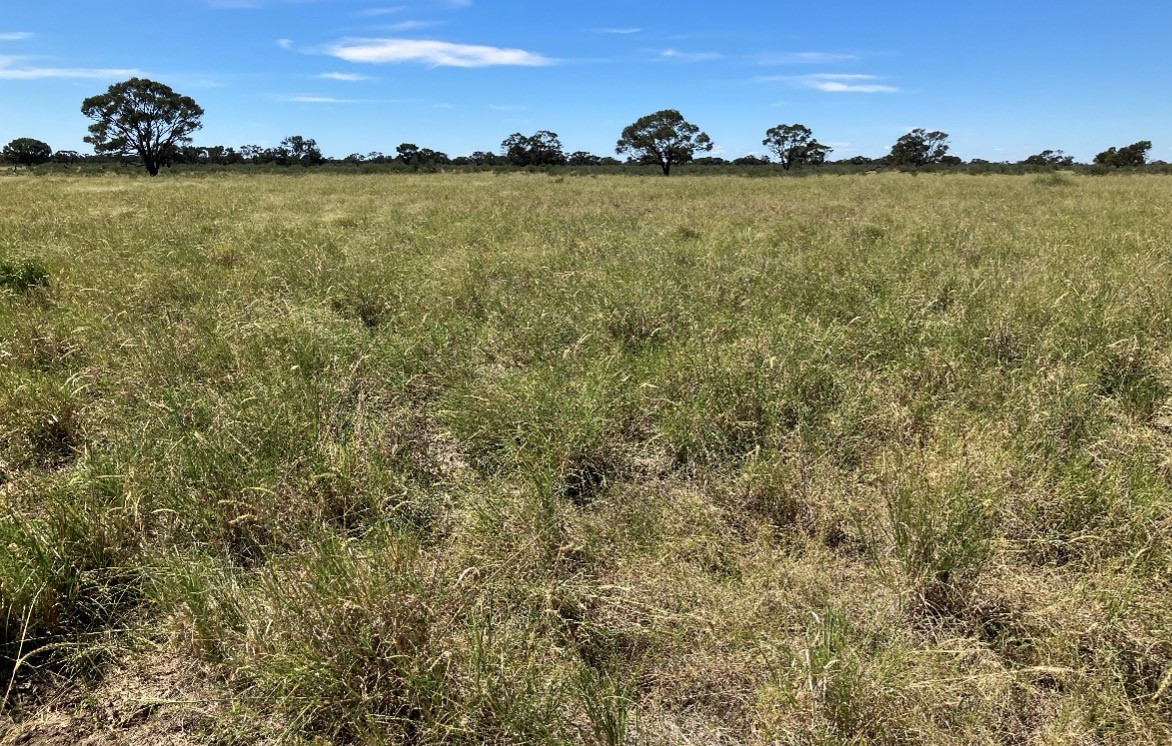
Image 19. The same photo monitoring point as in Image 18, recorded in December 2025 before grazing. Source: David and Ruth Read.
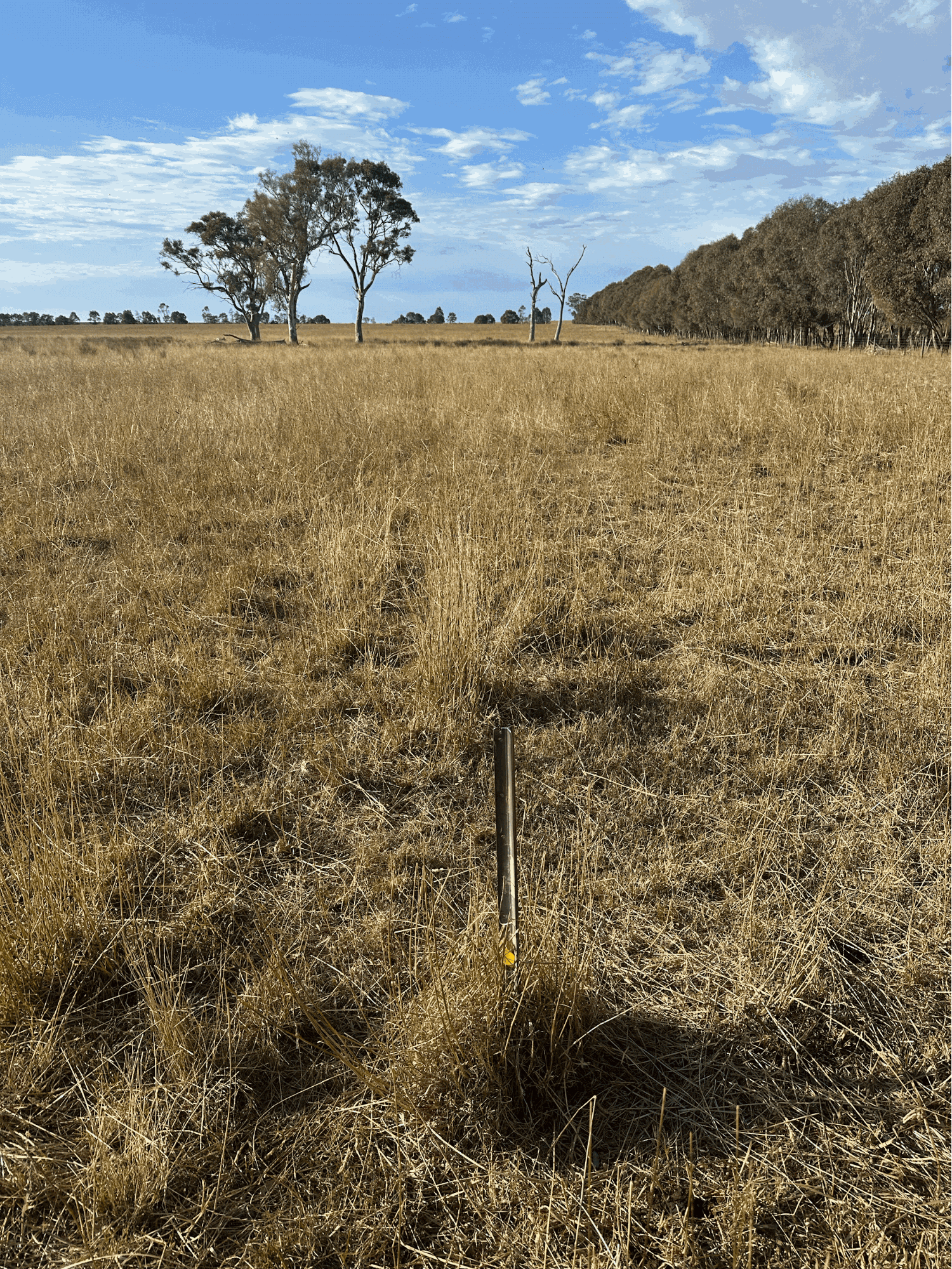
Image 20. Photo monitoring point (from Images 18 & 19) 10 days after grazing, January 2026. Source: David and Ruth Read.
Nick and Deanna Austin
Nick Austin has three 100 m monitoring transects where he has been implementing Holistic Management biological monitoring and soil tests every year to get a trend, and is seeing slow improvements. ‘This told us that we weren’t falling off a cliff by not putting fertiliser on and our soils were growing more alkaline without doing any liming,’ says Nick. When the EOV system started in 2018, he stopped his biological monitoring and started using the EOV monitoring.
Data collected at Mundarlo through the EOV system is in its early stages with significant trends yet to emerge, but there has been a notable increase in perenniality of grasses since the EOV monitoring began (Table 6 & Figure 4).
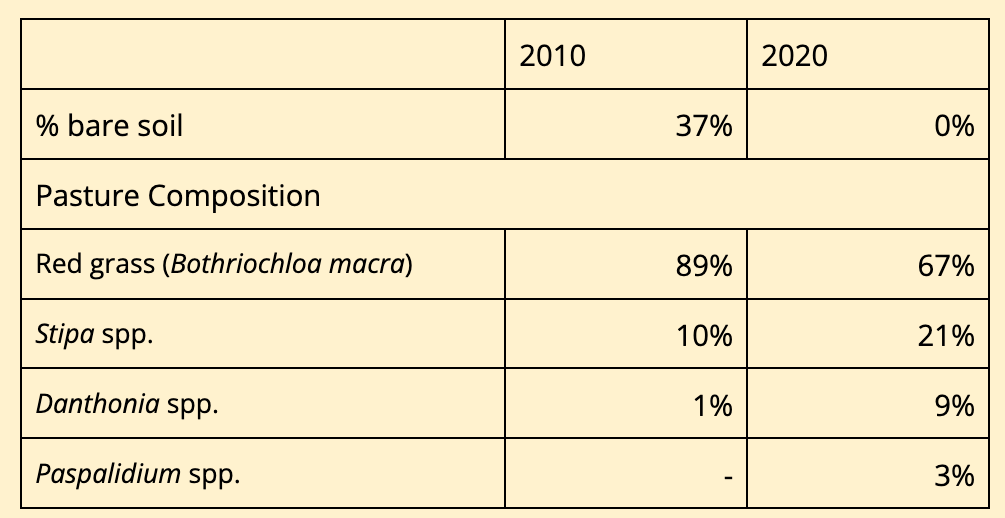
Table 6. Nick Austin’s biological monitoring data shows an increase in ground cover and changes in pasture composition at the Top Hut monitoring site.
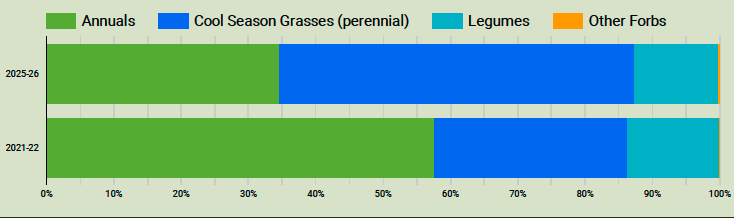
Figure 4. EOV data showing an increase in cool season perennial grasses at Mundarlo since 2021–22. Source: EOV Report 2025.
Managing drought and dry periods
Grazing plans can incorporate critical dates for making decisions and taking actions to prepare for and manage dry spells and drought. Dates can be planned for making stocking rate decisions, developing the livestock production calendar and monitoring pasture conditions.
🥾 Farmer examples: Monitoring drought and dry periods
Ben Simpson
Ben Simpson will do a mid year feed budget to double check where they are at so he can make adjustments to the grazing plan and stocking rates. Ben describes how feed budgeting is ‘a very powerful tool’ because it helps him to predict when they will run out of grass and then he can offload cattle early. ‘By starting offloading cattle early, you don’t need to offload as many, don’t get stuck, and more often than not if you offload early you are in a position to have grass when no one else does, giving you opportunities to buy back at a cheaper rate or agist out at a higher rate,’ says Ben.
David and Ruth Read
David and Ruth Read explain that ‘monitoring their feed budget and grazing chart helps them to see a dry time coming and reduce animal numbers early’. David and Ruth use an excel grazing chart (Figure 5) to record stocking rate and rainfall and use this data and the graph to inform grazing decision making. They aim to keep their stocking rate (DDH/100 mm) above 66% and below 100% carrying capacity. It is a trigger to reduce stocking rate when their actual stocking rate on their grazing chart increases for two months in a row.
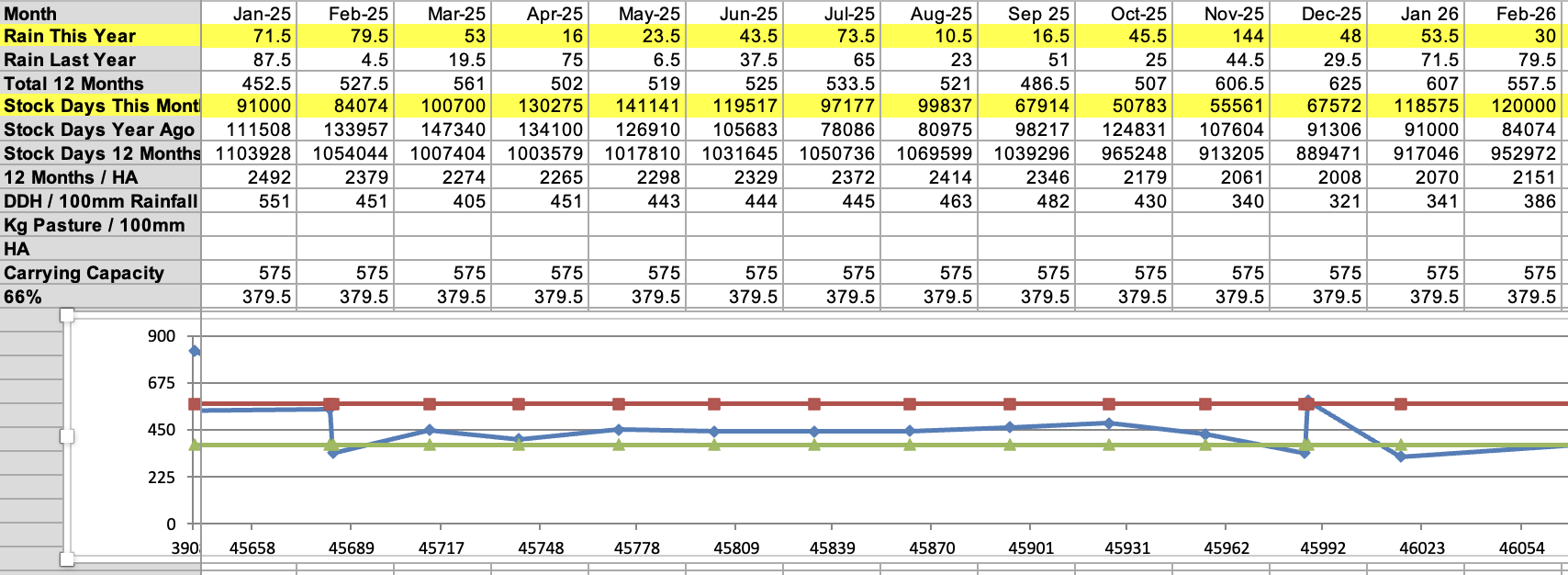
Figure 5. David and Ruth Read’s excel grazing chart. They aim to keep the blue line on the graph which represents actual stocking rate (DDH/100 mm) between the red line (carrying capacity) and the green line (66% of carrying capacity). Source: David and Ruth Read.
David, Ruth and Sophie Curtis
David Curtis says drought management is ‘all about trying to control the numbers as best you can, as soon as you can’. David goes through mobs to get rid of sheep that are not performing and pregnancy scans ewes to prioritise what class of sheep to sell when it gets dry, such as ewes scanned in lamb or dry sheep.
David explains that he ‘makes decisions to protect the place, based on his observations. Personally I think, use your head, and use your eyes. Every environment is going to be different. You’ve got to tune into what’s happening in your environment, understand your grasses, rainfall, capacity, potential for heat, potential for drought and then as things dry off, move quickly. If you have sheep that you need to get off the place, get them off.’
David bases stock movements on how the country looks, with the goal of maintaining cover. He goes in early with supplementary feeding using advantage feeders which are moved with the sheep when it gets dry. ‘Don’t wait for them to lose condition, go in early with supplementary feeding,’ he suggests. David feeds supplements to take the pressure off how hard the animals graze. ‘Protect your pastures, your country, as best you can. The beauty of sheep is that they don’t need a lot to keep them going through a dry time.’ In severe droughts, David uses a drought feedlot to protect paddocks from overgrazing.
Image 21. David Curtis pregnancy scanning ewes. Source: Sophie Curtis.
Nick and Deanna Austin
Nick Austin has managed drought in different ways over time, and now feels he has got to a place where he feels more comfortable because he’s able to shift animals earlier. Nick remembers the Millennium drought shifted his thinking: ‘It was relentless day in and day out, feeding cattle two hours a day, seven days a week for six months, with fodder costs continuing to go up.’ Now, pasture monitoring and reviewing the carrying capacity and stocking rate helps Nick to make decisions months in advance of what he would have done. ‘When we start moving cattle quicker than expected, this indicates it is time to make a decision and do something to reduce stocking rates.’ Nick says that ‘the hard work is monitoring, constantly keeping tabs on what is happening so if something starts to slip then you make another decision’. The option of deciding to feed and continue feeding does not sit well with Nick because ‘it costs money, labour and becomes very wearing. When you buy feed you spend money and this can become addictive and lead to spending more money. I would rather have the cash in the bank, know the finances up front and feel in control of my spending, being mindful that we need to get back into the market again.’
Rod and Katrina Butler
Rod and Katrina Butler have seen a direct correlation between their grazing management and drought resilience. ‘We realised we were creating a lot of the tough times. We used to blame the weather, when it was our decision making. We decided not to blame the weather and the drought and make decisions towards keeping our cover on our land instead,’ Katrina says. Forward planning through feed budgeting and monitoring their grazing plan means ‘we are not creating our drought, and we keep cover on the land so we recover from dry times once the rain comes. We are aware of drought early, we can take action early and safeguard our money, land and relationships. In previous droughts we spiralled down the tunnel financially, emotionally and environmentally.’
Infrastructure (wire and water)
Getting the infrastructure right is essential to support a shift to a regenerative grazing approach. This includes:
- Water infrastructure to enable and accommodate larger mob sizes and changed grazing patterns
- Fencing to create more, smaller paddocks and facilitate more frequent moves.
While not traditionally considered as infrastructure, many graziers also look for ways to increase diversity and ecological function (building ‘natural capital’) through their grazing practice and to support their soil and landscape goals, including:
- Increased diversity of plants
- Increased diversity of livestock species (e.g. running both sheep and cattle)
- Integration of trees and other vegetation
- Landscape rehydration.
Water Infrastructure
Many graziers and consultants emphasise that getting water infrastructure right is perhaps the most important first step when shifting towards regenerative grazing practice. This is because many practices associated with regenerative grazing require different water infrastructure or can have an impact on existing water infrastructure. In particular:
- Larger mob sizes require higher flow rates
- Different grazing patterns and landscape management goals can require changes to the location and number of water points
- Changed grazing patterns can increase ground cover, which can improve water quality but also reduce the volume of water running off into dams.
Water flow rate
As mob sizes and stock density increase, so does the demand for water. Water infrastructure needs to be able to provide enough water to meet the livestock’s daily requirements at a flow rate that allows the water to replenish quickly enough for all the animals in the mob to be able to get a drink without waiting for water. Flow rate is more important than having large troughs.
RCS recommends a minimum flow rate into troughs of 2 litres per second. According to RCS Managing Director David McLean, ‘Clients never complain about having a water system supplying too much water, but there have been clients who have used inadequate pipes and equipment to deliver this flow rate, only to regret it deeply.’
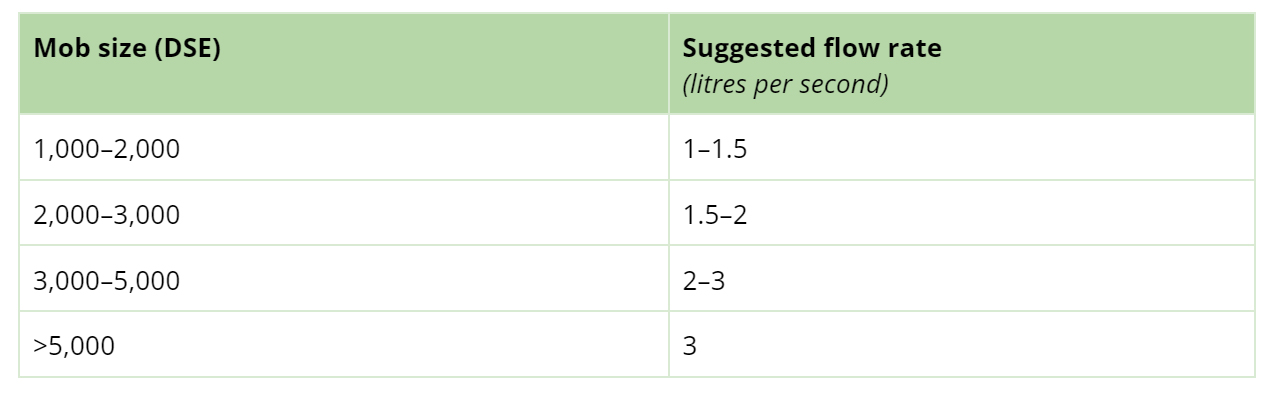
Table 7. Required flow rates to maintain adequate water supply for different mob sizes.a
Location of water points
The location of water points affects the distribution of grazing, with the distance livestock must walk to access water influencing how evenly they graze a paddock. While cattle can walk up to 10 km from water, it’s estimated that 80% of grazing occurs within 2 km from water. Overgrazing can therefore occur near the water point, while pasture remains underutilised away from the watering point. The ideal walk to water distance varies according to the carrying capacity and topography of the property.
Paddock or cell size is limited by how far animals must travel to reach water, so large paddocks may need more than one watering point. Some farmers use movable troughs to allow better use of the whole paddock, improve animal performance and get the animal impact where it is needed, noting that there is a risk of movable troughs being pushed over or damaged by stock. When livestock travel long distances to water they travel as a herd and will all reach the water point together, increasing demand for flow rate to replenish water quickly, so it is important to ensure that the moveable troughs are equipped with sufficient flow.
💡 Tips and Tricks: Don’t rely on small dams
Managing grazing to increase ground cover and vegetation can reduce water run off into dams. It also reduces the inflow of manure, nutrients and sediment into farm dams and can provide a filtration buffer.
🥾 Farmer examples: Infrastructure
Ben Simpson
Ben Simpson suggests starting with fence design so you can prioritise designing the water infrastructure you need. But when you start planning water infrastructure, Ben suggests to ‘go with bigger water pipes than what you think you need, you will use it later’. Ben initially thought he had used bigger pipes than they needed, but now that stock density has increased, they need the bigger pipes.
Ben’s water system is good quality bore water, free flowing under pressure that can be delivered without any pumps or tanks. With 1,000 head in a cell grazed paddock, putting multiple troughs in paddocks, rather than relying on one, means stock can spread out and get a drink. Ben has set up water in diamond-shaped cell centres between four paddocks (Figure 6). The troughs are built up on pads with bars over the top and barriers to stop the cattle getting into the trough. These allow the cattle to only get their heads in to keep water clean, which makes a big difference to animal health and production.
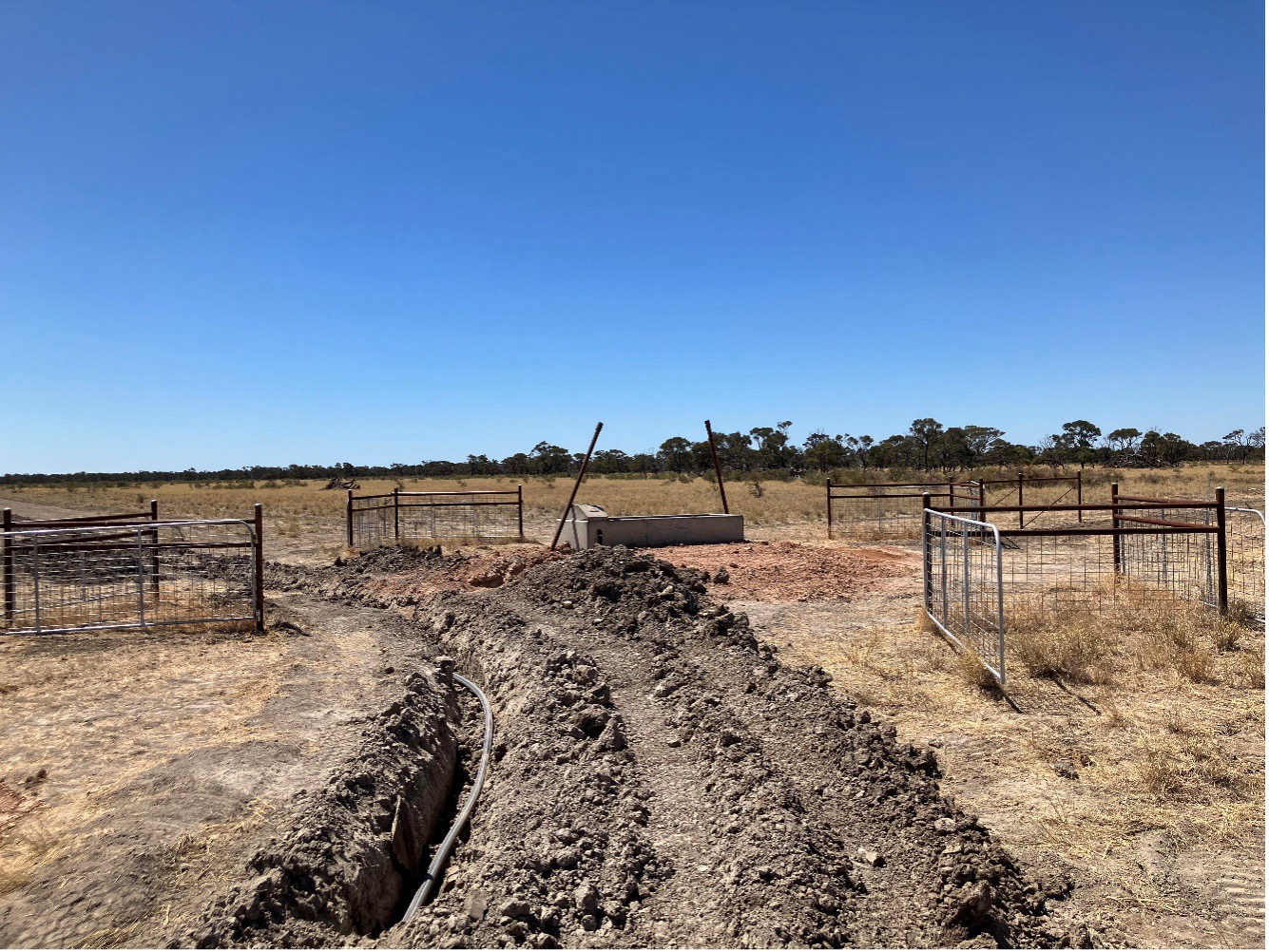
Image 22. Installing water in diamond-shaped cell centres between four paddocks at Thistlebank. Source: Ben Simpson.
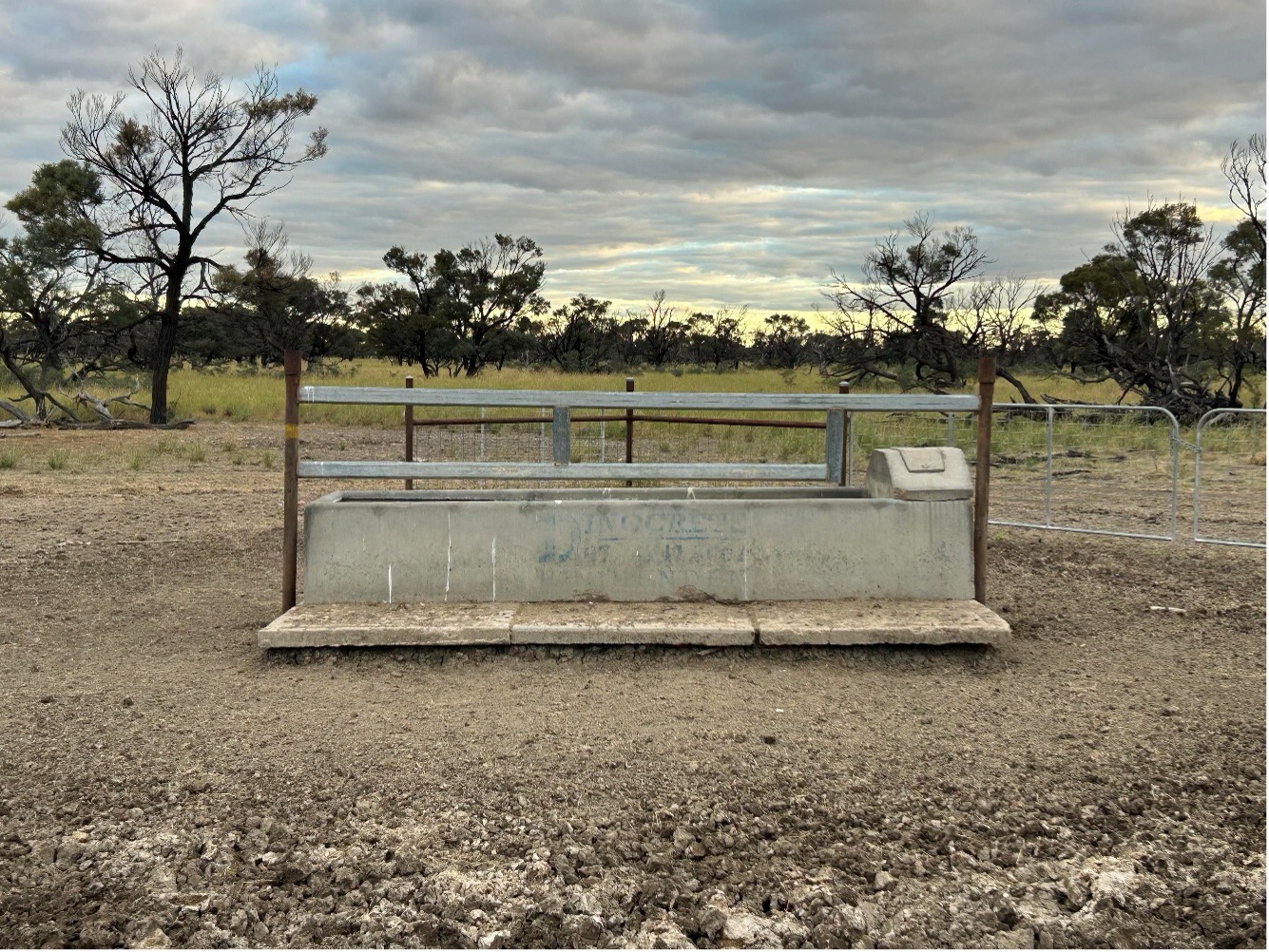
Image 23. Ben has installed bars over the top of troughs to keep cattle out of the trough and ensure water stays clean. Source: Ben Simpson.
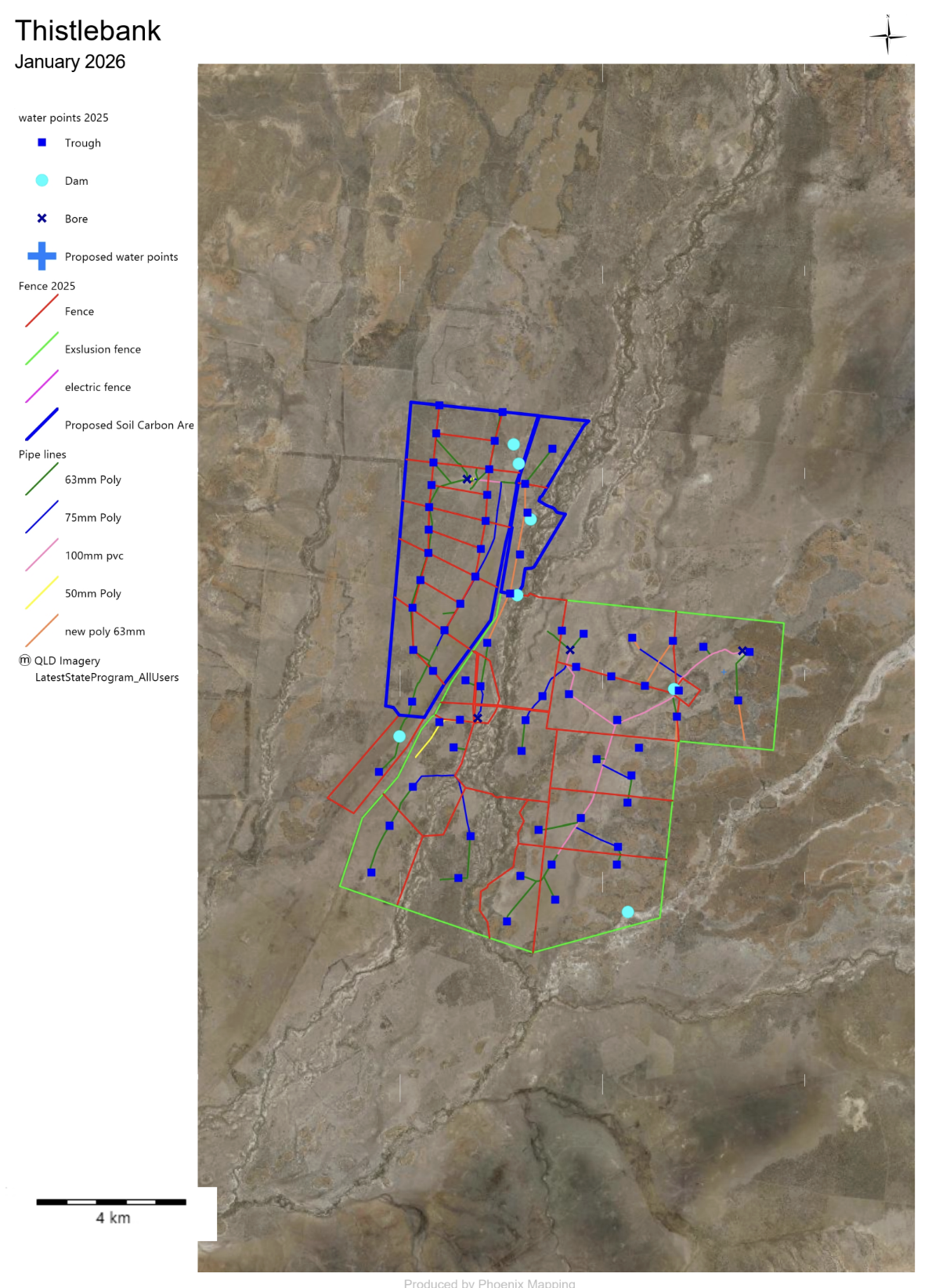
Figure 6. Current property fence and water point design at Thistlebank. Source: Ben Simpson
David and Ruth Read
David and Ruth Read were told early on not to rely on dams for water, as they may not fill if they change their grazing. ‘We fenced off most of our dams. A lot of them remain low, even in wetter years they struggle to fill,’ says David. Instead, they reticulate good quality underground water through troughs. Initially they had one water trough in each of their 20 paddocks, but eventually they moved some fences and water lines to locate the troughs centrally where triangular shaped paddocks join in a wagon wheel fence layout. The triangular shaped paddocks allow a central water point to serve multiple paddocks. While this design is cost effective, it can create uneven grazing impact because the widest part of the paddock is the furthest from the water. David and Ruth plan to change future paddock subdivisions to be rectangular to improve the distribution of grazing impact.
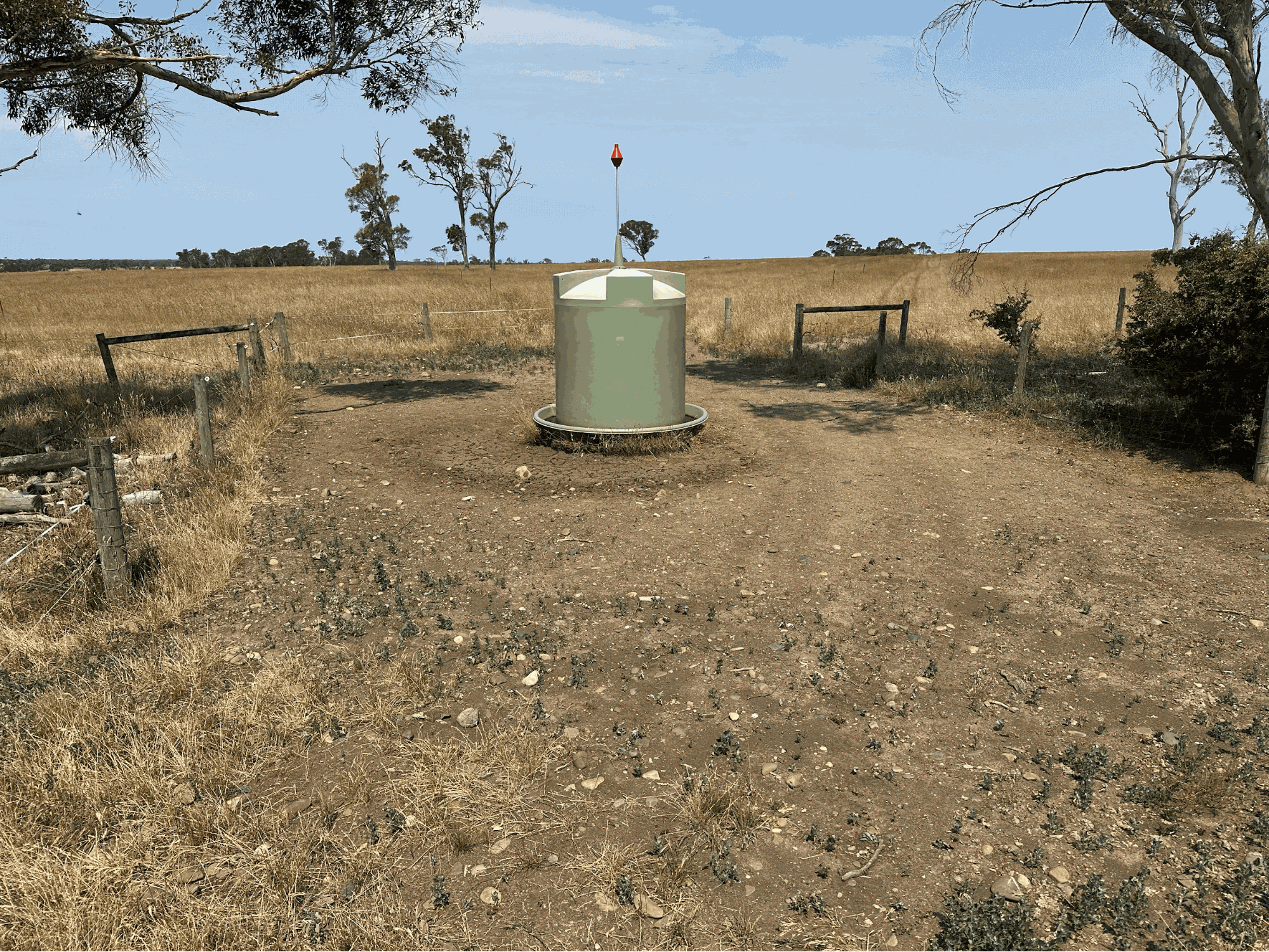
Image 24. Cell centre with cup and saucer style trough sharing water for 10 paddocks. Source: David Read.
David, Ruth and Sophie Curtis
David Curtis makes sure their sheep have access to good quality clean water, with bore water reticulated to troughs in every paddock. They use remote monitoring technology Farmbot to monitor water levels in the troughs. When subdividing paddocks, they spread water troughs through the paddock to provide plenty of access to water and reduce walking distance. David notes that the more access to water you can have at lambing the better, and spreading water through paddocks helps prevent mismothering issues.
Nick and Deanna Austin
Nick Austin pumps water from the river to reticulate around the farm into troughs, with only one paddock relying on a dam. His priority getting started was to upgrade his water infrastructure, which he has learned is critical for success when changing grazing management. ‘The simplest thing you can do when you start is to put your mobs together, but you can only put them together if you have the water to support them. When we put our mobs together, our water supply wasn’t enough so we had to reengineer a whole water supply. We got the water wrong the first time we did it, then it took a second run to get it right, so we made a lot of mistakes. Don’t mob up until you get the water right first,’ suggests Nick.
Nick employed a consultant to help him redesign the water system to make it purpose built for one mob. ‘There are so many different techniques for how you set up water, the key is just to get the flow right.’ Nick uses a rule of thumb of a 2 litres per second flow rate for 500 breeding cows plus followers, and explains that ‘water storages need to be able to hold enough water to cover stock needs if there is a breakdown somewhere in the system.’
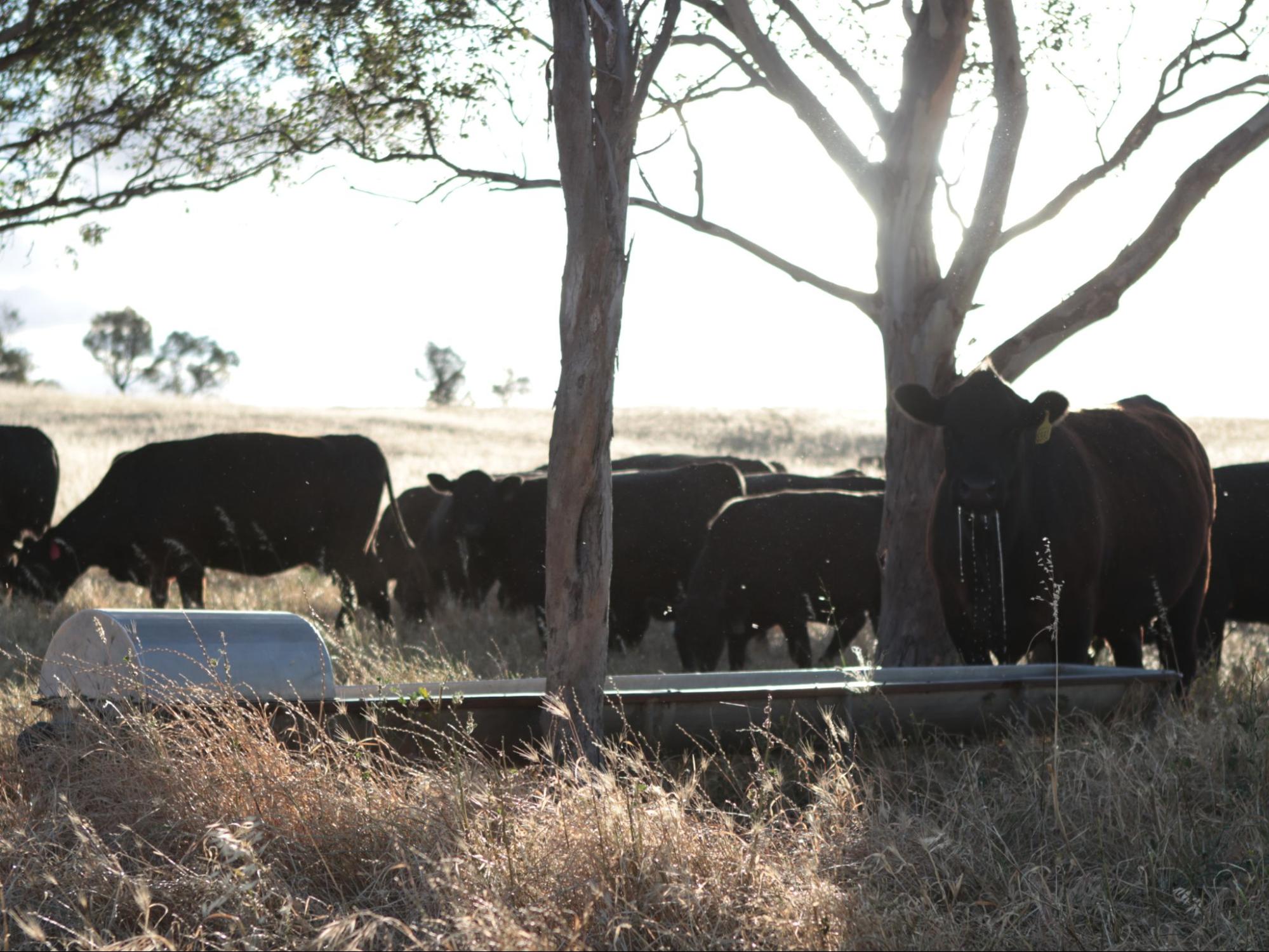
Image 25. Movable water trough at Mundarlo. Source: Grow Love Project.
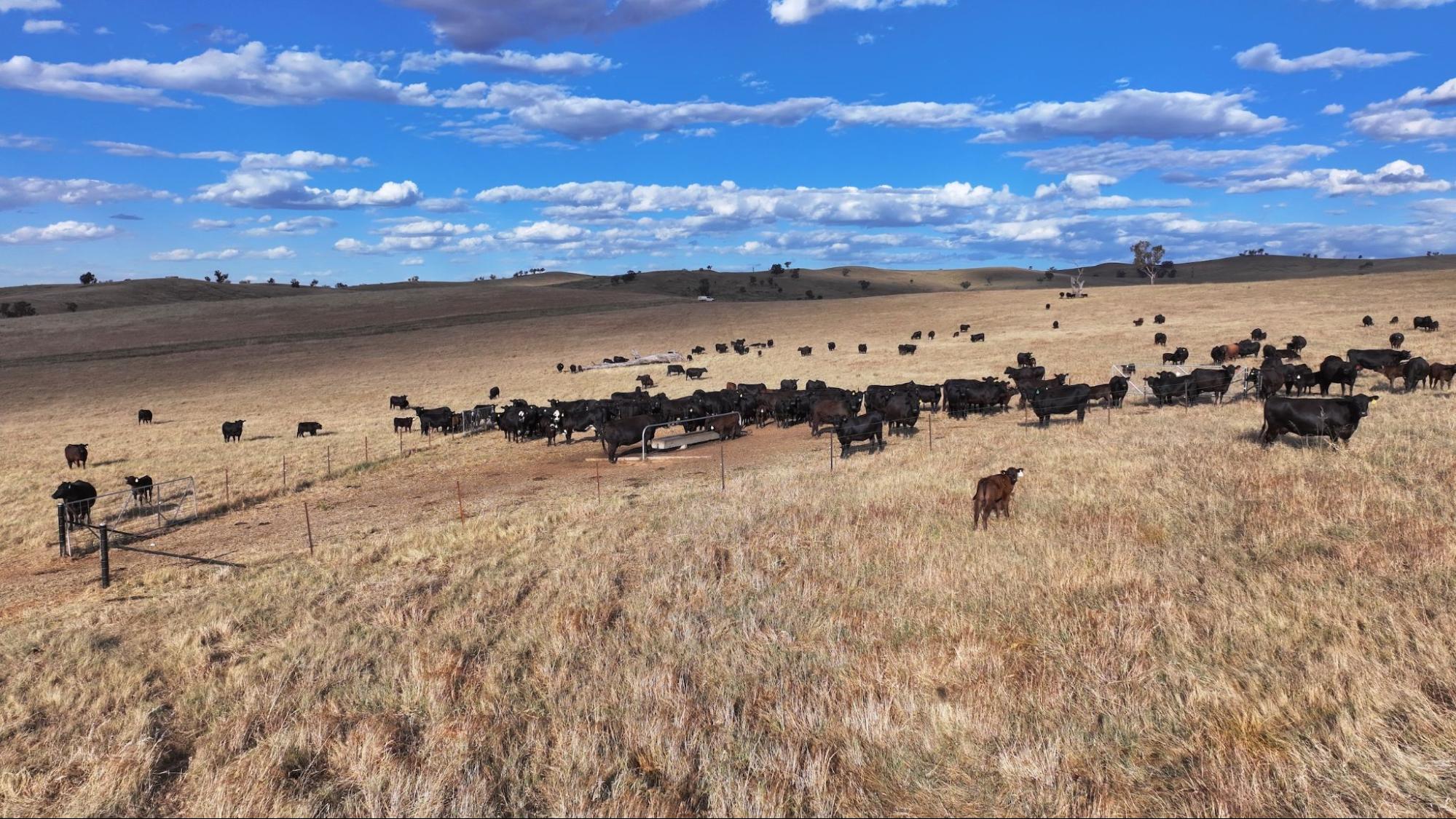
Image 26. Water cell at Mundarlo. Source: Grow Love Project.
Rod and Katrina Butler
Rod and Katrina Butler started out carting water using a water truck with portable troughs. They are now equipped with three bores to access underground water. Bore water is pumped to a tank using a windmill or solar pump, then gravity fed across the farm through poly pipe with taps that they can tap into with three portable Kiwitech water troughs. This allows them to move water around to get the animal impact where they want it and change the grazing patterns. Poly pipe that is above the ground is easy to move and adjust, but gives them more trouble than the pipe in the ground as it can be run over, get caught up in machinery or be impacted by wild animals. They also have a 40,000-litre water tank on a trailer to cart water when they are agisting their sheep on other people’s properties.
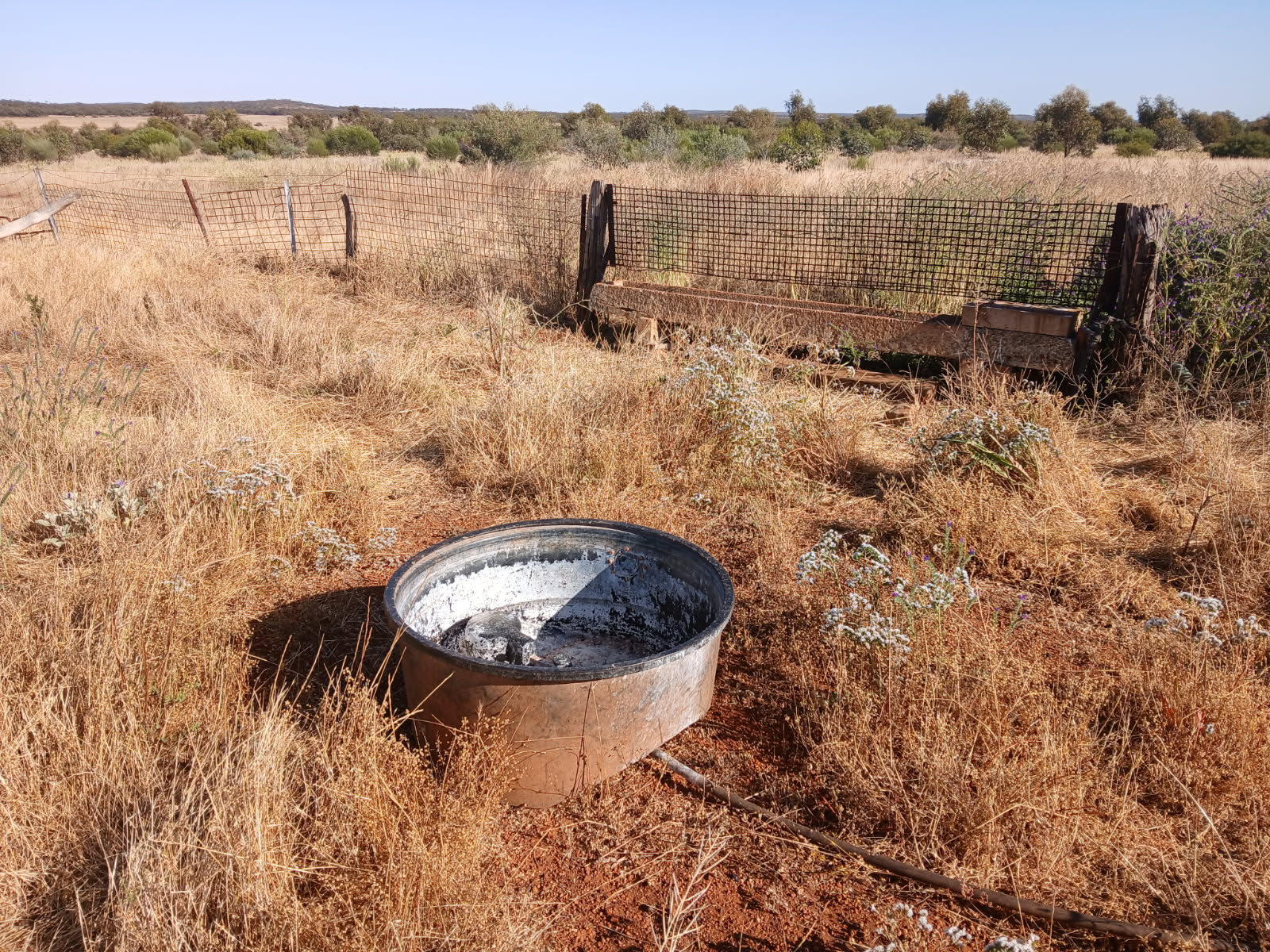
Image 27. A portable water trough at Rod and Katrina Butler’s property. Source: Rod and Katrina Butler.
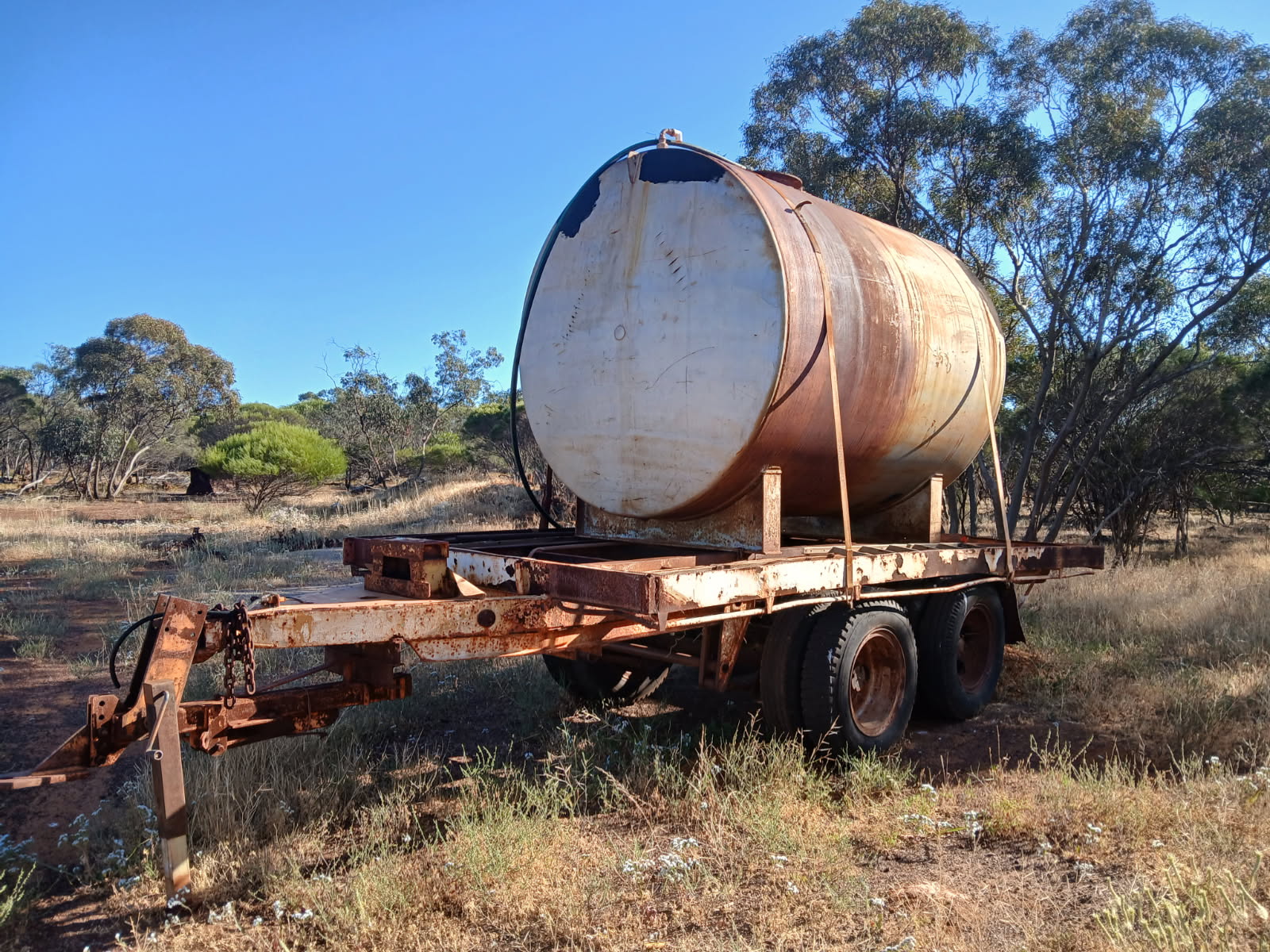
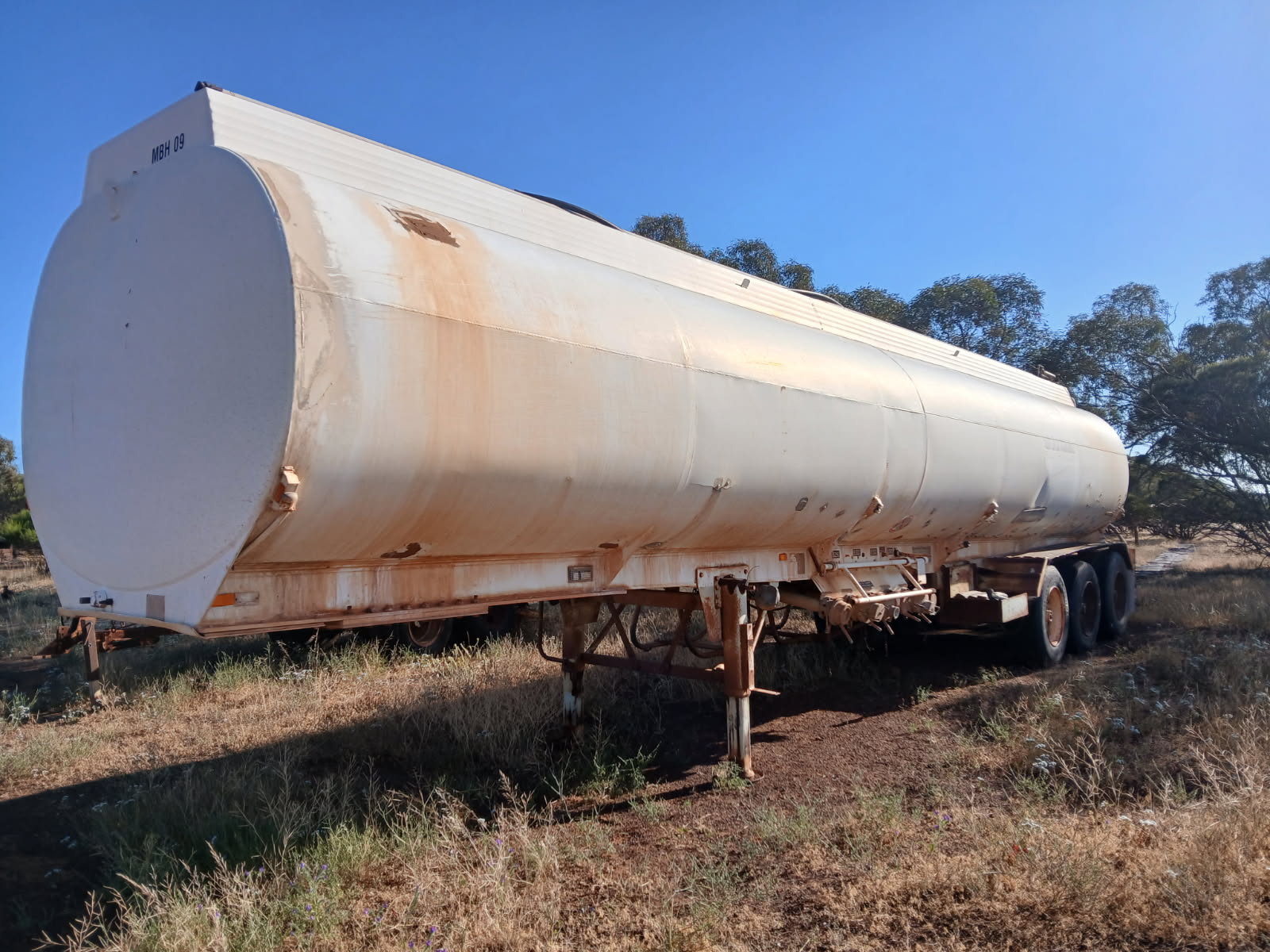
Images 28 & 29. Rod and Katrina Butler use trailers to cart water to areas of the property not serviced by troughs. Source: Rod and Katrina Butler.
Fencing
Initial improvements can generally be made without investing in fencing infrastructure, such as merging livestock into one or fewer mobs. However, changing fencing to increase the number of paddocks per mob provides greater control over grazing by allowing for shorter, more intense grazing periods and longer recovery times, along with more flexibility to adapt grazing plans.
There are no set rules for paddock design for regenerative grazing, and many farmers engage in a process of trial and error. Rather than investing heavily at the outset, many graziers prefer to start with the infrastructure they have and, at least initially, make changes incrementally to determine what works best in their context before developing a whole farm fencing plan. Others prefer to do the research and potentially bring in a consultant to help them develop a plan before making any changes.
💡 Tips and Tricks: Paddock numbers rule of thumb
Educator Judi Earl recommends that if there are fewer than around 15 paddocks per mob, consider creating more paddocks by subdivision. More paddocks can provide greater control by allowing shorter graze periods, and longer recovery periods (Figure 7).
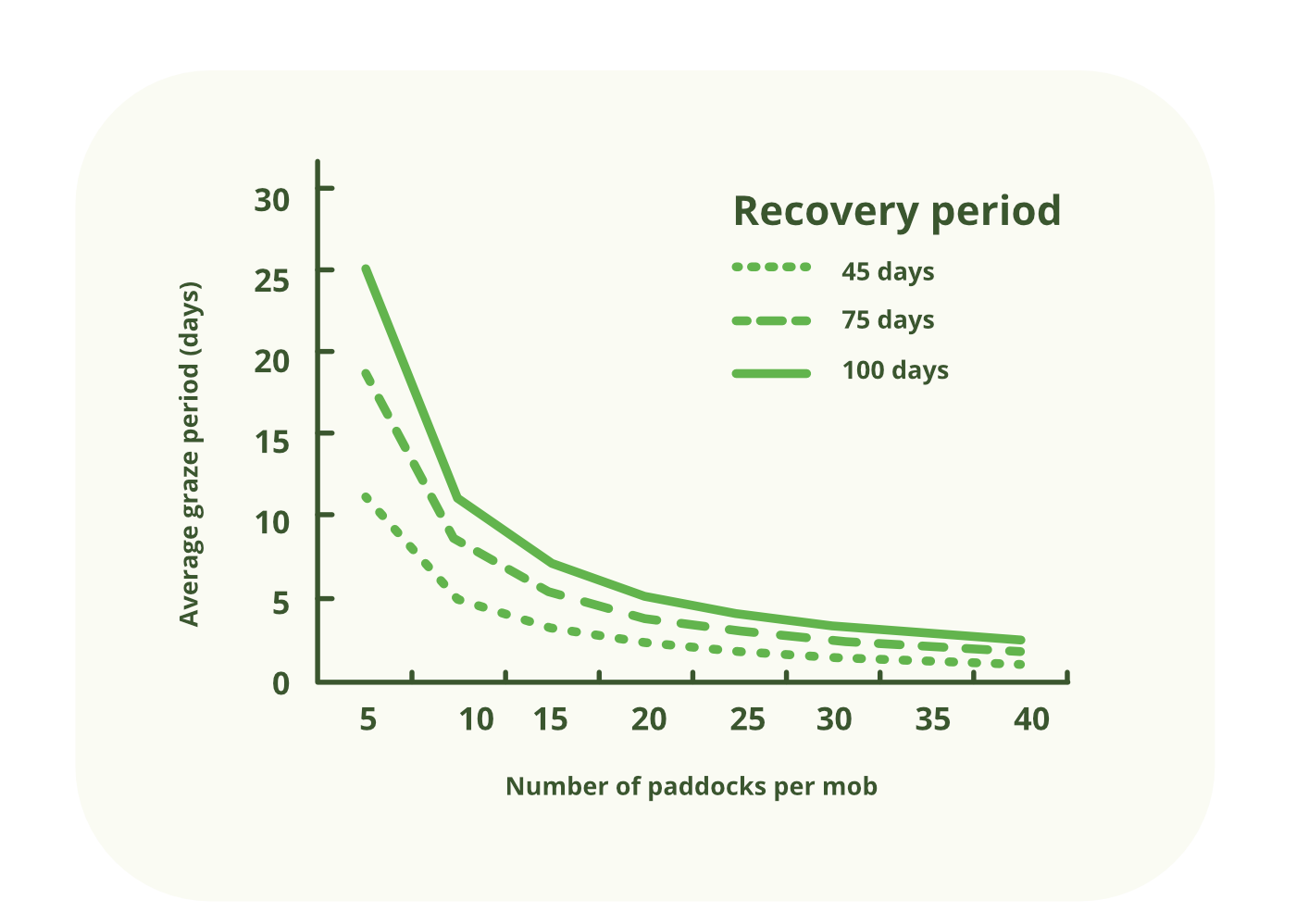
Figure 7. More paddocks can provide greater control by allowing shorter graze periods and longer recovery periods. Source: Judi Earl, AIMS Agricultural Information and Monitoring Services.
Paddock design
There is no one way to design paddocks that will work everywhere. Soil types, land capability, existing property fences and the type of livestock will influence paddock design. In particular, there are significant differences in how to effectively design fencing for optimal grazing in extensive areas (e.g. Ben Simpson’s Thistlebank property) versus more intensive grazing areas. In addition, fencing infrastructure often changes over time as grazing practices shift.
Paddock size and shape can have a significant impact on grazing patterns:
- Square paddocks can require less fencing materials, reduce the distance livestock need to walk to water and create more uniform grazing distribution.
- Long narrow paddocks may create more trampling, manure and urine impact than square paddocks when animals move back and forth in a set pattern repeatedly as long as they don’t spend more time at one end of the paddock.
- Triangular paddocks in a wagon wheel formation may have uneven grazing impact, with stock spending more time in the narrow section near the water point and less time in the wide section furthest from the water point.
👉 Find out more about fencing design in extensive rangeland environments through Soils for Life’s case study series on WA’s Rangelands Revitalisation program.
Types of fencing
There are many types of fencing used in regenerative grazing. Each type of fencing has advantages and limitations and are chosen according to the specific requirements of the property, farmer and livestock. Key types of fencing, and their common uses in regenerative grazing systems, are summarised in Table 8, with some additional considerations below.
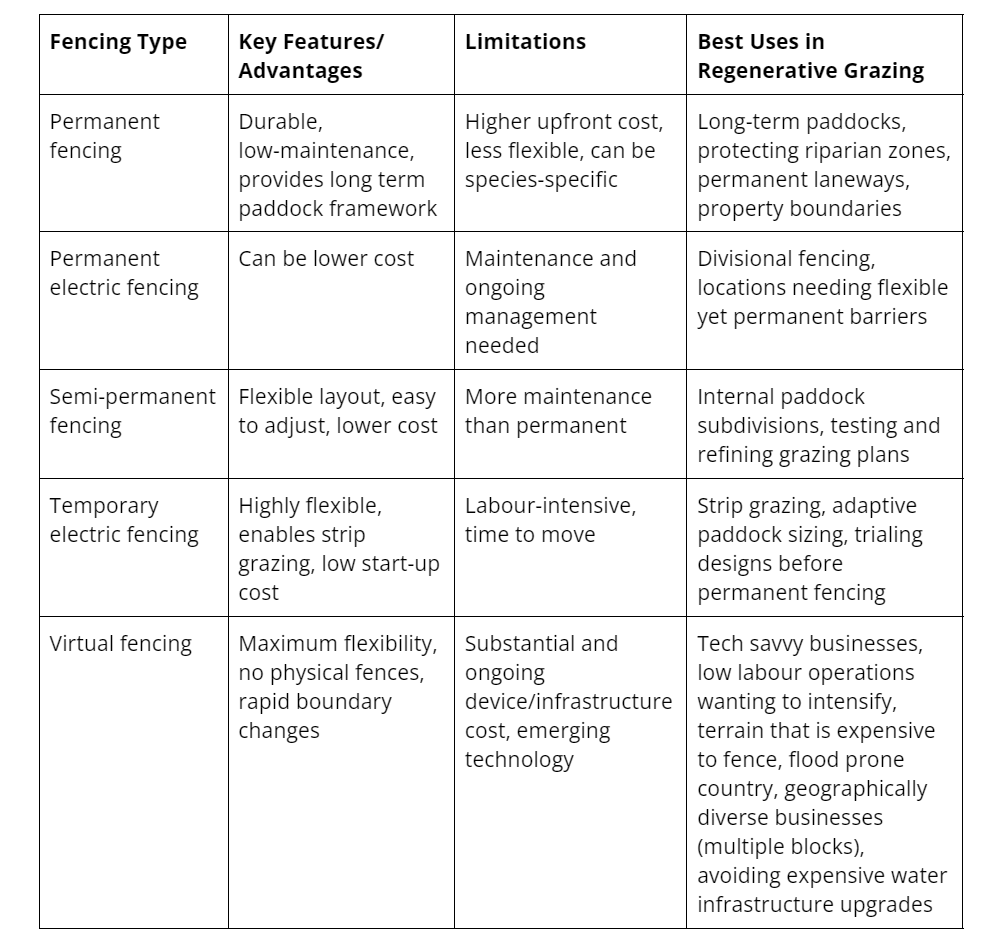
Table 8. Types of fencing used in regenerative grazing, including advantages, limitations and best use.
Managing total grazing pressure with fencing
It can be challenging, particularly in expansive landscapes such as the rangelands, for pastures to adequately recover between grazing periods when they are also being grazed by wild herbivores, such as kangaroos or rabbits. There are many different strategies for addressing this increase in total grazing pressure, including turning off water points when not in use, increasing stock movement, incorporating wild herbivore grazing pressure into grazing plans or installing exclusion fencing, if needed. In some cases, maintaining predators on the landscape has also been used as an effective grazing management tool (see our case study on Wooleen Station). The most effective strategy is context dependent and unique to each farm, but regardless, it is important to take wild herbivore grazing into consideration when developing grazing plans and designing paddocks.
🥾 Farmer examples: Fencing
David and Ruth Read
David and Ruth Read have permanently fenced paddocks of 5–7 ha in size. These are subdivided with temporary electric fencing so that the stock have access to enough feed and have adequate rumen fill for each strip graze. The size of these subdivisions is adapted to the seasonal conditions with up to 1.5 ha grazed per day depending on many variables including the mob size, the amount of grass that’s there and the time of year.
David and Ruth go out once a day and set up three electric fences and use a PensAgro automatic tape lifters sourced from Argentina to move cattle. ‘They are like a pole with an electric fishing reel on the top and at a certain pre-programmed time of day, it will pull your hot tape up. The posts are about 20 steps apart, there is a 40 metre opening where the wires will come up and the cattle can walk through to the next paddock,’ explains David. ‘The automatic lifter makes an audible sound when it lifts up and the cows hear the spool winding so they are ready to go before it starts lifting up, and they are under it when it starts lifting up.’
The property is fenced into three secure zones that can accommodate three different mobs using an electric fence system. The zones were designed to make use of existing permanent fencing around tree plantings that were built from treated pine with five wires, two of them electric. Within these zones, the paddocks are subdivided in a wagon wheel design using star pickets and electric fence wire (Figure 8). They started with three wires because they had cattle and sheep and now they are down to one wire as they only run cattle. The secure zones mean that if any animals get out of their subdivided paddocks, they remain in the area and can’t go far.
David and Ruth are considering changing some wagon wheels to a laneway system where the length of the electric fences required for dividing the paddock for strip grazing would be shorter and easier. They currently divide the wedge shaped paddocks by fencing across the wedge, with no back fence so the stock can walk back to the water point. ‘Some of the subdivision fences are 300 m long so if we can change the shape to make it 100 or 120 metres, when we divide the paddock up it will only take 15 minutes,’ explains David. They also envisage using electric fencing to create laneways to guide the cattle to water in the new system. This will also address the uneven grazing impact that occurs in the wedge shaped paddocks.
Image 30. Cattle moving between paddocks underneath the solar powered automatic poly wire lifter at David and Ruth Read’s, showing the impact made by grazing and the recovery in the paddock before being regrazed. Source: Michael Green, Drift Media.
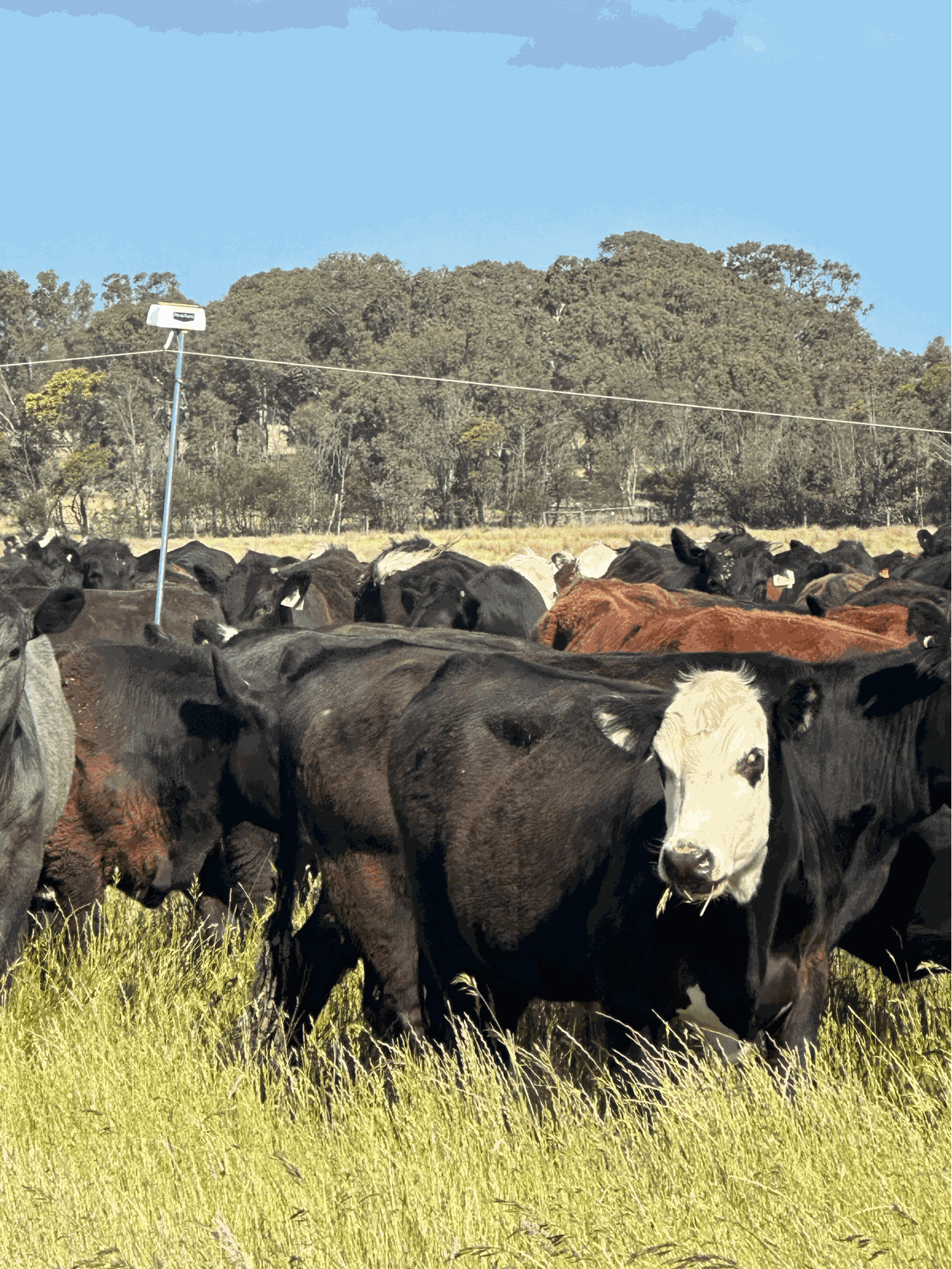
Image 31. Cattle at David and Ruth Read’s moving under the gate opened by the PensAgro solar powered automatic poly wire lifter. Source: David and Ruth Read.
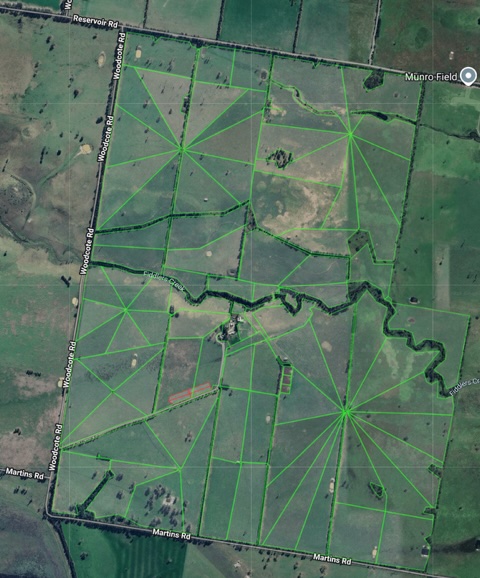
Figure 8. A property map showing paddock design at Woodcote, with green lines indicating fences. Source: David and Ruth Read.
David, Ruth and Sophie Curtis
David Curtis’s property (Figure 9) is fenced using 5-wire permanent electric fencing built from 2.5 mm Waratah Tyeasy® high tensile wire, galvanised posts and stays, and porcelain insulators. Everything is installed as per the manufacturer’s instructions. David has a full earth return system with eight energisers across the farm. It is very cost effective, quick to put up and has a very long life. ‘Do it correctly and properly the first time,’ advises David. ‘A “half-arsed” electric fence system is a nightmare. A good one is brilliant. Our sheep do not go through the electric fences as they are born and bred in them.’
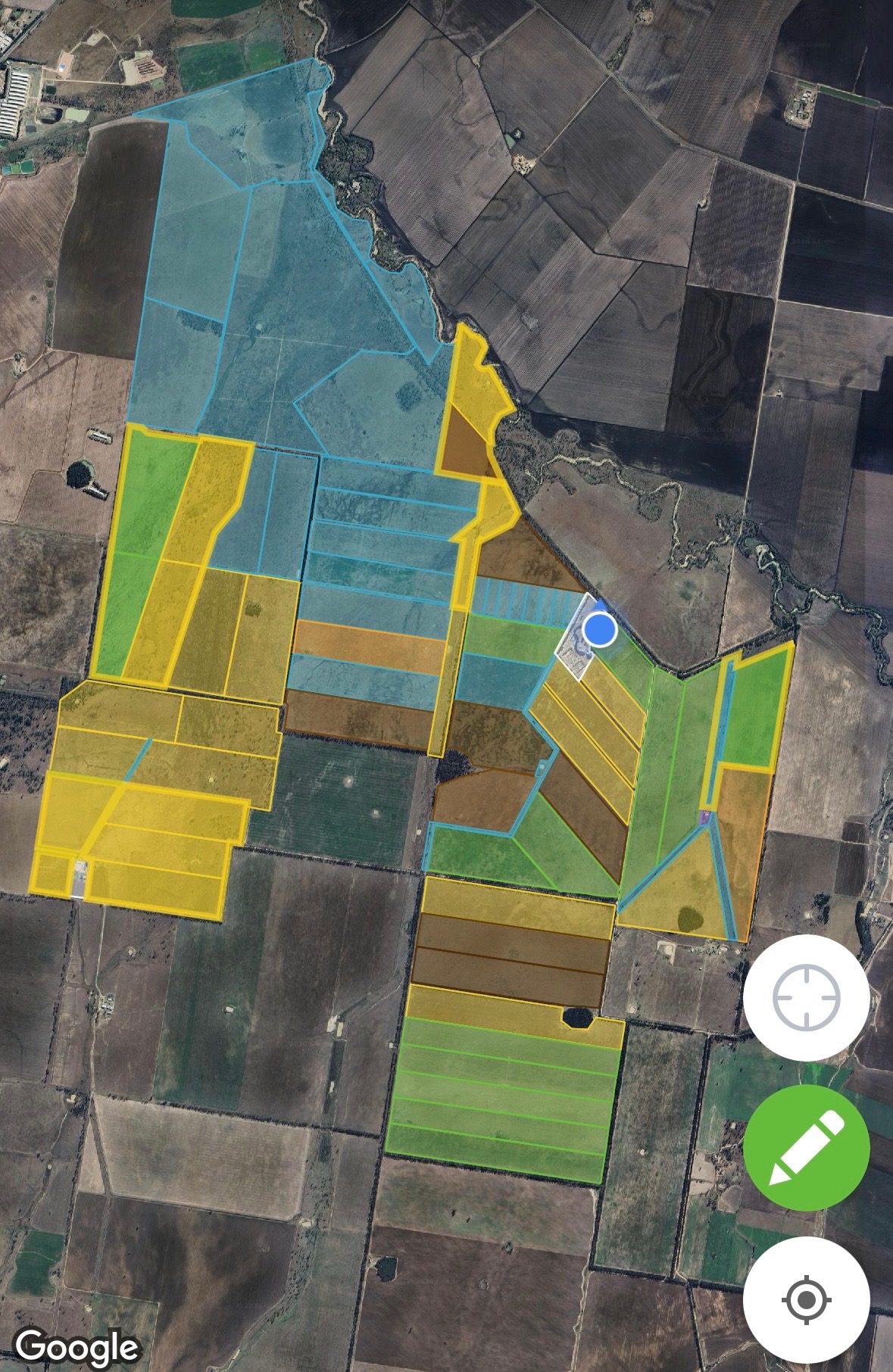
Figure 9. A property map showing paddock design and fencing layout at Bellevue. Image source: David Curtis.
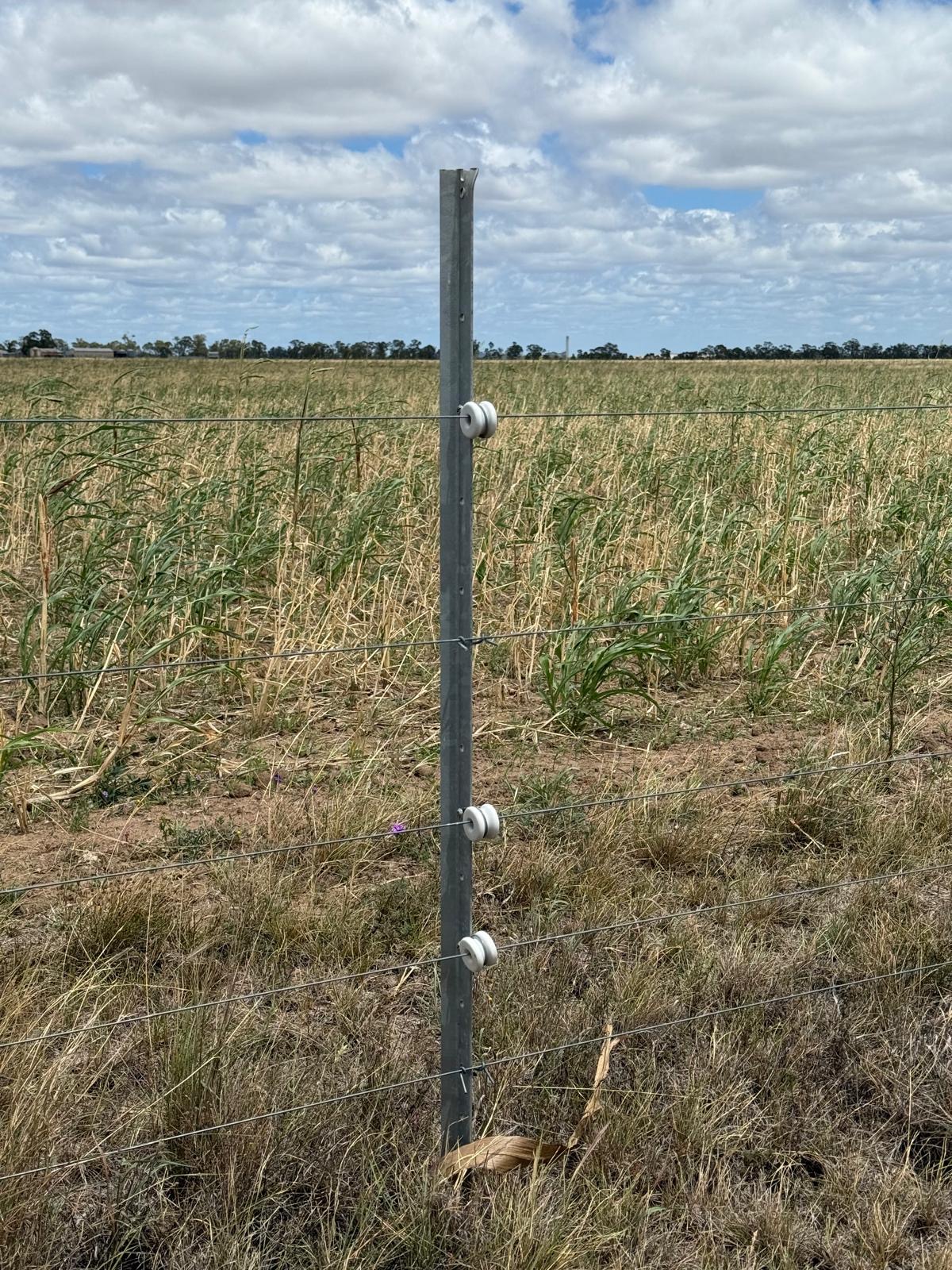
Image 32. Five-wire permanent electric fencing used by David Curtis. Image source: David Curtis.
Nick and Deanna Austin
Nick Austin started out by subdividing some big existing paddocks and fencing off creeks using funding available for riparian zones. Original paddocks are around 45 ha in size, and most of these are fenced with a permanent plain wire fence containing one hot wire (Figure 10).
For subdivisions, Nick finds that electric fencing gives much more flexibility, is quicker to install and lower in cost. Nick uses the Kiwitech semi-permanent system, which consists of 1.5 mm high tensile wire with fibreglass posts. ‘Our permanent fencing costs around $6/m without labour, the Kiwitech semi permanent fence costs $1/m,’ Nick explains. ‘The Kiwitech fencing is quick to put up, you are able to drive over it, and it is not too bad to pull down and put back up again if you discover it is in the wrong spot.’ Nick used three-wire subdivisions because they had sheep and wanted to keep the place flexible. ‘I would get away with two wires for cattle, but I don’t think so with sheep, and having three wires stops calves from going under during calving.’
Paddock sizes are now getting down to 10–15 ha. Nick says, ‘If I want to ramp it up I can use poly wire and a reel to fence off and strip graze away from the water in those smaller paddocks.’ Having a lot of paddocks helps minimise the risk of overgrazing and gives more control. Nick is planning to go from 50 paddocks at the moment to at least 70 in the next two years. The additional paddocks will be installed as part of a new carbon project. Nick does his own fencing and doesn’t use contractors.
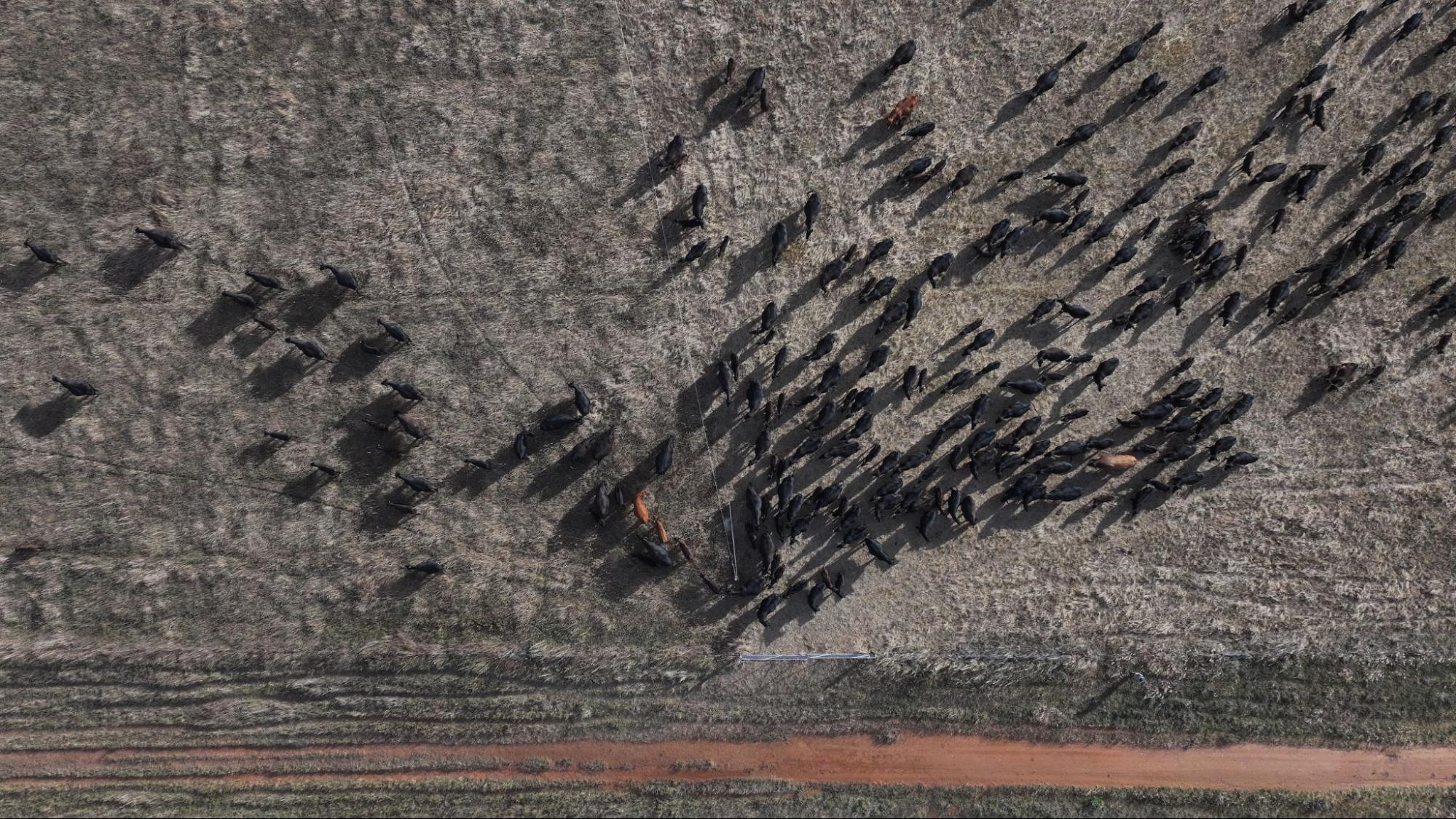
Image 33. Cattle moving between paddocks at Mundarlo. Source: Grow Love Project.
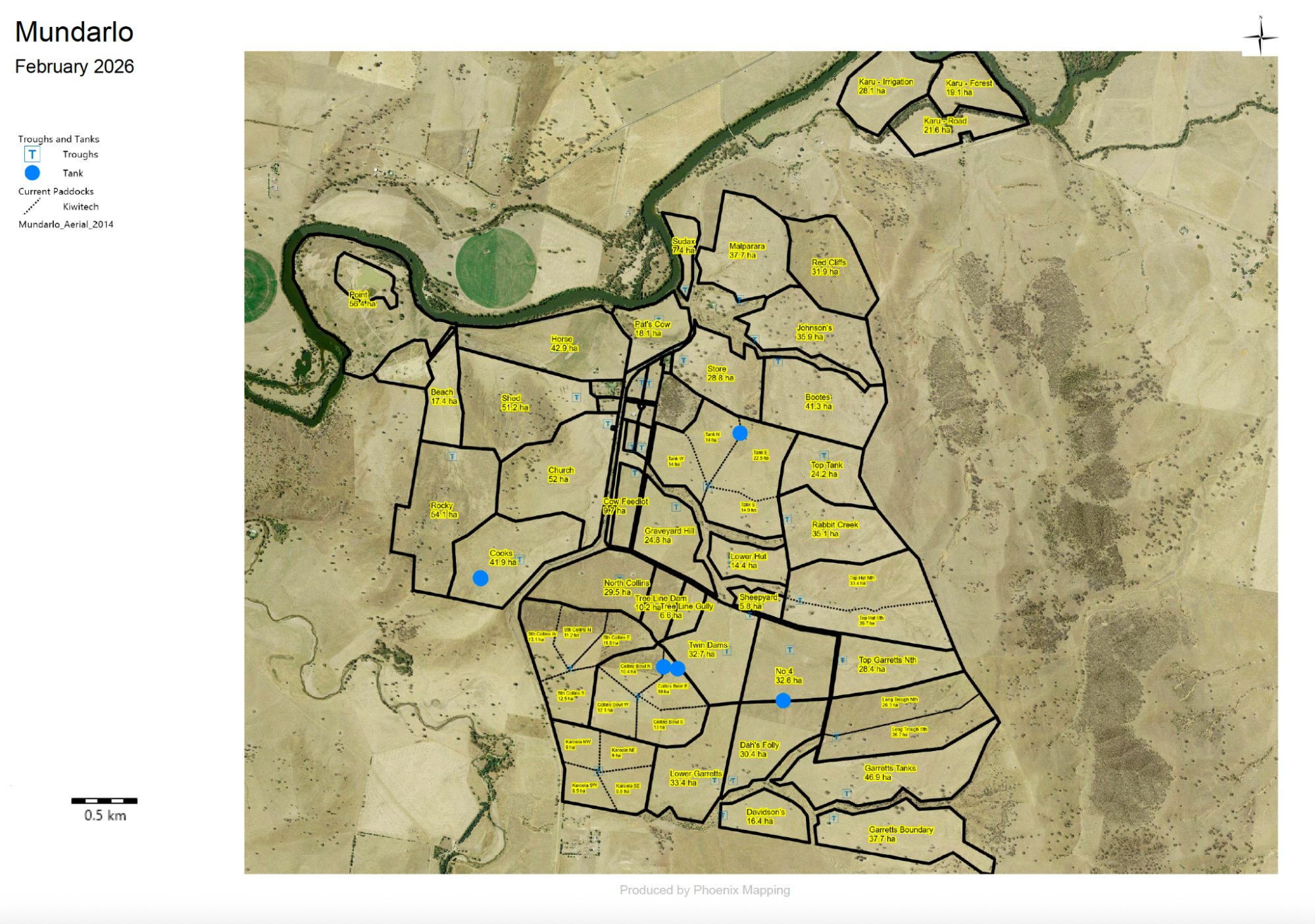
Figure 10. A property map showing fencing design at Mundarlo. Source: Nick Austin.
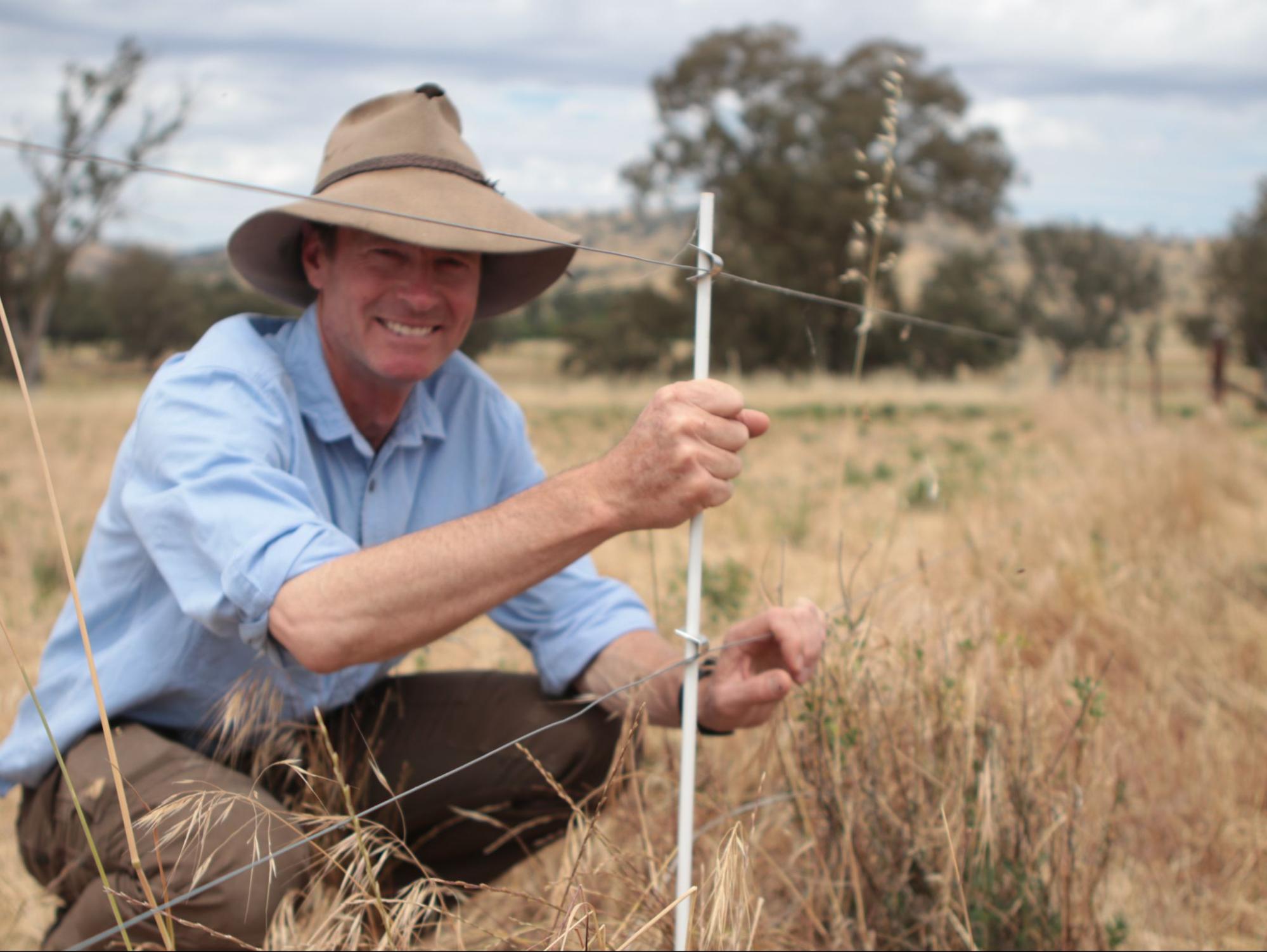
Image 34. Temporary electric fencing at Nick Austin’s. Source: Grow Love Project.
Rod and Katrina Butler
Rod and Katrina Butler have permanent fences that vary in design (Figure 11) in order to teach the sheep that not all the fences are the same and therefore deter fence breaches. Some fences have a hot wire on the bottom, some have hot wires on the bottom and top and an earthwire in the middle, while others are variations of this setup. A lot of gates are cocky gates, which they used to equip with an outrigger and hotwire to deter sheep, but they find they no longer need to. Rod explains, ‘Once the sheep trust the system, that there will be suitable feed and water and they will be moved on regularly, then they don’t try to test the boundary.’ Rod and Katrina will sometimes subdivide paddocks using temporary fencing as feed becomes abundant. In order to ensure a return on investment for any new fencing, they will only subdivide when available feed and animal numbers justify the investment. ‘Don’t spend all your money on fencing until the paddock is worthy of splitting up,’ says Katrina.
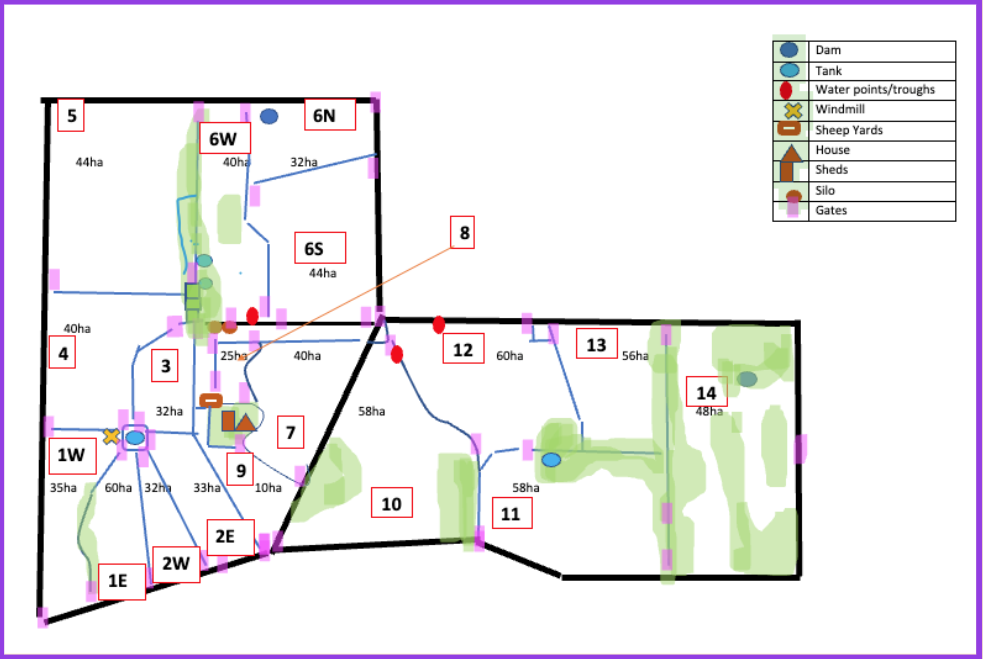
Figure 11. Paddock layout at Rod and Katrina’s property, Gimlet Ridge. Source: Rod and Katrina Butler.
Ben Simpson
Ben Simpson has an exclusion-fenced boundary to reduce external grazing pressure from kangaroos and predation pressure from dogs, aiming to ‘get some rest into the country’. He uses netting for internal fencing on bigger 1,000ha paddocks, which is needed for keeping in his 3000 rangeland x boer goats. Subdivision fences on smaller paddocks of 250 ha are four-barb construction. Ben has not used electric fencing because it is not the best fit in his management system. ‘While it is much cheaper, there is more to check on, more maintenance and more likelihood of it stopping working. In dry weather, the cracking clay soils don’t carry an earth. While the upfront costs of the permanent fencing are higher, the long term maintenance is less, and there is less labour required to manage it.’
💡 Tips and Tricks: Livestock handling facilities
Increasing mob size can require upgrades to livestock handling facilities such as yards and laneways. Making these upgrades also provides an opportunity to incorporate natural animal behaviour into the design, taking advantage of their mobbing instincts and improving safety for both animals and handlers. Cattle, sheep and goats are herd animals and like to follow each other, so facilities can be designed around the tendency for separated animals to always try to return to the mob.
🐂 As they started to run larger mobs of livestock, David and Ruth Read realised that their livestock handling facilities needed improving, with holding pens needing to be three to four times the size. ‘It was a lot of challenges that you didn’t realise you had until you mobbed up 400 cattle together and went to bring them into the yards, and paddocks and holding pens weren’t big enough,’ says David.
Diversity and enterprise design
Increasing pasture diversity
While increased pasture diversity is often a result of shifting towards a regenerative grazing approach, especially when combined with a shift away from annual spraying out and resowing of annual pastures, pasture diversity can also be more proactively improved through planting and maintaining multispecies pastures.
More diverse pastures provide higher quality forage with a balanced diet of protein, fibre, energy and minerals. They can also help to fill seasonal feed gaps and provide additional grazing opportunities, while building soil carbon and soil health.
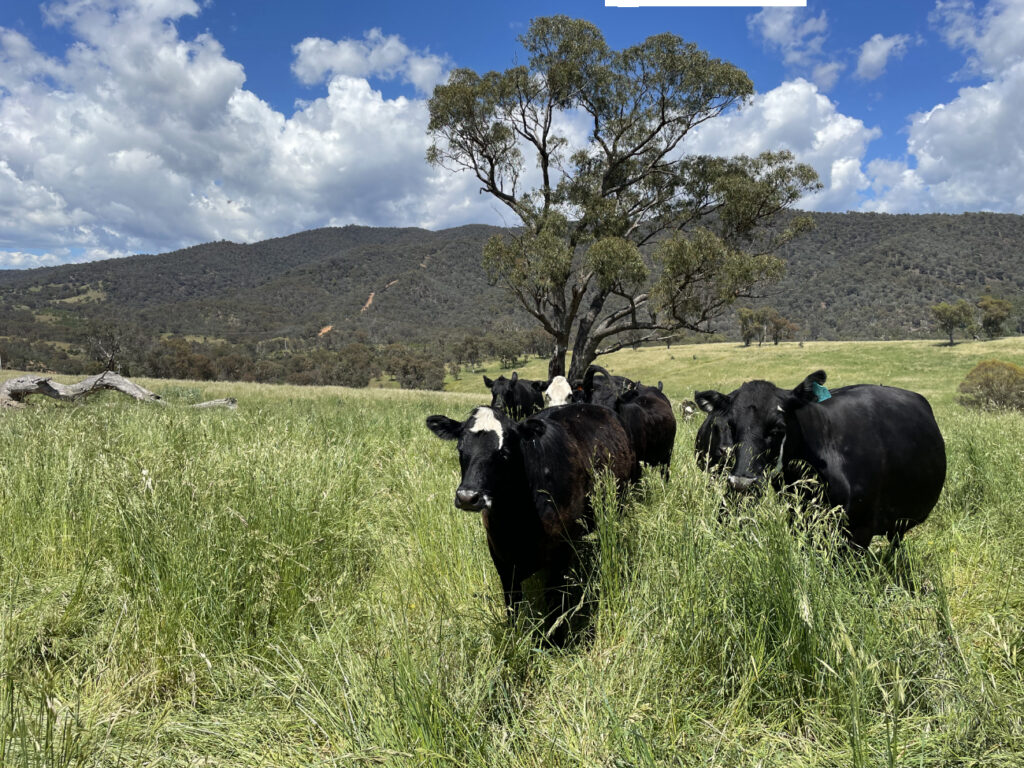
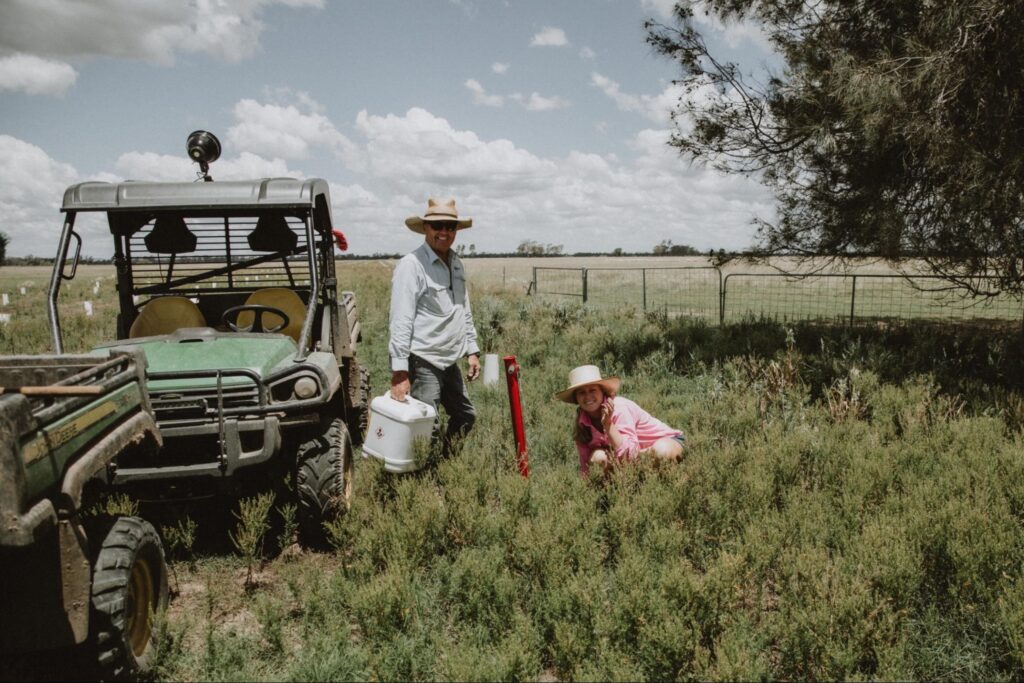
💡 Tips and Tricks: Grazing multispecies pastures
- Base your grazing management decisions on the goal of the multispecies pasture. For example, if your goal is to provide winter forage and enhance the environment for re-establishing pastures, grazing management may focus on encouraging the perennial pasture establishment over annuals. Make weekly observations of your multispecies pasture to better understand germination, growth and development of different species, and you may wish to record photos of these observations.
- Ensure that the stocking rate of your farm allows multispecies plantings adequate time to grow roots so plants are well anchored and can’t be easily pulled out before they are grazed. Some farmers may hold off grazing beyond when they would usually in order to let the multispecies crop reach a more mature stage and increase the benefits for soil health.
- Graze lightly on the first rotation, more heavily on the following grazes.
- Rest multispecies pastures after grazing to allow recovery, and consider timing the next graze to be when individual species start to outcompete others.
👉 Find out more
💡 Tips and Tricks: Grazing fodder crops
Regenerative grazing practices can also be implemented in fodder crops by planning and timing grazing to maintain the productive potential of the fodder crop as well as to protect and improve soil health. Grazing should be timed to occur when the plants are well anchored in the soil and at phases of the growth cycle when the plants are most nutritious. Grazing fodder crops regeneratively requires paying attention to plant growth rate and growth stage and adapting the grazing and recovery duration to promote regrowth of the fodder crops when possible.
🥾 Farmer examples: Diversity and enterprise design
David, Ruth and Sophie Curtis
The Curtis family plants 600 ha of multispecies fodder crops into pastures in March for winter feed. The multispecies crop is planted into the same country two years in a row before moving on to another area. They buy medic and brassica seed like tillage radish and keep their own seed from oat, vetch, barley, faba bean and field pea crops. David uses a pelletised composted fertiliser and drills the seed directly into the pasture using a disc planter with coulters. ‘We don’t kill anything, we don’t dig anything up, we just drill straight into the grass. We do it when it’s dry and we plant shallow, 10 millimetres deep to cover the seed,’ David explains.
David describes how these multispecies fodder crops ‘get a lot of plants to work in unison together who have different functions in the soil. Instead of bees being hungry in winter, they have flowering plants to live on as well. It’s like working as a team, the plants are working as a team. Our sheep get a winter smorgasbord.’
David makes sure that the plants are well established with secondary roots before grazing. He can tell when this is by ‘putting pressure on the plant that represents what an animal would do when biting it off, looking to see if there is resistance to being pulled out of the ground, and if it pulls out easily, the animal could pull it out and it is too early to graze.’ He likes to go in early with a quick graze when the season is dry, making sure there is enough left behind for the plants to regrow, which ‘sometimes stimulates a growth spurt’. When the season is wet, he leaves it longer before the first graze. David explains how he ‘uses his eyes and observations to make decisions, no hard and fast rules’.
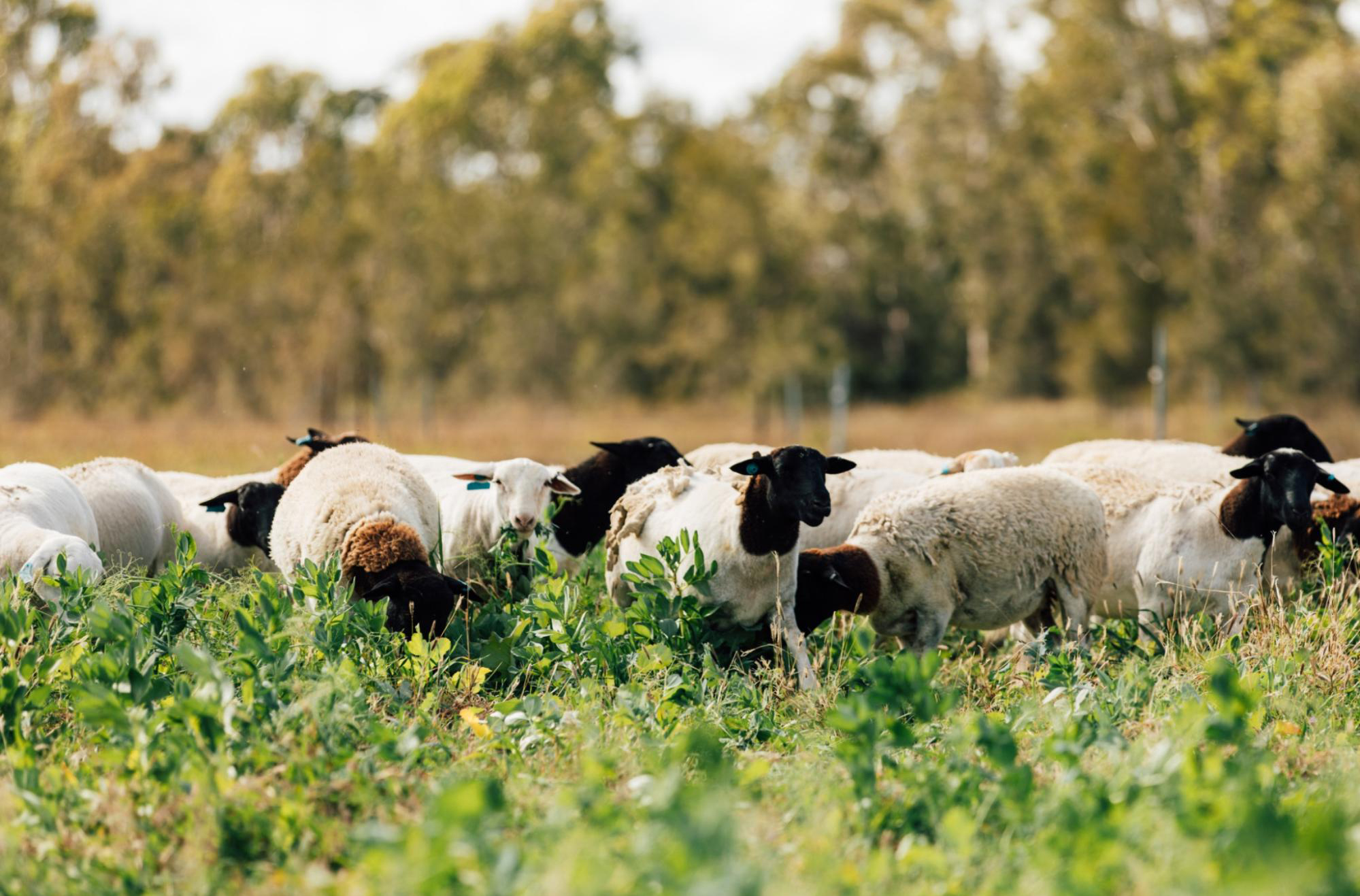
Image 35. Sheep grazing multi-species fodder crops at Bellevue. Source: Sophie Curtis.
David and Ruth Read
David and Ruth Read have observed capeweed (A. calendula) decreasing over time, and see benefits from changing how they view weeds. ‘We rarely see a paddock that is overrun with an undesirable plant like fleabane or thistles return for a second year, it usually does it’s job and is gone.’ David and Ruth ask two questions when they get a weedy plant: ‘What is it telling us? And what have we done? Maybe we grazed the paddock too low, or grazed it two times in spring.’
💡 Tips and Tricks: Managing weeds and toxic plants
Grazing can be a weed control strategy for weeds that are palatable to livestock. Planning grazing and recovery periods based on the most palatable pasture species also creates an environment where pastures can outcompete weeds. Improvements to ground cover and soil health tend to reduce the potential for toxic or weedy plants to establish and also help create conditions that favour perennial plants over annual weeds.
Increasing pasture diversity can be helpful when there are toxic plants present, as animals are less likely to select toxic plants when other palatable options are available. Problems can be more likely when livestock are hungry and forced to eat toxic plants through overgrazing, when they are contained in stock yards and holding paddocks or when the country is recovering from drought or flood. Newly introduced or young livestock are more likely to eat toxic plants, but livestock can sometimes learn to avoid toxic plants when they are bred in an area with those plants.
Increasing livestock species diversity
Managed well, grazing different livestock species on the same area of land can promote plant diversity, as different species graze plants in different proportions (Figure 12). Species diversity can also promote more diverse and effective nutrient cycling while boosting productivity and diversifying the enterprise. Different species of animals can be grazed together, for example in a flerd, which is where cattle and sheep are grazed together. They can also graze separately, in a sequence where they graze the land one after the other, known as leader-follower grazing. Ideally the following mob should be grazed as soon as possible after the leader mob to prevent grazing of plants that have begun to regrow and to prevent contamination of feed for the mob coming behind.
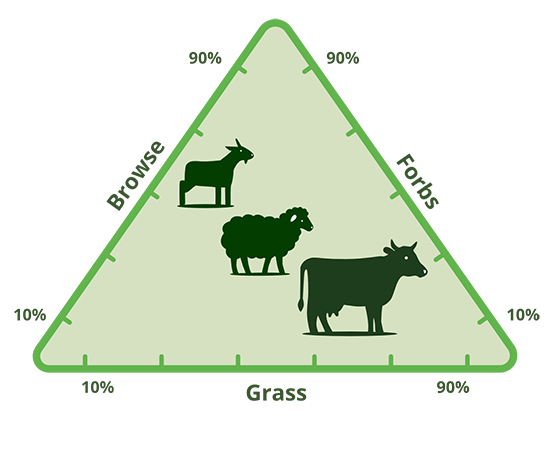
Figure 12. Multispecies grazing triangle, illustrating the general forage preferences of goats, sheep and cattle. Source: University of Minnesota Extension.
🥾 Farmer examples: Increasing livestock species diversity
Ben Simpson
Ben Simpson runs goats set stocked in paddocks to clean up regrowth of woody weeds and other undesirable species. The cattle rotate through as normal and a chopper musters the cattle out to move them, while the goats stay behind.
Nick and Deanna Austin
Nick and Deanna Austin have previously trialled bringing sheep into the grazing rotation as part of a flerd, which is a mixed species mob of sheep and cattle managed together as a single group. Nick was concerned the cattle might keep the sheep away from the troughs or trample the sheep, but water never turned out to be an issue. He observed that the sheep would water in the morning and the cattle would come into the water in the afternoon. The sheep would graze areas of the paddocks that cattle wouldn’t, especially the higher country in the hillier paddocks. In years with good rainfall, such as in 2020–2022, it became difficult to find the sheep in the long grass, so Nick put the cattle in a mob grazing ahead of the sheep, in a leader-follower grazing approach.
👉 Find out more
Multispecies Grazing: A primer on diversity. A publication discussing the principles and practices of grazing multiple species of livestock on pastures.
Integrating trees and vegetation for shade and shelter
Trees and other vegetation in the landscape can support soil and landscape regeneration in grazing enterprises by providing shade and shelter for livestock, increasing habitat for biodiversity and improving water quality and soil health. Retaining scattered trees and patches of vegetation in paddocks, allowing some regeneration and establishing new areas of vegetation supports livestock production through improving lamb survival, wool production and livestock weight gain and reduces the effects of heat and cold stress in livestock. In some cases, the long recovery periods provided in regenerative grazing can also encourage natural tree regeneration by allowing young tree saplings to establish without being constantly grazed.
🥾 Farmer examples: Integrating trees and vegetation for shade and shelter
David, Ruth and Sophie Curtis
The Curtis family has been planting trees since 1992 for windbreaks and shelter and to encourage birds back into the landscape. Paddock trees are also important for providing shelter for ewes at lambing to improve lamb survival.
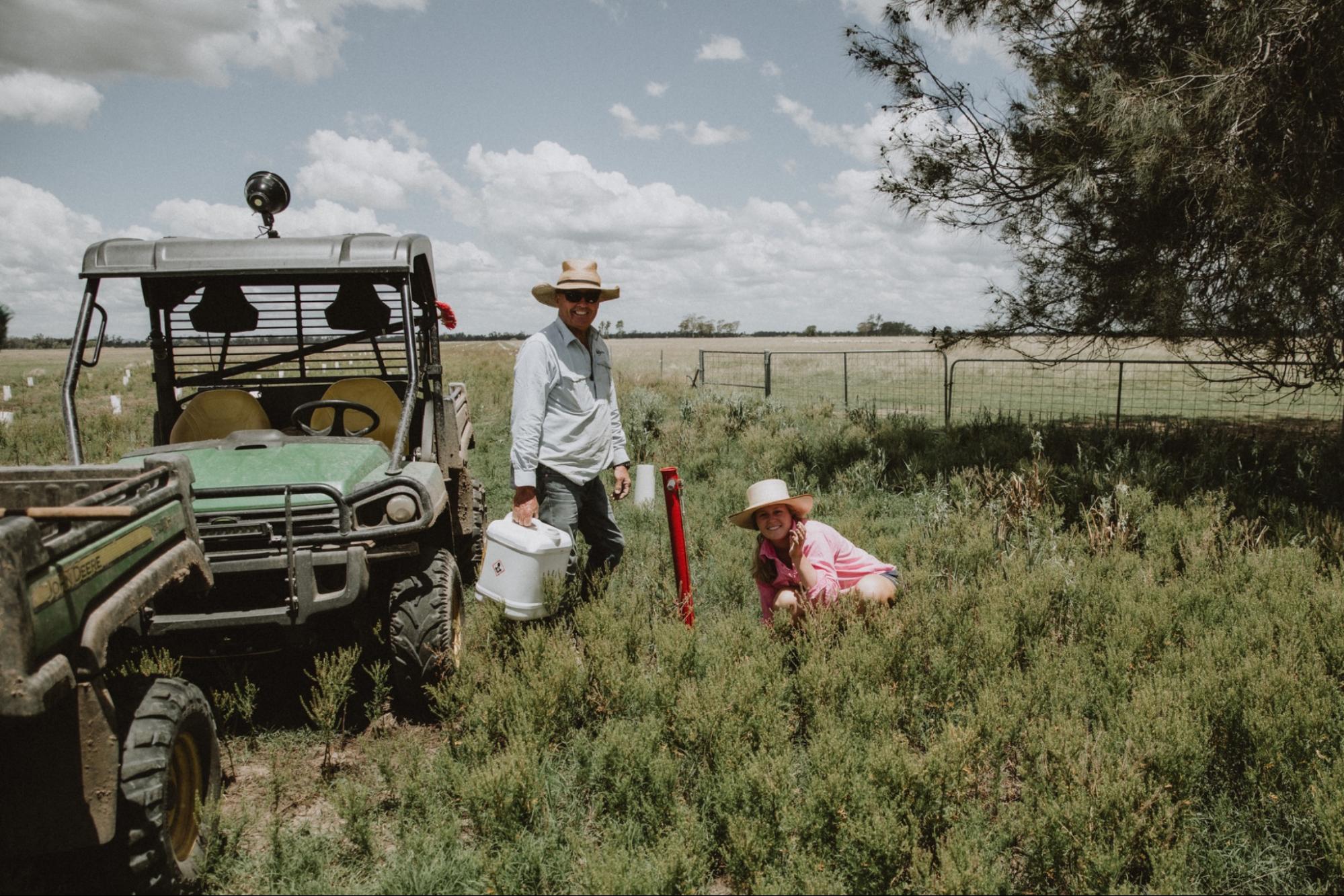
Image 36. David Curtis and employee Meg Millar planting trees at Bellevue. Source: Sophie Curtis.
David and Ruth Read
David and Ruth Read have fenced off the creek through the middle of their property and replanted this area with tree plantations and wildlife areas. This has helped protect the creek banks from erosion and slow the flow of water down to keep more water on their farm and rehydrate the landscape. Water quality has improved as a result, so any water that leaves their property is cleaner. The trees also provide shade and shelter for livestock.
Landscape rehydration
Combining grazing management with landscape rehydration strategies that improve water absorption and retention can re-establish the conditions for more prolific plant growth, rebuild soil fertility, fix more carbon in the landscape, restore lost biodiversity, improve water quality and availability, and moderate the impacts of climatic extremes including drought and flood.
🥾 Farmer example
Rod and Katrina Butler
Rod and Katrina Butler are working on a rehydration project informed by local indigenous partners. The aim is to slow down the flow of water high up in the landscape in order to reduce runoff and erosion and increase soil absorption. After installing earthworks in August 2025 they are already seeing that silt and topsoil are not moving off the area, plants are emerging and the moisture is being spread out.
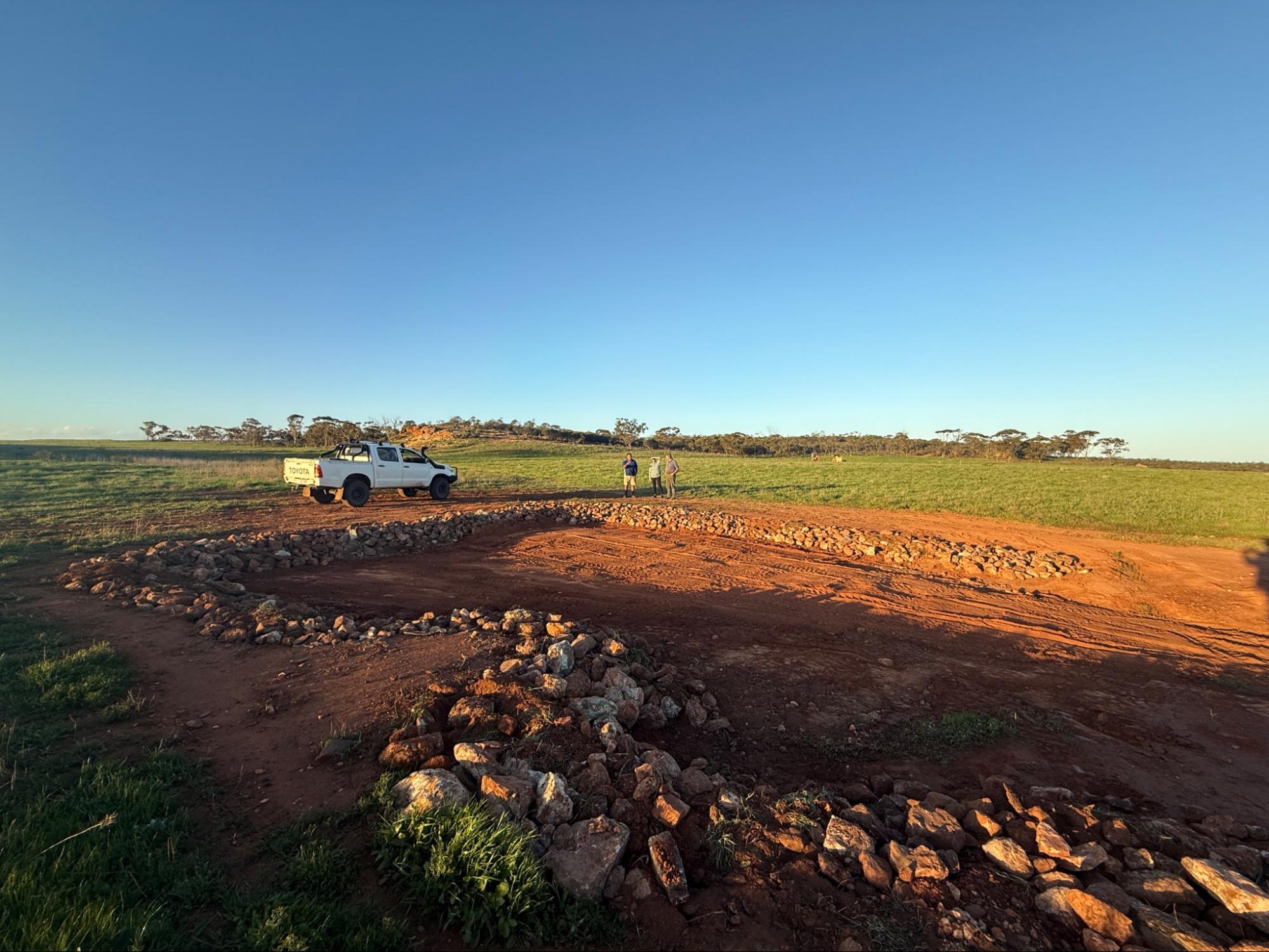
Image 37. Landscape rehydration works at Rod and Katrina Butler’s property, Gimlet Ridge. Source: Rod and Katrina Butler.
👉 Find out more
Soils for Life Case Study: Rehydration on the Monaro
Other Soils for Life rehydration resources
Mulloon Institute: Resources, training and education on landscape rehydration and restoration
Tarwyn Park Training: Resources, training and education on the Natural Sequence Farming approach to rehydration
Livestock management
Working with animal behaviour
Moving livestock more frequently can be daunting, especially where labour availability is a constraint. Many graziers are reducing this burden, and reducing the stress on animals and people, by working with natural animal instincts to facilitate easier moves. This approach is often learned through training courses that focus on this aspect of grazing management.
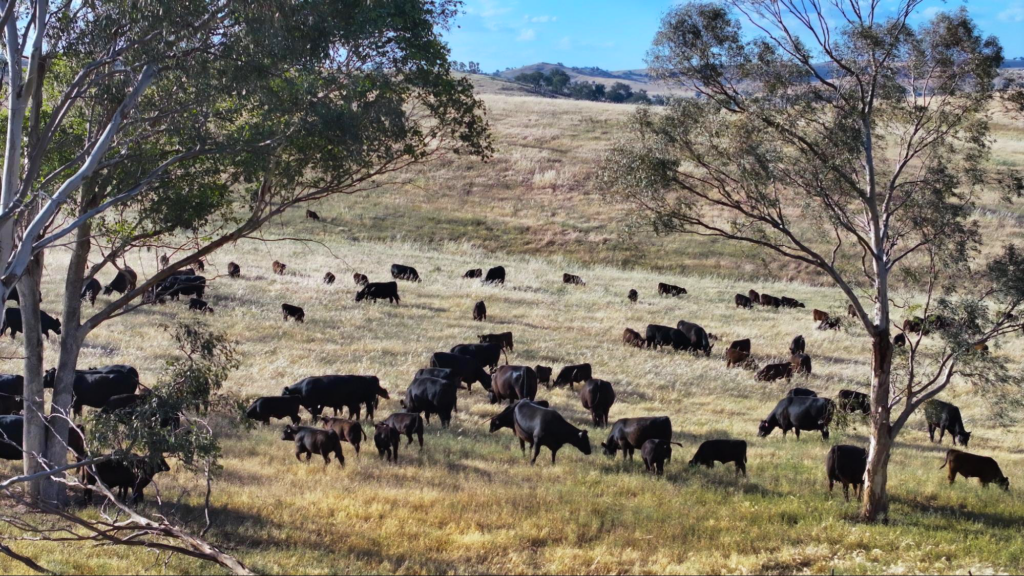
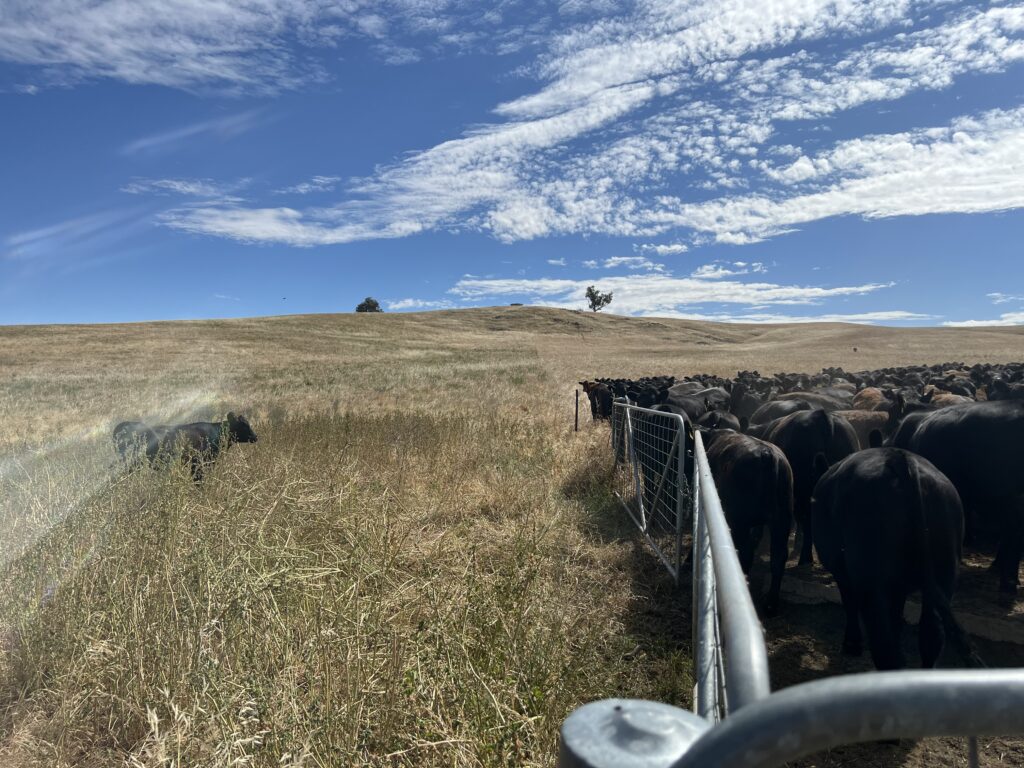
🥾 Farmer example: Working with animal behaviour
Ben Simpson
Ben Simpson has noticed how stock psychology has improved across the board since starting the intense rotations. ‘For the first few moves, the cattle assumed they were going back to cattle yards as that was previously the only time they would be moved, but after four moves they got used to it,’ says Ben.
Ben has set up water troughs on fence lines after seeing how the livestock head for the water when they first move paddocks. Ben encourages cattle to move themselves by turning the trough off at one end of a paddock, turning the trough on at the other end of the paddock, and then opening the gates at the troughs to move the cows to the next paddock.
Ben finds that the trade cattle in the cell grazing system are quieter than the breeders because they are moving more often. Ben says, ‘The trade cattle don’t take long to quiet down, they get used to you being around more often and being weighed, and being in a mob of 1,000 head they get educated by the others quickly.’
David and Ruth Read
David and Ruth Read believe building trust in the animals is essential. Having the right infrastructure for water and understanding stock behaviour in terms of water is a priority. ‘When the animals understand what’s happening, they don’t all rush to the water, they take it in turns and that all works if they have trust in you and trust in the water. You break that trust and you’ll have all 300 in the cell centre at once, thinking the water is going to run out, and that can really set them back,’ explains David.
Ruth sees the importance of ‘having animals that know the system and share their gut microbiome with new animals’. David and Ruth make sure there are educated animals to go in with trade animals when they arrive and then try to integrate the new stock in with their existing mob as quickly as they can. David explains, ‘We put more importance on getting animals out in the paddock than we do on quarantine. We let them out into a smaller paddock with some green grass and a trough so they can get used to our trough and our water really quickly. Then we will process them and get them back into a mob of educated animals.’
They find that some shy animals don’t like coming back into the narrow part of the wedge-shaped paddocks for water and having other cattle to follow helps train them. ‘Some animals are not good with high density. Some humans will never go to the MCG when there’s 100,000 people in it because it’s just too many, other people thrive on it. It’s the same for cattle. You can’t put 2,000 DSE per hectare together and expect all of them to be happy. One or two may push through the fence,’ explains David.
Rod and Katrina Butler
Rod and Katrina Butler observe animal behaviour and aim to keep the sheep calm. ‘It’s not all about fences, drones, virtual collars. They are just going to keep you poor,’ says Rod. Their approach to animal behaviour has come from working with educators Bruce Maynard and Fred Provenza, where animals move in mobs concentrated together, rather than spreading out. They have seen the benefits from working with herd dynamics. ‘Matriarchs are leaders who think they know everything, while the ones in the middle are important for giving different things a go and introducing it to the others,’ says Rod. ‘The animals know what you are doing, they know when you will move them.’
Rod likes to spend time drifting behind the sheep. He will use a ute, motorbike, bike or walk. He will also use his sheep dogs to shepherd the mob. All of these tactics help stimulate the predator/prey response, promoting grazing behaviour that sees them graze tightly together and offers resilience against dingoes. They have learned from working with Noongar loreman Clinton Hansen that dingoes prefer smaller food than sheep and this would be their preference in a healthy ecosystem.
Training sheep to trust the system and know they will be moved also makes using electric fencing so much easier, so the more Rod and Katrina learn and incorporate animal behaviour into their management, the more valuable it becomes. ‘Change takes a bit of time, you have to want to do it, you have to be ready for it,’ says Rod.
👉 Find out more
Low Stress Stock Handling: Training programs focused on creating a calm and controlled environment when moving and managing stock
Stress Free Stockmanship: Training programs reducing animal stress through improved stock handling skills
Self Herding: An approach to managing livestock and landscapes working with animal behaviour
MLA Animal Handling Guidance: Resources focused on minimising stress when handling livestock
Dr Temple Grandin: Website for information on livestock behaviour and design of facilities, including behavioural principles of livestock handling
Animal selection and breeding
Shifting to a grazing approach that works more with natural systems might require different species or a greater focus on genetics and culling. Breeding and selecting animals that are fertile, hardy, efficient and suited to your local climate can make them more suitable for a lower input, diverse pasture system. Considering the environment livestock are sourced from when selecting animals can also help improve health and performance of livestock over time. Grazing and livestock management practices can influence epigenetics, which is the influence of environmental factors on gene expression in the current generation and for several generations to come. The environmental influence on which genes switch on or off can affect animal health, growth and resilience, so animals bred in regenerative grazing management systems can become better suited to, and therefore perform better in, these conditions.
🥾 Farmer example: Animal selection and breeding
David, Ruth and Sophie Curtis
As a stud, The Curtis family breeds resilient sheep. ‘We always say the bottom 5% of the sheep cause 100% of the problems, so as a stud we need to remove those sheep that are poor doers,’ says David. They go through lambs early and pull out the bottom 50% and the ram lambs, which go into their commercial line of sheep to supply butchers.
👉 Find out more
Grass Genetics Selection 101: the basics of effective genetic selection
The most overlooked factor for successful regenerative grazing: Considerations when genetically selecting livestock to thrive in regenerative grazing systems
Animal health and nutrition
Observing animal grazing behaviour to inform nutrition decisions
Regenerative grazing practices can lead to improvements in animal health and nutrition. Moving stock more regularly provides the opportunity to observe stock and stay ahead of animal health issues. Improvements to pasture diversity can support animal nutrition by offering a wider diversity of plants, allowing livestock to consume particular plant species to meet their nutritional requirements.
Where supplementation is required, especially in transition periods, many graziers use free choice mineral licks to allow the livestock to select what they need. Licks can also be used to attract livestock to areas where animal impact is desired.
🥾 Farmer examples: Animal health and nutrition
Nick and Deanna Austin
Nick Austin explains that ‘having fewer mobs and being out moving them more regularly means that you are observing the stock a lot more, seeing if they are sick, seeing how content they are’. Trading cattle are drenched on arrival and that is the only drench given whilst on the farm as longer recoveries between grazing helps break parasite life cycles.
Ben Simpson
Ben Simpson realised that he cut back on nutritional inputs for the cattle, including lick molasses and fodder supplementation, too hard and fast initially. This impacted animal production in terms of reduced pregnancy rates and weight gains. Ben has started working with animal nutritionist Desiree Jackson to address this and work towards balancing inputs to production and keeping it profitable.
David and Ruth Read
David and Ruth Read explain that ‘our soils have a low CEC (cation exchange capacity) and are low in nutrients so we put out mineral licks and blocks for the stock.’ In order to get the fat score needed and turn over enough cattle to remain viable, they also put some animals through a feeder system to finish them for sale.
David and Ruth also time their strip grazing moves for 10 am, 1 pm and 4 pm each day. Waiting until 10 am allows the plants to have sugar from the morning sun and there will be less nitrates. ‘We make sure the pastures have a better sugar level and are more balanced,’ says David.
David, Ruth and Sophie Curtis
The Curtis family finish lambs with feeders in the paddock, if needed, using their own grain such as barley, field peas or faba beans. Supplying sheep with a dry lick makes sure that there are no nutritional deficiencies.
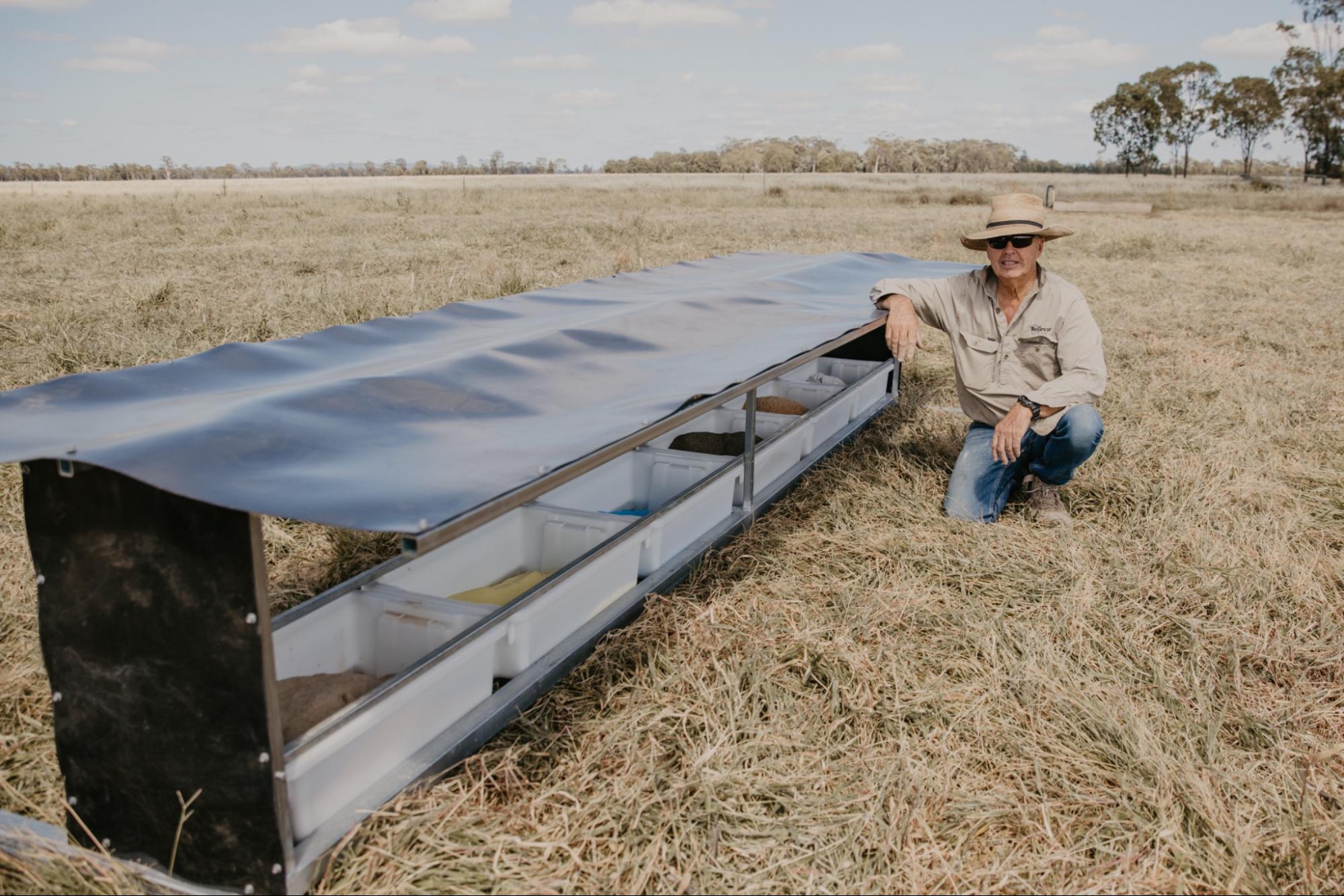
Image 38. David Curtis with a free choice mineral supplement station. Source: Sophie Curtis.
Rod and Katrina Butler
Rod and Katrina Butler move minerals, water or other attractants to get animal impact where they want it. After trying different options, they have minimised minerals back to three supplements offered as free choice: multimineral loose lick, salt and bicarbonate soda (to help digestion). In the past they offered sugar and molasses, but now that the pastures are more balanced and these are not required.
Managing Parasites
Grazing management can be an important tool for managing parasites. Grazing can be planned to keep grazing periods short to prevent stock being reinfected by larvae hatching from eggs they have deposited on pasture, and to ensure the rest period is long enough for parasite larvae to die before livestock return to a paddock. The length of time required for these depends on the parasite species and climatic conditions.
🥾 Farmer example: Managing parasites
David, Ruth and Sophie Curtis
David Curtis uses grazing management for managing barber’s pole worms in their sheep. David describes the three pillars of managing worms as stock movement, genetics and nutrition. ‘To manage worms we move the sheep, and we identify and remove sheep that are wormy or have low resilience or resistance.’ David is finding the sheep are becoming more healthy and more resilient from the combination of breeding and the improved landscape health.
Further learning
Explore our series of practice guides
Resources for further learning, including resources recommended by the farmers in this guide:
- RCS Grazing for Profit for grazing courses, advice and coaching
- Holistic Management for Holistic Management education and Ecological Outcome Verification
- Brian Wehlburg from Inside Outside Management, for Holistic Management education and support
- Graeme Hand for holistic land management training and consulting
- Judi Earl, AIMS for pasture and grazing management education and consulting
- Low Stress Stock Handling for stockhandling skills training
- Stress Free Stockmanship for stockhandling skills training
- Fred Provenza, author and scientist
- KLR Marketing, livestock marketing training
- Dick Richardson, Grazing Naturally training programs
- Stuart Andrews, Tarwyn Park Training for landscape rehydration training
- Jim Elizondo, Real Wealth Ranching training programs
- Allan Parker, Peak Performance communication skills training
- Darren Doherty, Regrarians for farm planning and landscape design education
- Quivira Coalition Grazing Toolkit a collection of webinars, podcasts, videos, and other resources on grazing management
- Prograze, NSW Department of Primary Industries training program that includes pasture assessment, livestock assessment and grazing management
- Understanding Agriculture Principles for implementing regenerative agriculture
Are we missing a great learning resource here? Let us know via [email protected].
Join a discussion group! Sign up to Soils for Life’s newsletter to hear about opportunities to join a discussion group with like minded farmers. Or follow our guide to start your own.
This guide was produced with funding from Twynam Investments and guidance from Judi Earl (Agricultural Information and Monitoring Services), Helen Lewis (Australian Holistic Management Cooperative), David McLean (RCS), Grahame Rees (KLR Marketing) and Brian Wehlburg (Inside Outside Management). We also acknowledge and thank the case study farmers profiled in this guide for their generosity in sharing their stories, knowledge and experience. Soils for Life remains solely responsible for all content, and the views expressed do not necessarily reflect those of the funder or advisers.
Appendix
Grazing planning terminology
| Term | Definition | How this is used |
| DSE | Dry sheep equivalent
1 DSE represents the feed required for a mature, 50 kg wether or dry ewe to maintain its bodyweight. |
1 DSE requires 1 kg of dry matter of average pasture quality per day to maintain its body weight.
DSE ratings indicate the amount of additional feed particular classes of animals require over the maintenance of a 50 kg wether. |
| LSU | Large stock unit or Livestock unit
1 LSU represents the feed required for a 450 kg steer to maintain its bodyweight. |
LSU ratings indicate the feed required by different classes of grazing animals. |
| Stocking rate | The number of animals on a piece of land, usually expressed in terms of LSU/ha or DSE/ha. | Generally, stocking rate refers to the number of stock across an entire production landscape, or in the case of set stocking, the number of stock within a large set stock paddock. |
| Stock density | Stock density is the number of livestock units grazing an area of land at a given time, and is often expressed in terms of LSU/ha or DSE/ha, but can also be calculated as head/ha or kg/ha to reflect the fact that it is the number of hooves and mouths that creates stock density | Stock density differs from stocking rate because it describes how ‘bunched’ the stock is on a piece of the production landscape. Often used in rotational grazing and cell grazing, the stock density can be increased when more animals are confined in a smaller area, even if the total stocking rate of the property doesn’t change.
See Stock density and high intensity grazing section |
| Carrying capacity | An estimate of the number of grazing animals that an area of land can sustain over a period of time without causing long term degradation to the pasture or ecosystem, measured as DDH or SDH. | Used to estimate how much feed is available for livestock. |
| DDH | DSE days per hectare
DDH = 10,000 m2 ÷ number of m2 of pasture to support one DSE for one day |
Used to estimate how much animals have eaten in a graze, and how many livestock a paddock can feed, in terms of DSE. |
| SDH | Stock days per hectare
SDH = 10,000m2 ÷ number of m2 for one LSU for one day. |
Used to estimate how much animals have eaten in a graze, and how many livestock a paddock can feed, in terms of LSU. |
| DDH/100 mm | A carrying capacity benchmark in terms of DSE days per hectare per 100mm of rain | The relationship between the amount of feed you are going to be eating on a 12 month basis against your rolling 12 month rainfall. |
| SDH/100 mm | A carrying capacity benchmark in Livestock days per hectare per 100mm of rain | The relationship between the amount of livestockfeed you are going to be eating on a 12 month basis against your rolling 12 month rainfall |
| Rolling rainfall | The cumulative rainfall received for the previous 12 months today. This number is dynamic and changes with every day and every rainfall event. | This metric shifts us away from ‘average’ rainfall mindset towards the rainfall we have actually received and its trend over time. It can be a key indicator a dry period is approaching. |
| Square method | Estimating the area required to feed one LSU or DSE for one day. | This can be converted to DDH or SDH for use in feed budgeting. |
| Livestock classes | Categories of livestock within a species, such as calf, weaner and steer. Livestock mobs are often sorted by age, sex, weight or reproductive status. | Standardises language within the industry.
Segregating livestock into different classes is sometimes used to improve production efficiency, animal welfare, and nutritional management. |
What did you think of this guide?
Thank you for reading the practice guide! We would love to know whether you found the guide useful. Please take a minute tell us more.
For more information
If you have any questions, get in touch at [email protected].
