


Practice Guide: Integrating Cropping and Livestock
PART OF A SERIES OF PRACTICE GUIDES TO USE IN YOUR REGENERATIVE CROPPING TOOLSET | LAST UPDATED: JUNE 2025
Overview
Integrating livestock involves combining cropping with sheep, cattle or other animals. Integrating livestock addresses one of the biggest challenges to soil and landscape regeneration in cropping systems by reintroducing species diversity, and can lead to immediate improvements in nutrient cycling and weed and biomass management. This guide introduces methods farmers are using to integrate livestock into broadacre cropping and the benefits of doing so.
This integrating cropping and livestock practice guide explores strategies to enhance farm resilience and productivity by combining crop cultivation with livestock grazing.
As with any practice, the decision to introduce livestock depends on the unique context of each farm. To reflect this, the guide shares two examples from South Australia and New South Wales, showing how they integrate livestock into their diverse, evolving cropping operations.

Before trying a new practice, it is important to consider your unique context and goals. What are you trying to achieve? Soil and landscape ecosystems are complex, and no two farming systems are the same – what worked for one farmer may not work for you. So consider starting small, monitoring the results and allowing some room for trial and error. There is no silver bullet when it comes to addressing soil health, so think about which strategies or combinations of other practices may be suitable to support what you’re doing.

Important: This Guide is designed to provide general information only. It is not tailored to the context of any individual farm, person or business, and does not constitute advice. Before using the information, you should carefully evaluate its accuracy, currency, completeness and relevance for your purposes, and consider seeking advice from appropriate professionals who have taken into account your individual circumstances and objectives. As a nonprofit dedicated to supporting farmers, we work hard to ensure our information is useful and accurate. However, Soils for Life accepts no liability arising from any use or release of information in, or referred to in or linked to this guide, or any error, inaccuracy or omission.

What does integrating livestock involve?
Mixed farming has long been part of Australia’s broadacre history, but since the 1990s, some farms have shifted to continuous cropping, dropping livestock out of the system.1LW Bell and AD Moore, ‘Integrated crop–livestock systems in Australian agriculture: Trends, drivers and implications’, Agricultural Systems, 2021, 111:1–12, doi:10.1016/j.agsy.2012.04.003. Many farmers find that livestock can bring flexibility, improve nutrient cycling and reduce risk, while creating the conditions for building long-term soil and landscape health. As the case study farmers in this guide show, there are many ways to integrate animals into a cropping system that can fit with different landscapes, seasons, resources and farm business goals. Some common methods include:
- In-crop grazing (also known as dual purpose crops), where suitable crops are grazed early on in the growing cycle and given enough time to recover before grain fill. The crop is still taken to harvest, with grazing managed to avoid yield loss.
- Grazing pasture phases, cover crops and fodders, where pasture or a fodder is re-established and livestock are grazed during planned breaks in cropping. Pasture phases (or leys) are usually for multiple years, but cover crops and fodders can be used between cropping seasons.
- Cropping into pasture, where crops are direct seeded into perennial or native pastures without removing the existing groundcover, when the seasonal conditions are suitable.

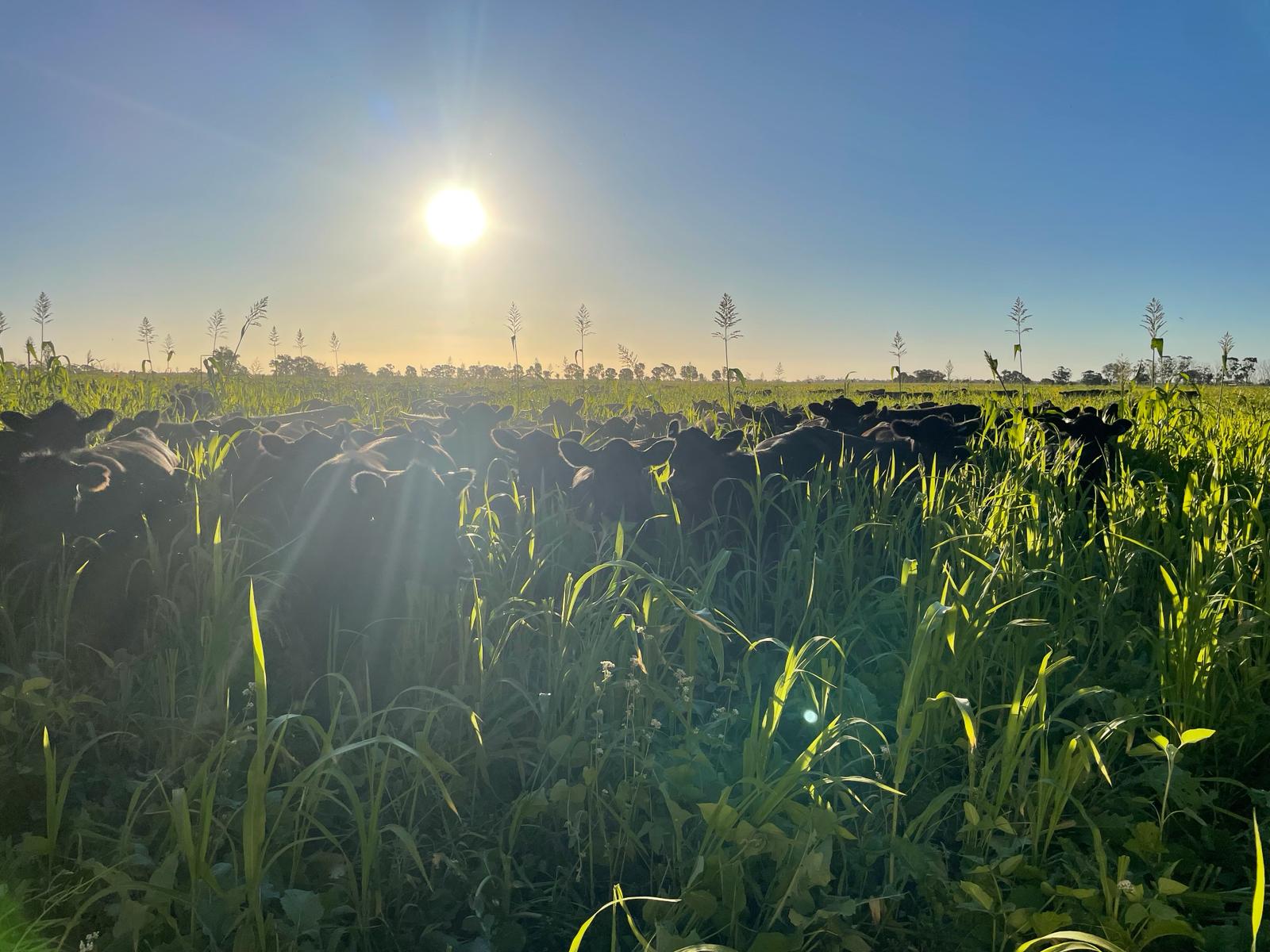
Image 1. Cattle grazing a multispecies crop at Pine Grove, VIC. Source: Grant Sims.
Farmers integrating livestock

Farmers integrating livestock
This guide includes examples from two Australian farmers throughout, showing their approach to integrating cropping and livestock in different farming systems.

Josh and Peri McIntosh run Border Park Organics, a certified organic mixed farm in South Australia’s Mallee region. They grow grain and pulses, as well as merino sheep, beef cattle and fat lambs. With low rainfall and sandy soils (what they refer to as a ‘brittle’ environment), they’ve developed an adaptive farming system that integrates cropping and livestock to build soil health, retain moisture and manage risk.
The backbone of their system is a flexible three-year rotation that includes grain crops, multispecies cover crops and native pasture regeneration. They graze sheep and cattle from closed breeding herds across every rotation, from stubble and summer weeds to cover crops and native grasses. They manage livestock in this way to cycle and move nutrients around the farm and support soil biology.
The McIntoshes’ management aims to merge traditional organic principles with innovative regenerative practices, steering the farm towards a systems-based approach focused on soil health and resilience. The combination of livestock and cropping is a key strategy to achieving this.
Location: Ngintait and Ngarkat Country, Taplan, SA
Regional Climate: Hot dry summer, cold winter
Average Annual Rainfall: 269 mm
Property Size: 2,390 ha
Elevation: 28–58 m
Social Structure: Family farm
Enterprise Type: Organic cropping of dryland grains and pulses (wheat, rye, barley, oats, triticale, peas, hay), organic self-replacing poll hereford beef cattle and self-replacing merino sheep for wool and fat lambs
Integrating Livestock Strategies: Pasture rotations, weed and stubble management, livestock used to move and cycle nutrients
Soils: Sands and sandy loams with some calcium carbonate, including Calcarosols, Kandosols and Arenosols

Colin Harper is a third-generation farmer at Taravale, a sheep and grain farm in the Riverina, New South Wales.
Sheep make up around two-thirds of the farm’s production, and have always been a reliable part of the farming system over four generations. Colin has worked to bring cropping into the same low-risk model, focusing on ‘low-input, low-risk’ strategies. Cropping was Colin’s first passion, something he gravitated towards as a young man, taking on the cropping jobs handed over by his father and grandfather. A sharp rise in fertiliser costs early in his career prompted him to trial more cost-effective and biological options, and it sparked a growing interest in soil health. In the early 2000s, Colin invented and built a ‘Stubble Cruncher’ to manage thick stemmed stubble like canola, allowing stubble groundcover to be retained while still being able to sow through it.
Now with two sons back home on the farm, Colin is as motivated as ever to keep providing nutritious and grass-fed food to locals through both his cropping and livestock farming. Alongside cropping wheat and canola, the farm’s main livestock enterprise is breeding first-cross ewes, with an on-farm paddock-to-plate business developed to value-add wether lambs. Colin bought the local butcher shop and also sells their grass-fed lamb and flour direct to customers at the Riverina Producers’ Market in Wagga Wagga.
Location: Barunggam Country, Tara, NSW
Regional Climate: Hot dry summer, cold winter/temperate sub-humid
Average Annual Rainfall: 500 mm
Property Size: 2,430 ha
Elevation: 290 m
Social Structure: Family farm
Enterprise Type: Mixed farming of sheep, wheat, canola
Livestock Integration Strategies: Five-year pasture rotations between two-year broadacre grain rotations, sheep used to manage weeds and stubble when needed
Soils: Sandy red loams, mostly Chromosols with some areas of Kurosols
What are the benefits of integrating livestock?
Diversify income, build business flexibility and resilience and support long-term soil health
Diversification and seasonal flexibility: In dry or variable seasons, failed grain crops can be grazed, converting potential losses into livestock productivity. Building this flexibility into a farming system can create more choices and adaptability to seasonal conditions, helping spread risk and stabilise income. Enterprise diversification also means that there’s other production and sales to fall back on to ride out tough times and spread financial risks across variable commodity markets.2 JW Oltjen and JL Beckett, ’Role of ruminant livestock in sustainable agricultural systems,’ Journal of Animal Science, 1996, 74(6):1406–1409, doi:10.2527/1996.7461406x.


Images 4 & 5. A paddock of cereal rye growing (L) and cattle grazing rye stubble post harvest (R) at Border Park Organics. Source: Josh and Peri McIntosh.
For Colin Harper, integrating livestock with cropping is a key strategy for managing risk and building financial stability. ‘Diversity of income’ is at the heart of his approach. Despite the fact that lamb prices are also variable and mightn’t have the ‘big numbers’ of cropping, he’s found the sheep to be a reliable, consistent fallback. Colin’s rotation of pasture, canola and wheat allows for flexible decision-making in dry times – whether that’s grazing or cutting failed crops for hay or running livestock through stubble.
The McIntoshes have similar motivations to Colin Harper. Josh describes their system as low input, low risk and highly adaptive. By integrating sheep and cattle, they’ve diversified income and buffered against seasonal extremes. In dry years when crops struggle in their ‘brittle’ environment, destocking can generate cash flow and, in some seasons, becomes the dominant farm income stream. The organic premium they get for their meat further helps to buffer the seasonal extremes that can come with cropping.
‘With variable seasons, it’s good to have backups.’ Josh McIntosh
Running livestock means the McIntoshes can also utilise areas of their farm that are marginal and not well suited for cropping. These paddocks have been returned to native perennial pastures and provide low-maintenance, reliable feed.

Image 6. Hay from a cereal crop that didn’t make it to harvest in a dry year at Taravale. Source: Colin Harper.

Image 7. A paddock of native grass in spring at Border Park Organics. Source: Josh and Peri McIntosh.
Soil fertility and nutrient cycling: Mixed farming doesn’t just spread financial risk. It can also help soil, plants and animals work together in ways that better mimic natural systems and make the whole farm more stable over the long term.3RD Garrett, MT Niles, JDB Gil, A Gaudin, R Chaplin-Kramer, A Assmann, TS Assmann, K Brewer, PC Carvalho PC de Faccio Carvalho, O Cortner, R Dynes, K Garbach, E Kebreab, N Mueller, C Peterson, JC Reis, V Snow and J Valentim, ‘Social and ecological analysis of commercial integrated crop livestock systems: Current knowledge and remaining uncertainty’, 2017, Agricultural Systems, 155:136–146, doi:10.1016/j.agsy.2017 .05.003; G Lemaire, A Franzluebbers, PC de Faccio Carvalho and B Dedieu, ‘Integrated crop–livestock systems: Strategies to achieve synergy between agricultural production and environmental quality’, Agriculture, Ecosystems & Environment, 2014, 190:4–8, doi:10.1016/j.agee.2013.08.009.
Livestock and pasture rotations (or leys) in cropping systems can help rebuild soil organic matter.4Soil organic matter has declined in some regions by more than 50% in many Australian cropping soils: S Orgill, Soil organic matter in cropping systems [PDF], NSW Department of Primary Industries, 2020, accessed 3 March 2025; Z Luo, E Wang and OJ Sun, ‘Soil carbon change and its responses to agricultural practices in Australian agro-ecosystems: A review and synthesis’, Geoderma, 2010, 155(3–4):211–223, doi:10.1016/j. geoderma.2009.12.012; RC Dalal and KY Chan, ‘Soil organic matter in rainfed cropping systems of the Australian cereal belt’, Soil Research, 2001, 39(3):435–464, doi:10.1071/sr99042. Pastures, especially with perennial plants, have a greater roots-to-shoots ratio than annual crops (i.e. they produce more roots and dry matter below ground), effectively contributing more organic matter and organic carbon to the soil.5WB Badgery, AT Simmons, BW Murphy, A Rawson, KO Andersson and VE Lonergan, ‘The influence of land use and management on soil carbon levels for crop-pasture systems in Central New South Wales, Australia’, Agriculture, Ecosystems & Environment, 2014, 196:147–157, doi:10.1016/j.agee.2014.06.026; H Frances, Managing Soil Organic Matter: A Practical Guide [PDF], Grain Research and Development Corporation, 2013, accessed 20 November 2025. Soils with high organic matter are generally more resilient and able to store more soil moisture and nutrients. A ley pasture period can also give the soil surface time to recover and reduce the risk of erosion.6 D Lawrence, M Bell, B Johnson and D Lloyd, ‘Integrating pastures into farming systems – soil health and the benefits to crops‘, Tropical Grasslands, 2009, 43(4):212–216.
Livestock can further enhance soil health by stimulating biological activity. Grazing returns nutrients to the soil through manure and urine and increases the diversity of plant species interacting with soil microbes.7PC de Faccio Carvalho, I Anghinoni, A de Moraes, ED de Souza ED, RM Sulc, CR Lang, JPC Flores, MLT Lopes, JLS da Silva, O Conte, C de Lima Wesp, R Levien, RS Fontaneli and C Bayer, ‘Managing grazing animals to achieve nutrient cycling and soil improvement in no-till integrated systems’, Nutrient Cycling in Agroecosystems, 2010, 88(2):259–273, doi:10.1007/s10705-010-9360-x; G Garland, A Edlinger, S Banerjee, F Degrune, P García-Palacios, DS Pescador, C Herzog, S Romdhane, A Saghai, A Spor, C Wagg, S Hallin, FT Maestre, L Philippot, MC Rillig and MGA van der Heijden, ‘Crop cover is more important than rotational diversity for soil multifunctionality and cereal yields in European cropping systems’, 2021, Nature Food, 2(1):28–37, doi:10.1038/s43016-020-00210-8. Animal saliva has even been found to stimulate plant growth after grazing.8EQ Li, JS Liu, XF Li, HY Xiang, JP Yu and DL Wang, ‘Animal saliva has stronger effects on plant growth than salivary components’, Grass and Forage Science, 2014, 69(1):153–159, doi:10.1111/gfs.12016; D Parnell, A Merchant and L Ingram, ‘Is animal saliva a prominent factor in pasture regrowth?’, Crop and Pasture Science, 2024, 75(1), doi:10.1071/cp23201. Additionally, pasture species like perennial ryegrass (Lolium perenne) are known for their carbon exudates that feed soil microbes.9PC de Faccio Carvalho, I Anghinoni, A de Moraes, ED de Souza ED, RM Sulc, CR Lang, JPC Flores, MLT Lopes, JLS da Silva, O Conte, C de Lima Wesp, R Levien, RS Fontaneli and C Bayer, ‘Managing grazing animals to achieve nutrient cycling and soil improvement in no-till integrated systems’, Nutrient Cycling in Agroecosystems, 2010, 88(2):259–273, doi:10.1007/s10705-010-9360-x.
Livestock and pasture integration can be especially helpful for adding nitrogen to cropping soils. While legume cash crops, multispecies cover crops and forage crops can provide a short-term nitrogen benefit for the following grain crop, pasture phases with legumes, particularly clover-dominant pastures, can boost soil nitrogen levels longer-term, helping to reduce reliance on synthetic fertilisers. 10D Lawrence, M Bell, B Johnson and D Lloyd, ‘Integrating pastures into farming systems – soil health and the benefits to crops‘, Tropical Grasslands, 2009, 43(4):212–216; GA Thomas, RC Dalal, EJ Weston, KJ Lehane, AJ King, DN Orange, CJ Holmes and GB Wildermuth, ‘Pasture–crop rotations for sustainable production in a wheat and sheep-based farming system on a Vertosol in south-west Queensland, Australia’, Animal Production Science, 2009, 49(8):682–695, doi:10.1071/ea07170.

Image 8. Evidence of dung beetle activity at Taravale. Source: Colin Harper.

Find out more in our practice guides on Improving Nitrogen Cycling and Efficiency, and Multispecies Cropping.
Improving soil structural health: Integrating livestock into a cropping system can support better soil structure, particularly when combined with diverse pasture leys and grazing rotations that give enough time for rest and root growth. Increased soil biology, organic matter and nutrient cycling resulting from well-managed integrated livestock all contribute to rebuilding of soil aggregates.11LW Bell and R Garrad, ‘Perennial pasture leys enhance soil health compared to continuous cropping’ [conference presentation], Australian Agronomy Conference, Ballarat, September 2017, accessed 5 March 2025. These benefits depend on grazing practices. Overgrazing can have the opposite effect, leading to surface compaction, reduced groundcover or pugging during wet conditions.
Colin Harper sees the integration of livestock and cropping as fundamental to building soil biology and fertility. He relies on his rye-clover pasture phase, livestock manure and dung beetles to build nitrogen and soil fertility that he then ‘harvests’ in cropping rotations. Colin calls his pasture phases ‘money in the bank’ and that growing a crop is drawing down on that ‘deposit’. Reflecting on changes since he left school in the 1980s, Colin believes the early gains of chemical farming rode on the legacy of decades of mixed farming, and sees rebuilding soil health through livestock and diverse rotations as essential for future productivity and business resilience.
For the McIntoshes, grazing cover crops helps prepare the soil for sowing, improving tilth and reducing the need for deep cultivation and diesel. They find that grazed cover crops support soil aggregation and subsequent cash crop establishment. Josh has also observed that crops following a grazed multispecies cover crop are more responsive to foliar nutrition.
Integrating livestock into cropping rotations has helped Josh and Peri improve soil health in several important ways. Grazing animals contribute to nutrient cycling by converting plant biomass into manure and urine, returning valuable nutrients directly to the soil. Josh also sees livestock as microbial inoculators, distributing a diversity of microorganisms as they move across paddocks and contributing to soil biology. Grazing, trampling and manuring work together to improve soil life and structure without the need for synthetic inputs.
Maintaining cover by allowing the growth of palatable plants like perennial native grasses or skeleton weed (Chondrilla juncea) helps protect against erosion, retain soil structure and keep vital moisture in the soil in their otherwise low-rainfall and sandy soils. In this way, livestock have become an integral tool for managing soil conditions between cropping cycles, but the McIntoshes are careful not to overgraze and push their pastures and soils too far with livestock.
‘Livestock present an opportunity to improve agroecology health and overall profit. However, if mismanaged they can have the opposite effect’. Josh McIntosh
Pest and disease break: Pasture phases can help break pest and disease cycles in cropping systems. Rotating out of crops and into pasture species can lower the pressure of pests and diseases that undermine the main crop species, such as pathogenic root lesion nematodes.12LW Bell and R Garrad, ‘Perennial pasture leys enhance soil health compared to continuous cropping’ [conference presentation], Australian Agronomy Conference, Ballarat, September 2017, accessed 5 March 2025.
In Colin Harper’s farming system, he rarely sees any signs of rust diseases or pest insect issues. Colin feels that the pasture leys and the increase in spider numbers during this phase helps reduce their pest pressure. He now sees far fewer instances of red legged mites and aphids than he did in years gone by. Colin also believes that his focus on plant nutrition has improved plant resilience.
Weed and stubble management: Stubble and spilled grain can be grazed post harvest for additional feed or to reduce biomass ahead of sowing. Bringing in livestock after harvest to graze palatable weeds can reduce weed pressure, cycle nutrients and lower the need for other weed control like herbicides, especially at higher stocking rates where animals can be less selective. Pasture phases also provide an opportunity to outcompete and lower the crop weed seed bank. Using livestock for weed management comes with some additional biosecurity risks and care needs to be taken to avoid weeds known to be harmful to livestock.
The McIntoshes use their sheep and cattle to manage weeds strategically through the year. After harvest, the animals graze stubbles and summer-active weeds, particularly skeleton weed, which the McIntoshes value as a forage plant, calling it ‘poor man’s lucerne’. For them, these summer weeds can provide important feed in dry conditions and give them more weed control options in their certified organic system.
In the winter growing season, naturalised annual ryegrass (Lolium multiflorum) and parabinga medic (Medicago truncatula) can quickly re-establish and can compete with sown crops. Prior to sowing, the McIntoshes use well-timed grazing and light tillage with a disc chain pass to reduce seed set before the weeds flower.
Colin Harper uses livestock to manage weeds post-harvest, seeing some weeds as useful, diverse feed. He takes a systems approach to weeds, believing that weeds are a symptom of something that could be improved in his farming system. For this reason, he tends to tolerate the presence of weeds as long as levels don’t affect wheat quality.
Find out more about ecological weed management by listening to our Weeds are telling us something podcast and the Reducing Herbicides Practice Guide.
How to integrate livestock
This section gives some practical insights and an overview of some of the main methods to integrate livestock into cropping, including:
- In-crop grazing
- Pasture phases and cover crop and fodder rotations
- Cropping into pasture.

This guide isn’t intended to be a comprehensive guide to regenerative grazing, but rather an introduction to the ways that livestock can be integrated into broadacre cropping.
Start here if you’re totally new to livestock
If you haven’t farmed with livestock before, this section covers some of the common challenges and key considerations. Additional upskilling and training is highly recommended for those new to livestock.
Skillset and labour: Managing animal health, grazing decisions and buying and selling livestock involves a different set of skills from cropping. If you’re totally new to livestock handling and farming, looking for a mentor or employees with these skills can be a great way to learn.
Like managing crop nutrition for optimal plant health and resilience, livestock have specific feed requirements, too. Feed sources in mixed farming tend to be more variable than in solely grazing enterprises and care needs to be taken to match feed quality and quantity with animal needs.
There are many options available for building livestock management skills, and different people have different needs.
Many of the farmers profiled in this guide and other Soils for Life case study farmers have used or recommended the following:
- Australian Holistic Management Co-operative
- Resource Consulting Services (RSC)
- Low Stress Stockhandling
- Regrarians
- Agricultural Information & Monitoring Services (AIMS)
- Southern Blue Regenerative
- Grazing Naturally System
- Inside Outside Management
- Real Wealth Ranching
- Savory Institute
Meat and Livestock Australia also provides a range of resources, training and events relating to livestock management, as do many agricultural industry and producer groups. It is also worth looking out for what’s on offer from your local Natural Resource Management organisation or Landcare group.
The McIntoshes describe their learning curve into livestock management in a mixed farming system as steep but rewarding. Josh had worked with livestock before in the dairy industry and out west on stations, but managing an integrated system rather than working as a stockman was new. It’s taken time, planning and a willingness to learn to get to where they are now.
For those new to livestock, the McIntoshes suggest starting out with trading rather than breeding, which creates more flexibility to buy and sell and reduces the overall labour needs. Though they recommend investing in good handling facilities, regardless.
‘Talk to people who have livestock in that area and learn their seasonal management plan…that would make a big difference.’ Josh McIntosh
Taravale has always been a mixed farm and Colin Harper has established systems and skills for managing both enterprises side-by-side. Over the years, he’s fine tuned his timing to ensure he doesn’t end up with a labour shortage when both cropping and stock jobs need to get done. For example, he shears towards the end of March, which is a win-win because he is freed up for planting winter crops come May/June and also avoids full fleece ewes lambing in winter when it can get wet and heavy. He also gets contractors to do shearing, which means his main labour is moving sheep in and out of the yards.
Equipment and infrastructure: Introducing livestock to a cropping enterprise will likely require infrastructure and equipment that may have fallen into disrepair or been taken out entirely in the transition to continuous cropping. Fixing or rebuilding fences, yards, shearing sheds and water infrastructure is no small task. Electric and temporary fencing options can offer a cheaper and time-efficient entry point for fencing infrastructure and, with some practice, are adaptable and user-friendly.
The development of virtual fencing presents an opportunity to integrate livestock for cropping farms without fences. Trials on Australian farms are highlighting how GPS-enabled devices worn by livestock might provide benefits such as the ability to avoid erosion prone areas in paddocks and to target weedy patches.13 G Braidotti, Strategic grazing with virtual fencing a viable potential weed control option, GRDC Ground Cover, 2025, accessed 16 April 2025. Keep an eye out for future virtual fencing developments as more states and territories in Australia move to legalise virtual fencing technology.14As of June 2025, virtual fencing is legal in NSW, Tasmania, WA, QLD and the NT. The Australian Department of Agriculture, Fisheries and Forestry are also set to release an Australian Animal Welfare Guide for Virtual Fencing in 2025: Australian Government Department of Agriculture, Fisheries and Forestry, Virtual fencing technology, The Animal Welfare Task Group (AWTG), n.d. accessed 25 May 2025.
The Harpers know that reintroducing livestock to farms that have transitioned to continuous cropping must be a ‘big, big hurdle’ and feels that it is ‘a real shame’ that fences and water have been taken out on many farms in his region. He also points out that the logistics of mixed farming across multiple properties is more difficult than in cropping because it’s harder to walk sheep 20 km up the road than it is to drive a tractor the same distance. For anyone looking at putting fences back onto a cropping farm, he suggests doing it bit by bit in ‘small bites’.
The McIntoshes also acknowledge that fences, yards and stock water are a ‘big investment’ and can be a barrier for croppers who are keen on introducing livestock. Josh says that an upside is that you get a fresh start and can plan things out exactly how you want them rather than working with existing infrastructure that isn’t fit for purpose or in ideal locations. They inherited paddocks that range from 11 ha to 280 ha, and so they plan to subdivide paddocks in the future.

Image 9. Fencing infrastructure around a triticale paddock at Border Park Organics. Source: Grow Love Project.

Image 10. Calves in the yards at Border Park Organics. Source: Grow Love Project.
Weed management: Integrating livestock provides opportunities to manage plant biomass (including weeds) with livestock instead of tillage or sprays. It’s important to know what plants and weeds are in the paddock before grazing. Some weed species are harmful or toxic to livestock, especially in high quantities.15 For example, weeds with burrs and seeds, like silver grass (Vulpia spp.), can get into animal’s eyes and skin and capeweed (Arctotheca calendula) and paradoxa grass (Phalaris paradoxa) can be toxic to livestock in high quantities: A Preston, ‘Integrated Weed Management in Australian Cropping Systems A National Reference Manual for Growers’, Grain Research and Development Corporation, 2019, accessed 10 April 2025. Grazing weeds in cropping paddocks also increases the risk of weed seeds being moved around the farm via animals’ fleece or dung. For particularly weedy paddocks grazed by sheep, grazing when fleece length is short can reduce this risk.
Managing in-crop grazing
Dual purpose crops and in-crop grazing: Dual purpose cropping involves grazing crops that are subsequently taken to grain harvest. This approach has the potential to increase overall profit per hectare, with trials in Australia showing yield gains across around a quarter of all harvests, likely due to reduced lodging and reduced disease pressure. Another quarter of harvests had losses of less than 250 kg/ha.16C Nicholson, GRAZING CROPPED LAND [PDF], Grain Research & Development Corporation, 2016, accessed 15 May 2025.
If you’re thinking about dual purpose and in-crop grazing, some of the key considerations include:
- Sow early (March to April) for winter-grown dual purpose crops
- Graze earlier in the season rather than later to allow for a longer recovery period. Graze only when plants have a well established root system and before growth stage 30 (GS30) at the start of stem elongation. Grazing beyond this growth stage can damage the growing point and reduce grain yield.
- Use crop varieties suited to crop grazing, such as those that are quicker to mature, to make up for delays in maturity caused by grazing.
Find out more with this Grazing Cropping Land booklet which summarises the latest information on grazing winter crops from the Grain & Graze Program.
Stubble grazing: Stubble can also be grazed, but may not provide a complete feed option. At least 40 kg/ha of residual grain or 40 kg/ha of green material from stubble regrowth is needed for sheep to maintain or gain weight. Grazing stubble can also help manage weeds that establish post harvest and is a key strategy for reducing herbicide use.
Crop and stubble grazing does reduce ground cover after harvest. Care should be taken to retain enough stubble in the paddock if it’s the main groundcover vegetation. Be aware of the negative impacts on soil health that could occur with reduced groundcover to avoid soil erosion caused by wind and water.
Find out more in Meat and Livestock Australia’s stubble grazing guide and our Reducing Herbicides Practice Guide for more.
Managing pastures, cover crops and fodders in a cropping system
A key strategy for integrating livestock into cropping systems is to rotate paddocks out of cropping and into cover crop/fodder phases or longer pasture leys.
- Pasture phases typically last multiple years and involve sowing or regenerating perennial or self-seeding species.
- Cover crops/fodder can be grown for a season (winter or summer) and used for livestock feed and to maintain and improve soil health between cropping seasons or over one cropping season (i.e. a summer cover crop or a winter fodder crop).
Including a diverse mix of species within and between these phases can benefit both animal health and soil health. For more on this, see our Multispecies Cropping Practice Guide.
Pasture and fodder establishment: Moving a paddock out of cropping isn’t dissimilar to a transition between grain crops. Some farmers broadcast or direct sow cover/fodder species or pasture species when there’s enough moisture following harvest. Other farmers find there’s enough of a native or improved pasture seed bank to allow for self-seeding, saving on planting costs. Additional species diversity can then be direct sown into pastures, if needed.
To establish pastures into new paddocks, Colin Harper initially sows clover under a wheat crop to establish a strong clover-dominant pasture seed bank. Ideally, these paddocks are then left in pasture for five years. Once a seed bank is established, they find they don’t need to re-sow pastures before a pasture ley, instead relying on the clover and annual ryegrass in the seed bank to germinate, except in extreme cases like after the Millennium drought. Having clover already growing under wheat at the end of a cropping phase avoids the risk of failed pasture establishment, especially in dry springs.
The McIntoshes also allow pastures to naturally regenerate the first year after a grain crop has been harvested. They graze the stubble straight after harvest and then allow the existing seed bank to establish through to the following spring, summer and winter. The pastures tend to be annual ryegrass dominant, but also includes other species like medic and native grasses. The ryegrass seed bank can be a pain during cropping rotations, but they’ve found it’s the quickest thing to get going and establish groundcover during pasture rotation. After about a year, they find that native grasses become established and the annual ryegrass no longer dominates.

Image 11. Pasture that has naturally regenerated from the seedbank after cropping at Border Park Organics. Source: Josh and Peri McIntosh.
Rotations: The sky’s the limit when it comes to managing mixed farming rotations. Pasture leys range from short phases of around two to four years or longer phases typically up to around eight years. The longer the pasture phase, the more benefits to soil health accumulate, especially from building organic matter and organic nitrogen in the soil, which can take at least three to four years.17L Bell, A Arbacher and A Duric, Ley pasture rotations versus continuous cropping systems – their farming system productivity and soil health implications, GRDC Update Papers, Grain Research and Development Corporation, 2025, accessed 10 April 2025.
The McIntoshes follow a three–year winter cropping rotation with a non-cereal break, grazing between rotations. Their production is about 60% cropping and 40% livestock.
- Year 1: They keep stubble after harvest and by autumn they usually have a strong annual ryegrass growth, which they knock back before seed set with grazing and one very light disc chain pass. The self-established pasture stays in place and is adaptively grazed through the following winter and summer.
- Year 2: In the second autumn-winter after the last cereal crop, the McIntoshes aim to seed a cover crop timed with autumn rain. They broadcast a diverse seed mix with a spreader and lightly till it in to a maximum depth of 6–7 cm with a disc chain, which they find effective on their light textured soils. The mix is usually made up of their seconds left over from seed grading and includes multiple varieties rye, wheat, triticale and peas. In addition to the volunteer winter growth, the cover crop provides good feed for the sheep and cattle and preps the ground for the grain crop the following winter.
- Year 3: To prepare paddocks for a cereal crop, they tend to use a rod weeder or small shear cultivator instead of heavy cultivation, which saves diesel and helps protect the soil health and structure they built with a ley and multispecies cover cropping.
Colin Harper runs a longer rotation centred around a three- to four-year clover and ryegrass based pasture phase, followed by canola, then wheat, before returning to pasture again. He doesn’t use dual purpose crops, preferring to avoid the added animal nutrition complexities. Instead, he prefers to graze their animals on pastures during the ley pasture phase of their rotation.
Ewes are joined at the start of February at Taravale, with lambing in July and August, leaving May and June free for sowing. This also means lambs can be weaned onto green feed in spring, giving them time to adjust as pasture quality dries out heading into summer.

Image 12. Harvesting wheat as part of a three-year winter cropping rotation at Josh and Peri’s farm in South Australia. Source: Josh and Peri McIntosh.
Cropping into pasture
Various methods of cropping into pasture have been developed in Australia, such as Pasture Cropping and No-Kill Cropping.18C Seis, Winona The Home of Pasture Cropping, n.d., accessed 12 June 2025; Soils for Life, No-Kill Cropping, restoring grasslands, 2023, accessed 12 June 2025. Cropping into pasture can be a low-input, low-risk way to produce a crop that keeps continuous groundcover and diversity in the landscape.
Cropping in this way has gained traction in areas with low and variable rainfall and/or fragile, low water-holding-capacity soils where maintaining groundcover is important.
Cropping into pasture methods generally aim to:
- Maintain year-round groundcover that minimises soil disturbance and allows the soil and landscape to regenerate
- Reduce the risk of running out of feed for animals in a mixed farming system
- Avoid the expense and risk of reseeding pastures
- Keep valuable plant diversity already established in pastures
- Reduce or eliminate the need for fertiliser and chemical inputs.
Cropping into pasture involves direct-drilling winter crops into summer active perennial pastures. Pastures that actively grow during the warmer months but are dormant during winter and don’t compete with cereal plants work best, such as native grasses like Red grass (Bothriochloa macra), Mitchell grass (Astrebla spp.) and Warrego summer grass (Paspalidium jubiflorum). Cropping into other pasture species has been done too, though they are sometimes sprayed ahead of planting to suppress the pasture growth.19Meat & Livestock Australia and Agriculture Victoria, Demonstration Summary Pasture cropping to fill the winter feed gap – Enhanced Producer Demonstration Site [PDF], 2020, accessed 12 April 2025. Cereal crops are usually planted with minimal fertilisers when the top soil is dry, which helps to avoid stimulating pasture growth that could outcompete the cereal as it gets going. High impact grazing ahead of sowing can stifle the competitiveness of the pasture as the crop gets out of the ground.
The crops either become extra winter forage or are harvested for grain if the seasonal conditions are suitable for a cereal crop to mature to harvest.20R Leach, Pasture Cropping: Is It an Option at Your Place?, NSW Local Land Services Central West, 2020, accessed 12 April 2025. Those who practice cropping into pasture often talk about it as being about gross margins rather than gross yields. Pasture crops can be grown with limited moisture and nutrients, and while the total yields mightn’t compare to more standard cropping,21GD Millar and WB Badgery, ‘Pasture cropping: a new approach to integrate crop and livestock farming systems’, Animal Production Science, 2009, 49(10):777–787, doi:10.1071/AN09017. the appeal lies in it being low risk and having minimal outlay, with the potential to add additional profit while also protecting groundcover and landscape health.
Find out more about Bruce Maynard, the originator of No-Kill Cropping, and Colin Seis, the originator of pasture cropping, in their Soils for Life case studies.
Finances
A key part of realising the potential benefits of a mixed farm or rotations is to think of profitability and performance across years rather than on an individual year-to-year basis. Some farmers find that mixed farming tends to deliver more stable profits compared to straight cropping, especially across tough seasons, but can lower the chances of making very big profits in bumper cropping seasons.
Mixed farming can spread financial risk by dividing reliance across more than one industry and set of markets, as well as spacing cashflow out over the year with livestock tending to bring in income at multiple points of the year rather than only after harvest in cropping. Grant Sims, a mixed farmer from Victoria, has assessed the financial benefits of grazing multispecies crops grown between cropping seasons. He finds that grazing the multispecies crops delivers almost $1,000 higher profit per hectare compared to cutting and bailing the multispecies crop, although he keeps both options open. Read more about Grant’s approach in the Multispecies Cropping Practice Guide.
Whole-of-farm feed budgeting can help understand the extent of the capital required for additional livestock and stocking rates that will deliver profitability.22 Meat & Livestock Australia, Profitable integration of cropping and livestock management guideline Southern Victoria, n.d., accessed 12 April 2025.
For Colin Harper, the economics of mixed farming stack up. Livestock are a more predictable part of his business, especially in his variable dryland context, because the number of lambs run in a year can be reliably translated into an estimated income the following year. Colin finds cropping harder to predict because it is so dependent on weather.
While cropping tends to require high costs at planting in autumn with returns only guaranteed after a successful harvest, Colin finds their sheep enterprise provides more regular income every two to three months. Wether lambs are sold in July most years, ewe lambs in October and wool in March.
‘The flexibility of having different income streams means you can favour one more than the other and one can look after the other at different times. It’s not just putting all your eggs in one basket.’ Colin Harper.
For even greater reliability of profits, Colin has been selling his lamb directly to consumers, both at the local butchers shop he is now running himself and at the farmers markets. Colin jokes that while he’s not going to ‘retire’ on the farmers markets, it’s rewarding and worth it. He sells about a third of his lamb through the butcher shop, with the rest sold into the standard market. Abattoir access is now the bottleneck in his attempts to create a shorter food chain, and he’s looking into the viability of investing in a mobile abattoir to give him more control over the price and sales of the meat he produces.
For the McIntoshes, it would be too costly to replace their animals with more of an input-driven, higher-yielding cropping-only system. Josh says their ‘livestock income may be small, but it is reliable,’ and that this income tends to cover the input costs for cropping. They describe their business as financially conservative but ecologically stable. In recent years, the McIntoshes participated in a large benchmarking study in Victoria and South Australia that found that mixed livestock and cropping farms had the highest return on investment. They say that while it may not deliver big windfalls, it supports consistent returns and soil health over time. Given their low rainfall region, they have set up their farm to get through tough seasons when they come, but can still build capital in good years. It’s a balance they’re comfortable with.
Find out more: The Profitable integration of cropping and livestock management guidelines by MLA and GRDC breaks down some of the business fundamentals to consider when benchmarking a mixed farming system.
Indicators of success
Improvements in soil health and fertility: Improvements in soil fertility are a clear sign that livestock are working well in a mixed farming system. Many farmers notice stronger crop performance, better root systems and improved nutrient availability in paddocks that have been through a pasture or grazed cover crop phase.
For Colin Harper, soil health and fertility are core measures of success in his mixed farming system. Colin says it’s taken about 10 years to really see the improvements in his soil health. Over time, he’s monitored and improved his soil carbon levels with soil tests, which fell from 2% in the farm’s oldest soil test records to 0.8%, but have since increased to 1.5% under Colin’s management. His favourite tools, though, are a shovel and his own eyes. Colin regularly digs up plants to inspect root development and uses this as one of the main indicators of both soil and crop health on his farm.
‘Just dig and get your nose in the soil.’ Colin Harper
The McIntoshes use a combination of soil and plant testing to build a whole picture of crop and pasture health. They also tissue test the occasional weed, just to better understand what nutrients the weeds are taking up and giving back to the paddock through the seasons.

Image 13. Evidence of rhizosheaths on a pasture plant at Taravale. Source: Colin Harper.

Image 14. Josh McIntosh smelling a handful of soil at Border Park Organics. Source: Grow Love Project.

Image 15. Peri and Josh McIntosh sampling soil in a cereal paddock. Source: Soils for Life.
Reduced need for inputs in cropping rotations: One of the clearest benefits of integrating livestock is the ability to cut input costs in the following cropping phase. The building of soil fertility in the pasture and grazing phase often translates into improved profit margins in the following crop cycle and less reliance on inputs.
Colin Harper sees insects as ‘nature’s garbage collectors’ and have noticed that crops and pastures with good soil health and nutrition tend to be less affected by insect pests. His pasture rotations, along with his biological approach to inputs, are the backbone of his soil fertility management. Colin uses Brix tests to track sugar levels and infer biological activity, aiming for a reading of 12 or above in the morning as a sign of insect resilience and healthy plant function.
The McIntoshes have found that their ability to achieve both high protein and yields in cereal crops is usually best after long pasture phases.
‘The biggest thing that affects quality is the amount of time between crops. The longer the pasture, the better the quality of the grain.’ Josh McIntosh
Complementary practices
Improving farm and soil resilience can’t be achieved solely through using livestock, especially considering the variability of prices and markets. Both Colin Harper and the McIntoshes have found that it is the synergies between livestock and other practices that have yielded the best results.
Using biological inputs and fertilisers
Colin Harper sees using more biological inputs for crop nutrition as the first step to building soil health, diversifying your farm and creating the opportunity to introduce livestock. He suggests that an easy way to start experimenting with biological inputs is to add the application to an existing job. He got started by adding a biostimulant to herbicide applications as well as using micronutrients as liquid fertilisers applied directly to the soil. It was seeing the results coming back in his tissue test results that ‘kick started’ his interest in biological inputs. He has since experimented with broadcast applications of bulk manure at 2.5 t/ha and worm castings at 250 kg/ha before sowing, which also yielded well, though supplying them regularly has been a challenge. Colin is currently using liquid vermicast products that he is applying as a liquid inject at sowing and as a foliar.
‘I soon realised the more biological my liquid fertilisers became, the better tissue tests I was getting.’ Colin Harper
In Colin’s eyes, the loss of soil biology from some cropping paddocks is a challenge for the industry because it takes a while to rebuild the biological health of soils. His suggestion for other croppers is to start with using biostimulants to feed and grow the microbial populations in their paddocks.
The McIntoshes have tried a variety of certified organic biological inputs, including compost, guano and pelletised worm castings. Economically, bringing in bulk off-farm inputs doesn’t always stack up because water is usually their limiting factor, not nutrients. Josh suspects that even though their soil fertility is relatively low, they don’t have the soil moisture to exhaust what is there. They’ve developed a practice of using foliar applications of custom nutrient blends and amino acid nitrogen products and have been able to measure a yield and profit benefit from these, including improved Brix readings, leaf colour, grain protein and reduced screenings. Their foliar applications typically cost around $25/ha, which are worthwhile in seasons with strong yield potential. Josh says that foliars are just ‘one part of the whole system and not a silver bullet’. He adds, ‘The benefit that livestock bring to overall crop health is greater than what foliars alone can achieve, and livestock generate income while doing it.’
Find out more about using alternatives to synthetic inputs in cropping systems in our Biological Inputs and Fertilisers Practice Guide.
Multispecies cropping
The combination of growing multispecies cover crops and using sheep and cattle to graze and cycle the cover crop is the biggest change and driver of productivity that the McIntoshes have observed. They tend to use whatever seed they have on hand, often with a tough cereal like rye or triticale as a base with added legumes like peas or medic. Vetch is sometimes added but they make sure to terminate it before flowering and seed set. Josh broadcasts the seed and uses a disk chain to establish a multispecies crop.
Josh says multispecies crops are really multi-purpose crops because they can always be grazed, but can also be harvested for hay, green manured, taken to harvest for seed, slash-mulched onto the surface to conserve soil moisture or left standing for shade.
Find out more in our Multispecies Cropping Practice Guide.

Image 16. Slashing a multispecies cover crop at Border Park Organics. Source: Josh and Peri McIntosh.

Image 17. A sunflower in a grazed multispecies cover crop paddock at Border Park Organics: Source: Josh and Peri McIntosh.
To take their approach to diversity further, the McIntoshes have also fenced off around 90 hectares of their farm as native and permanent vegetation strips strategically placed to buffer the predominant wind direction and reduce soil wind erosion. They see the diversity that shelterbelts bring to the farm as providing ecological stability, a place for beneficial insect species to build up and a handy source of shade and fodder for livestock.

Image 18. Sheep moving through a tree line planted by the McIntoshes at Border Park Organics. Source: Josh and Peri McIntosh.
Further learning
Explore our series of practice guides
Resources and tips
Colin Harper’s and the McIntoshes’ stories highlight that resilient farm systems tend to be those that stay flexible and keep evolving.
Colin Harper has made some significant management changes and decisions in the last few decades at Taravale. Colin says improving your farm and soil health is the same process as trying to improve your own health – there’s no exact end point, just an ‘evolving management’. At the moment, just one of the projects Colin is working on is setting up a ‘green hay shed’ where he can grow barley shoots for livestock at scale to take pressure off the pasture and soils in dry times and provide healthy, high-energy feed at certain times of the year.
One of the McIntoshes’ main goals is to continue developing a resilient, ecologically balanced farming system that fits the landscape they farm. A key part of this is maintaining flexibility so they can respond to dry seasons and shifting conditions. They’ve built a lot of their knowledge through careful observation and trial and error, and aim to further refine their grazing rotations and seed selection and mixes.
- Read more about Border Park Organics in the McIntosh’s in depth Soils for Life case study here
- Nutrition Farming podcast by Graeme Sait from Nutri-Tech Solutions
- Bruce Maynard, the originator of No-Kill Cropping
- The Benefits of Pasture Cropping with Colin Seis on John Kempf’s Regenerative Agriculture podcast. As well as Colin’s book, Custodians of the Grasslands
- Rodale Institute article on 10 Tips for Adding Livestock to Your Crop Rotation, as well as their research project on crop and livestock integration
- The Profitable integration of cropping and livestock management guidelines by MLA and GRDC
- Meat and Livestock Australia’s Understanding livestock nutrition requirements module
- BetterBeef Network in Victoria
- Stipa, a non-for-profit organisation that focuses on the profitable, economic management of native grasslands
Other resources from Soils for Life
Join a discussion group!
Sign up to Soils for Life’s newsletter to hear about opportunities to join a discussion group with like minded farmers. Or follow our guide to start your own.
Soils for Life Podcast
Check out our podcast interview with Joel Williams on small steps for big change in cropping.
What did you think of this guide?
Thank you for reading the practice guide! We would love to know whether you found the guide useful. Please take a minute tell us more.
This project is jointly funded through the Australian Government’s Future Drought Fund and Soils for Life.

For more information
If you have any questions, get in touch at [email protected].
