


Water is life – Lessons from Kachana Station
December 2025 – Eli Court, Soils for Life CEO
Water is life.
But Australia is a land that is dehydrating, losing its capacity to turn water into life. In few places is that more apparent than the Kimberley, in the far north west of the country, a landscape that on average receives more than 700mm of annual rainfall but is seasonally dry and vulnerable to dehydration and fire.
At Kachana Station, a remote and rugged 77,500 hectare pastoral lease in the Kimberley, Chris Henggeler has spent most of his life demonstrating that even in this challenging environment, humans working in sync with nature can reverse dehydration and let life return to the land.
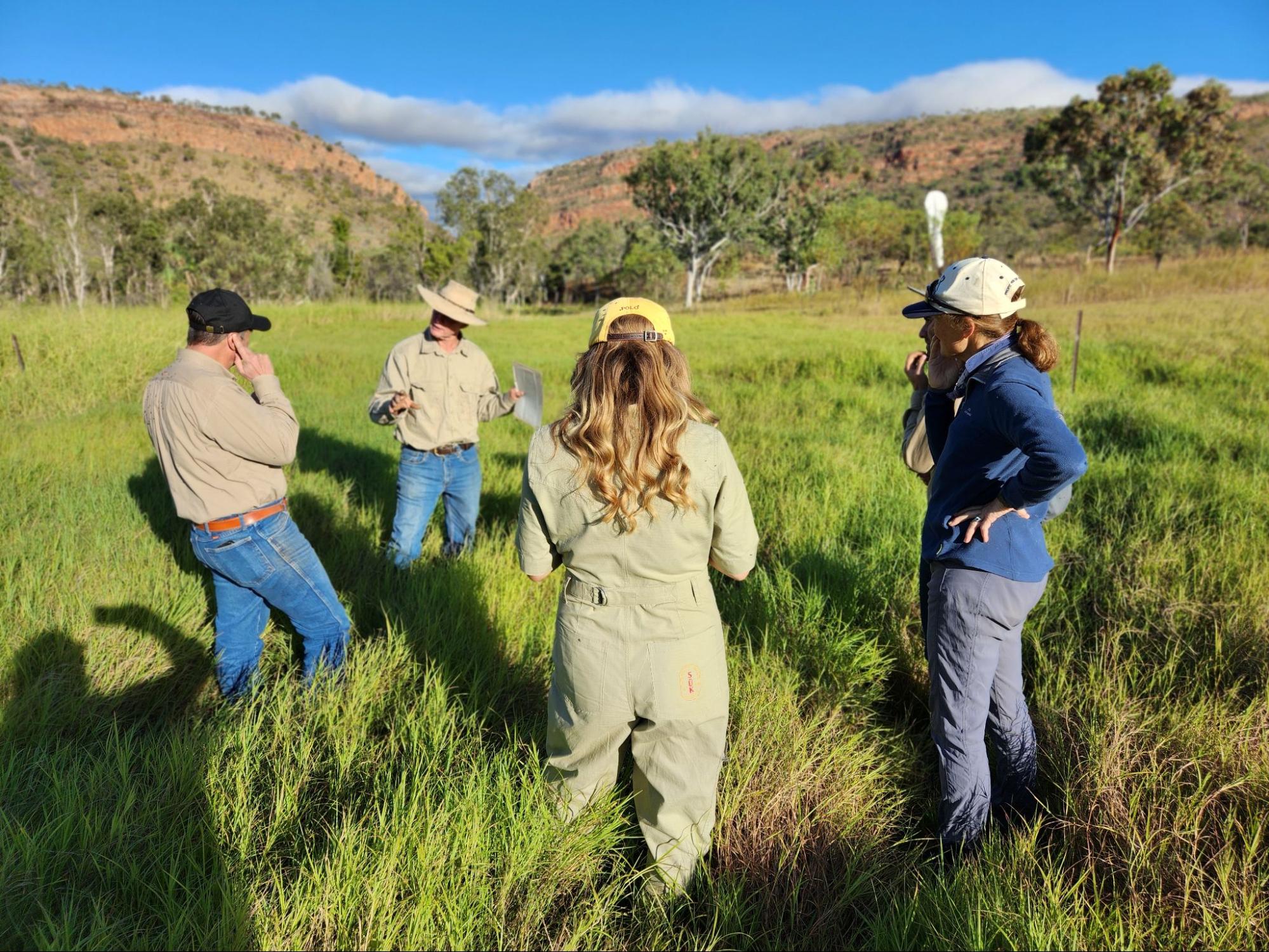
Chris is a student of ecology and a self-described ‘free range scientist’, and Kachana Station has been both his classroom and laboratory. I spent five days in Chris’ classroom in May 2025, along with Mexican rancher Alejandro Carrillo and a diverse group of other visitors.
Here is some of what I learned…
Fire – Tool or bandaid?
When Chris and his wife Jacqui arrived at Kachana, much of the landscape was already quite degraded. Believing this degradation to be a result of too many feral livestock, Chris began destocking. The results were not what he had hoped.
In the wet seasons, the country grew a lot of grass on the back of at least 750mm of average annual rainfall. But in the dry, the grass dried up and when lightning struck, it burned. These fires were initially manageable and usually died out of their own accord, but soon they grew in scale and intensity. The family lived through several out-of-control wildfires.
‘If you’re growing grass, you’re always feeding something – you’re feeding bacteria, fungi, animals, or flames.’
Conventional wisdom dictates that Northern Australia is a landscape adapted to fire, and requires managed burning to avoid the hot fires that the Henggelers were experiencing. And the family does use burning in the lead-up to the dry season to reduce fire scale and intensity. But Chris began to wonder if this was simply a bandaid measure.
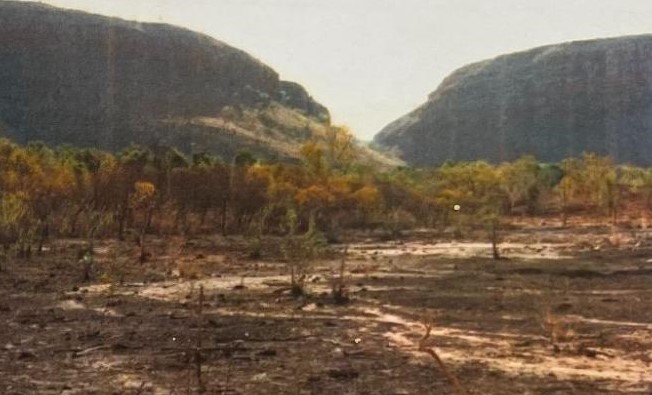
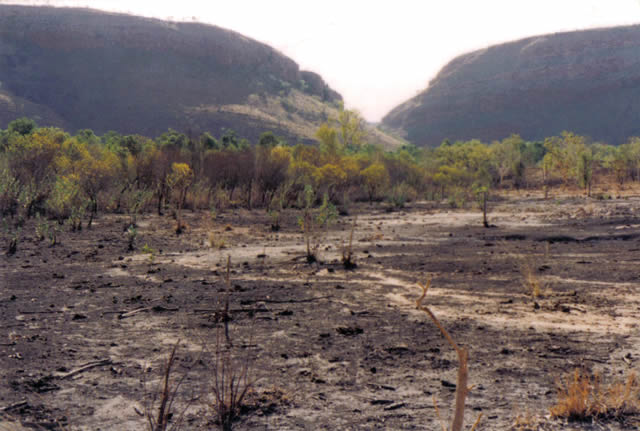
Observing the results of even cool burns, Chris saw how fire dried out or killed plants and exposed and dehydrated the soil. The soil stayed bare until the rains. When the rain did come with what Chris describes as ‘pressure cleaner’ impact, it washed away the exposed soil. The result was a landscape not conducive to living plants.
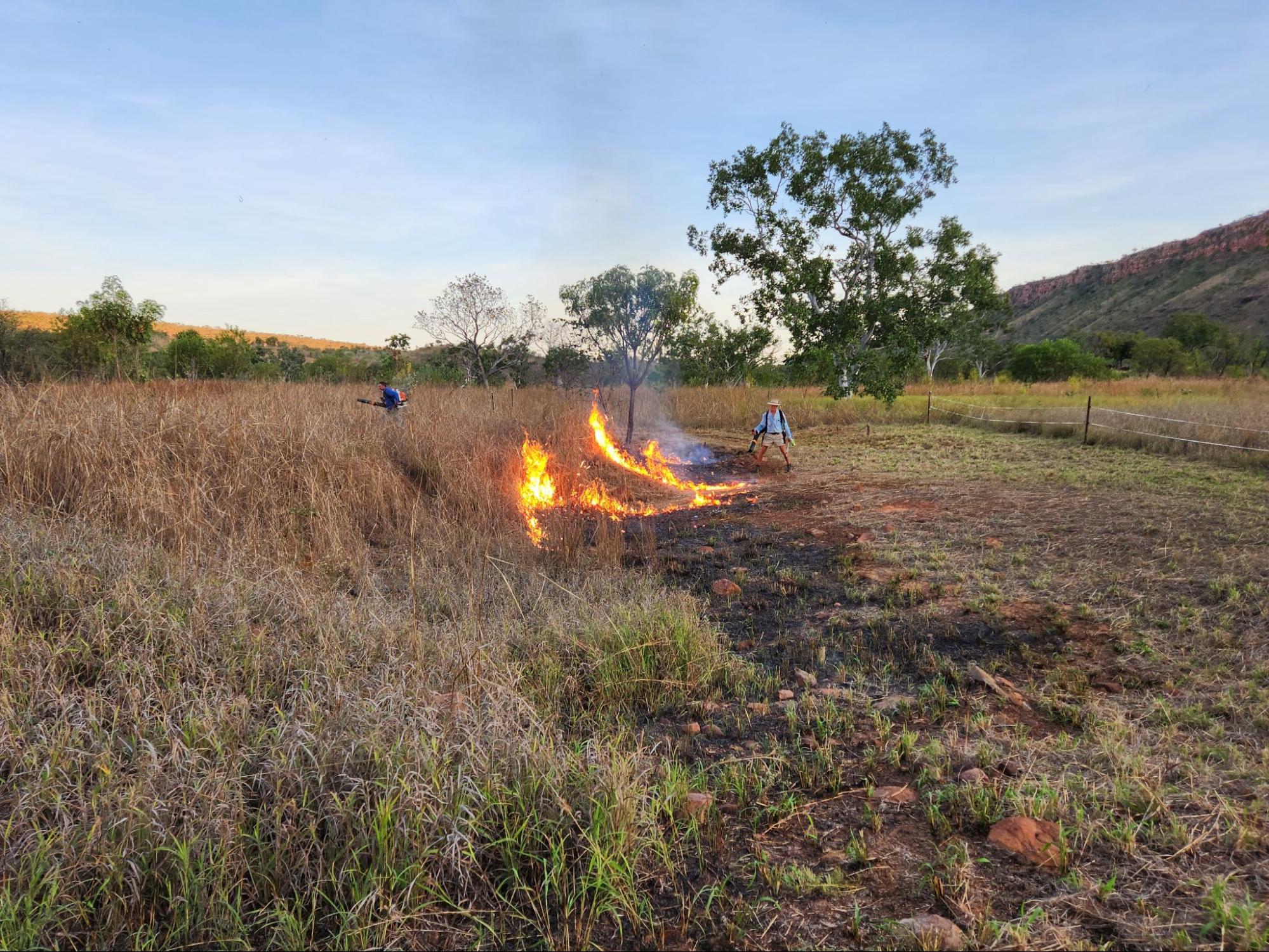
Image: Fire demonstration at Kachana Station.
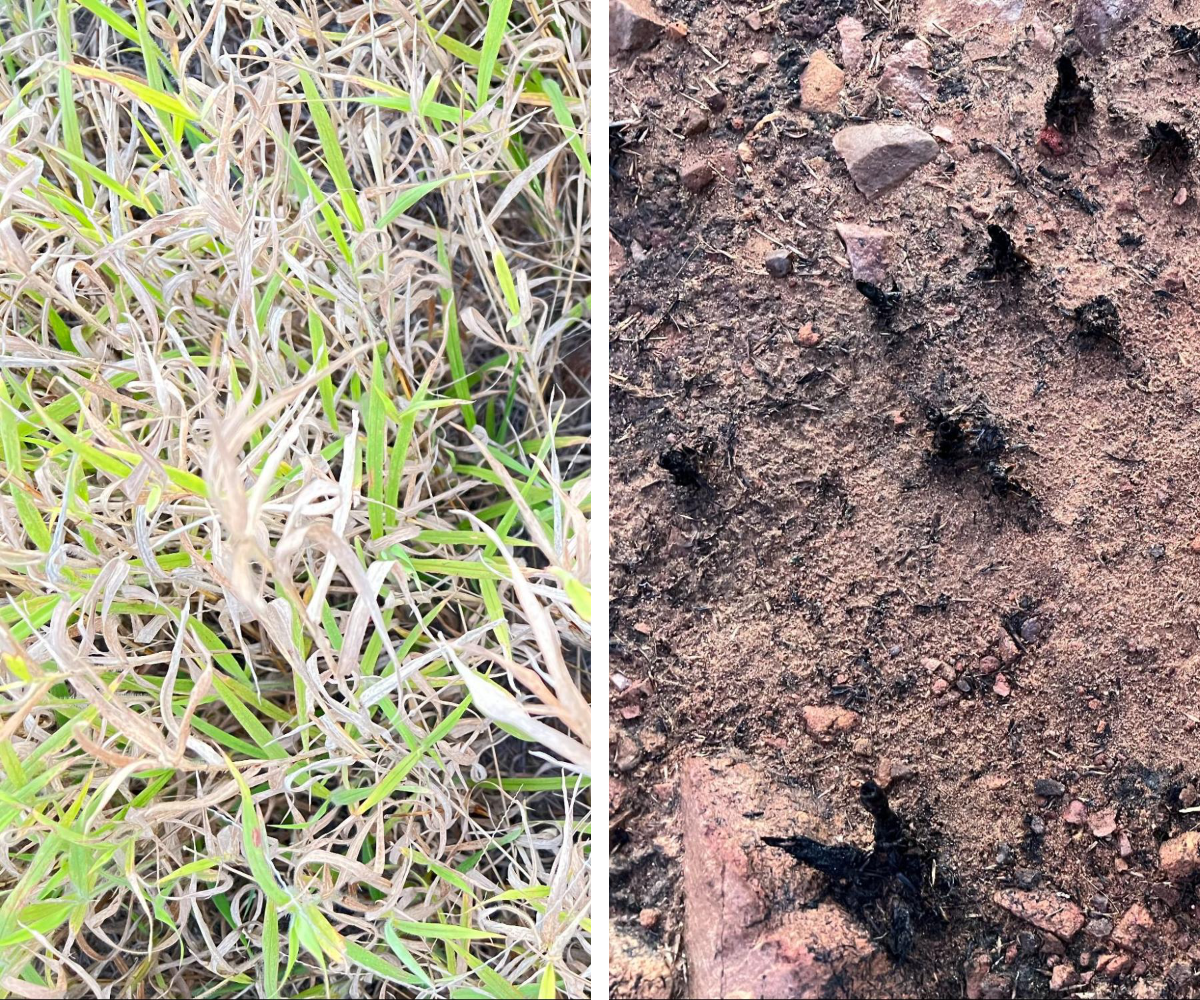
Image: Before and after. A demonstration of the impact of cool burning followed by rain at Kachana. Source: Soils for Life.
Inspired by Tim Flannery’s book The Future Eaters, which described the history of Australia’s now-extinct large herbivores, Chris wondered whether introduced herbivores (what Chris calls the ‘new Australian megafauna’) could do what the original large herbivores of Australia did – manage all that vegetation, reinstate biological soil building, and in so doing reduce the impact of wildfire.
The impact of livestock depends on management
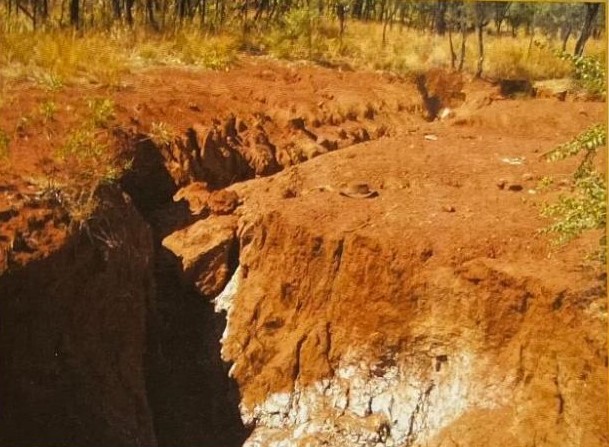
The landscape of Kachana had been unmanaged for decades when Chris arrived. Populations of feral cattle and donkeys – left behind from the days when Kachana had been part of an old stock route – had been selectively grazing the vegetation, eating down the most palatable grasses (generally, the perennials) again and again until they mostly disappeared from the landscape. Without the perennial grasses, annual grasses and weeds dominated. In dry periods, these plants browned off and died, and when fires struck they burned, leaving the soil exposed until the rains. The rains, hitting bare and now often compacted land, ran straight off, taking soil with it, eroding the banks of streams and gullies with powerful force. Ultimately this turned the creeks into deep drains, dropping the water tables and dehydrating the surrounding areas.
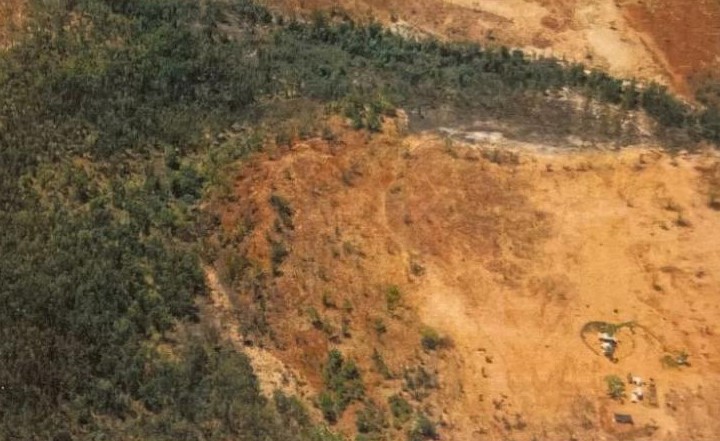
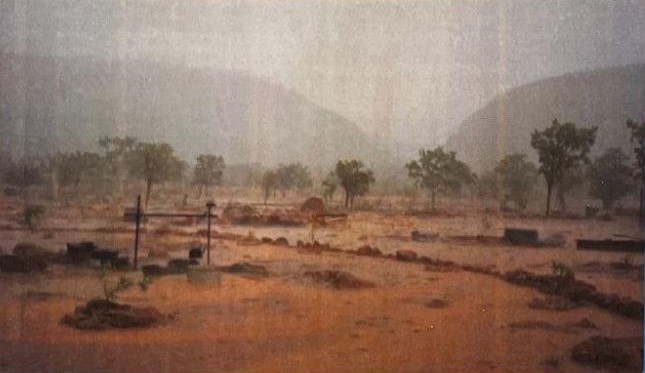
The livestock were having a devastating impact on the landscape, but destocking only made things worse. Chris now believes that it was not only overstocking or overgrazing that was the problem, but rat her animals behaving dysfunctionally (i.e. not behaving in a way that their wild ancestors would have behaved prior to domestication). Originally from Southern Africa, Chris knew that in functional African savannah landscapes, large herbivores are subject to constant threat from predators. This leads them to bunch up in large herds (‘safety in numbers’) and to move constantly, quickly grazing whatever they found along the way and moving on. In Australia, without significant predators, they were free to roam individually, select their favourite plants to eat, and linger in their favourite spots, often places with water, which they would never do in a functional ecosystem because water holes would be the most dangerous place for them. This then led to something Chris says is all too common in Northern Australian Rangelands – over-grazed plants, over-rested plants, compacted soils and bare patches with fluctuations of temperature-extremes.
‘Mulch, evenly fertilise and prune’: Livestock can be nature’s gardeners
Chris became interested in whether the ideas of Allan Savory and Holistic Management, developed in the context of African savannah, could be applied in the Kimberley.
In short, Savory’s approach aims to mimic the behaviour of large migratory herbivores on the African savanna, with short periods of high intensity animal impact, followed by long periods without high animal impact. Behaving in this way, cattle and other livestock ‘prune’ the grass by eating it down (but not killing it), fertilise the soil with their dung and urine, and mulch by trampling what remains, acting like gardeners. After they leave, the ‘micro herds’ get to work, transforming the fertility left behind and cycling those nutrients into plant-available form, supporting plant recovery and regrowth. The still-living plants and the mulch layer covering the soil slow evaporation and shade and cool the soil. The living roots build soil structure and hold the soil together, preventing erosion when rain arrives, and allowing water to infiltrate and be stored, available for plants. According to Chris, the ‘rest’ period when animals move on is better understood as the next stage in the natural dryland ecosystem process.
‘Moving the animals doesn’t necessarily ‘rest’ the land, it gives the plants time to regrow their ‘solar panels’ and the micro-herds a chance to transform all that energy from the animal impact into biological activity, soil health and fertility.’
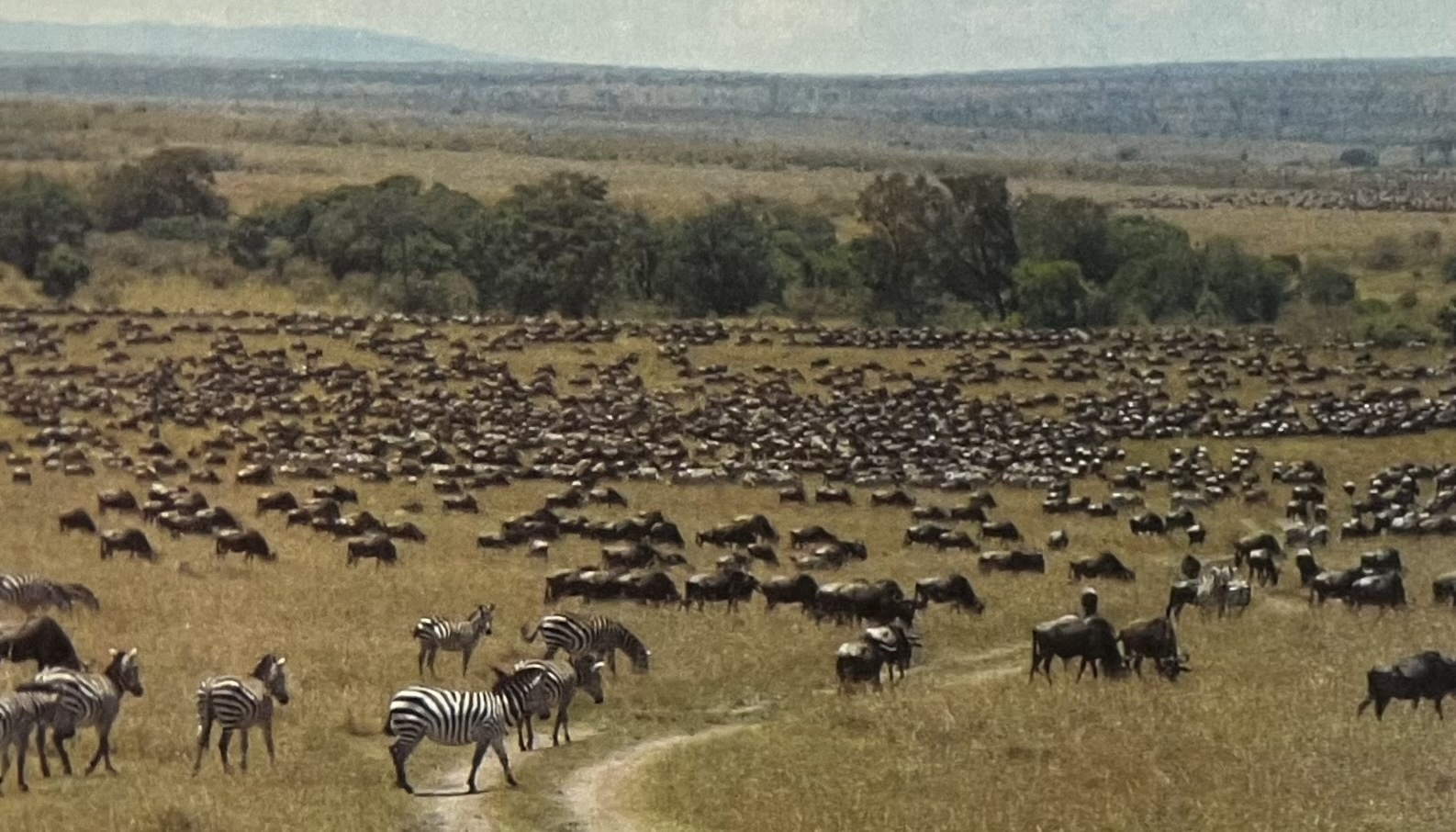
Image: Migratory herds on the African savannah. Source: Chris Henggeler.
We can mimic nature’s ‘economy’ to regenerate land
This approach mimics what Chris calls ‘nature’s economy’ in dryland environments. This economy runs on sunshine, and has three ‘teams’ that play for each other, which Chris terms the producers, consumers and recyclers’. The ‘producers’ are the grasses and other plants that harvest the free sunshine and pull carbon out of the atmosphere. The consumers (mainly herbivores) consume the products produced by the plants. And the recyclers are those that take what’s left over and transform it into a form that supports ongoing plant growth and enables the cycle to continue.
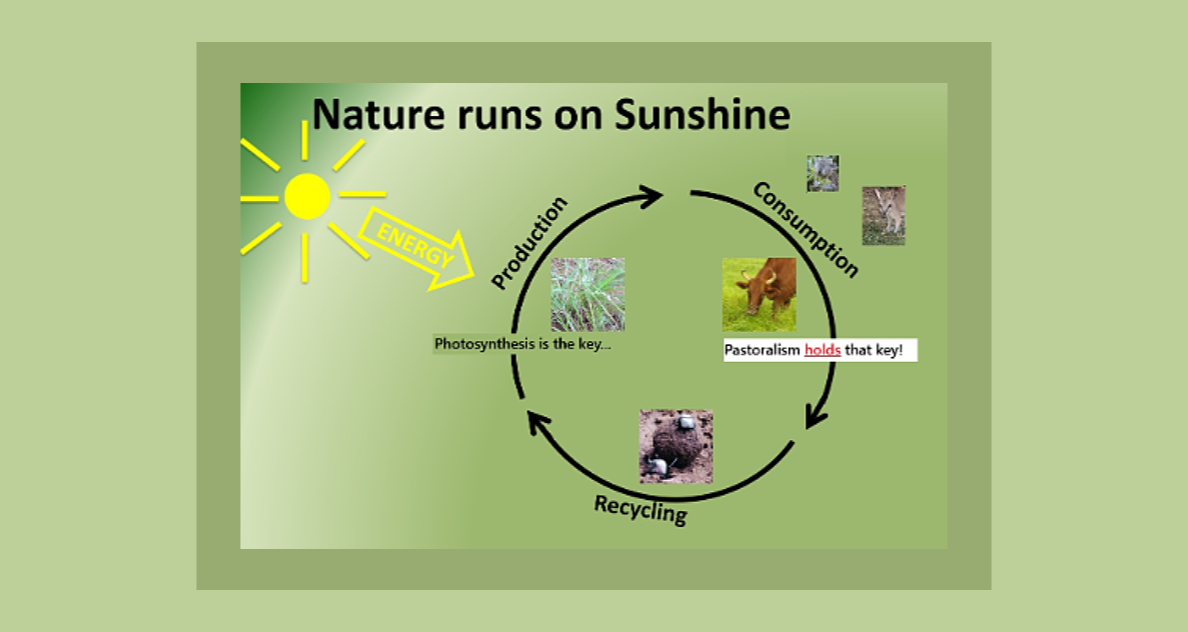
Image: A sunshine economy. Source: Chris Henggeler
Chris saw this as a way to move from ‘feeding flames’ to ‘feeding bacteria, fungi, plants and the soil’. He began to manage the livestock in this way, focusing on small areas with plentiful water nearby to the homestead to test the approach.
In degraded landscapes, build out from the key areas
Starting to reverse the trend of degradation across a landscape as vast as Kachana Station, with a human workforce of one, is a daunting task. Chris decided to start in an area just south of the homestead that had the once perennial but now impermanent and degraded Cockatoo Creek running through it.
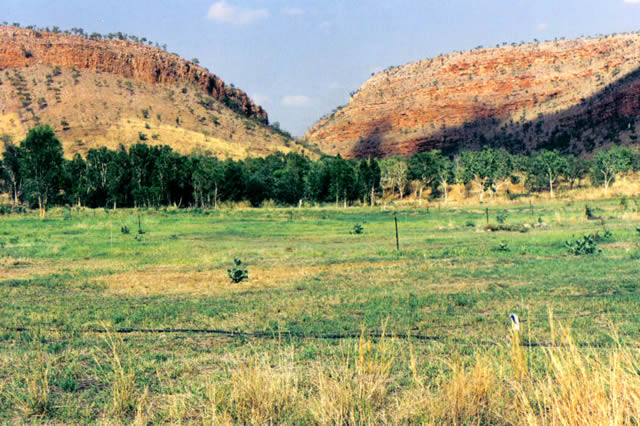
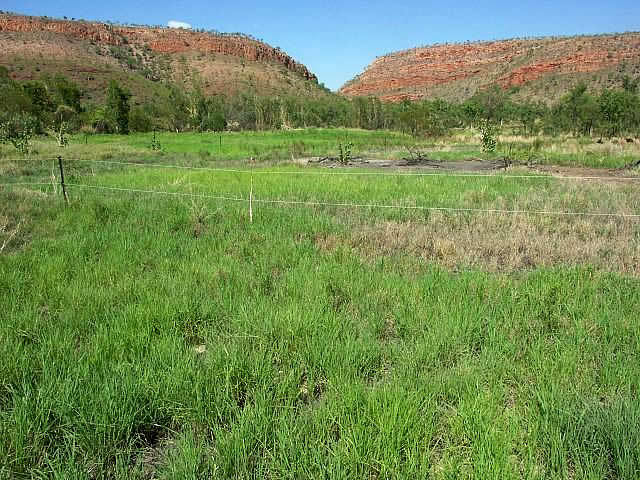
In this area, starting in the early 1990s, Chris excluded fire and grazed livestock intensively with densities of between 300 and 1,200 animals per hectare in very small grazing areas bordered by temporary electric fencing, then leaving the treated areas to ‘recover’ for extended periods afterwards. He also lightly intervened to slow the flow of the creek by, for example, cutting part way through the trunk of riparian trees and pushing them across the stream where they continued to grow and provide a natural permeable barrier.
Chris says that within five years, the Creek returned to reliable perennial stream flow. A pilot study in 2016 by Melbourne University researcher Dr Philipp Nauer revealed that the area managed in this way had 50% higher soil water storage compared to a neighbouring comparable area managed with passive grazing and fire management. The intensively managed area also had 3 times more soil carbon, and 2.5 times more soil nitrogen, most of which was stable, bound up in organic matter.
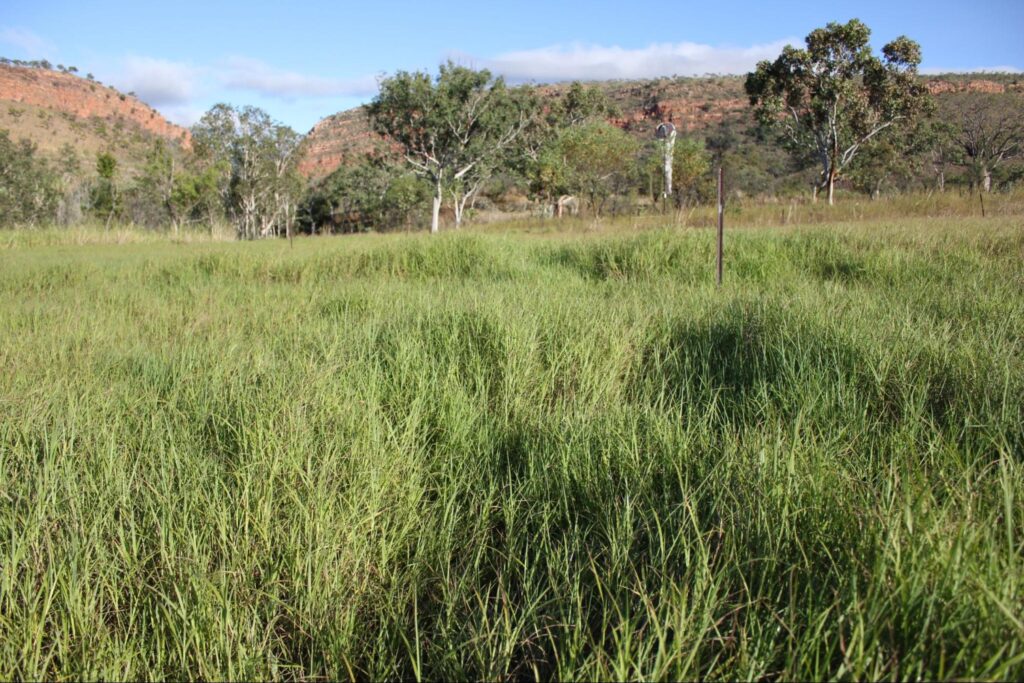
Chris’s longer-term goal is to work upstream, using animals to take the fertility he has built in this low-lying area higher up in the creek catchment, supporting improved plant growth, ‘changing raindrops from bombshells to mist irrigators with groundcover’ reducing erosion and supporting more plant growth, restoring the creek and providing ‘sub-irrigation’ to the riparian areas on either side of the creek. Ultimately, he aims to restore the ‘sponge’ higher up in the cockatoo creek catchment which currently holds very little water and acts, according to Chris, like sheet roofing when it rains.
‘We’re looking at a skeleton of a landscape. Sometimes surgery is required, but generally its as simple as changing raindrops from bombshells to mist irrigators with groundcover’
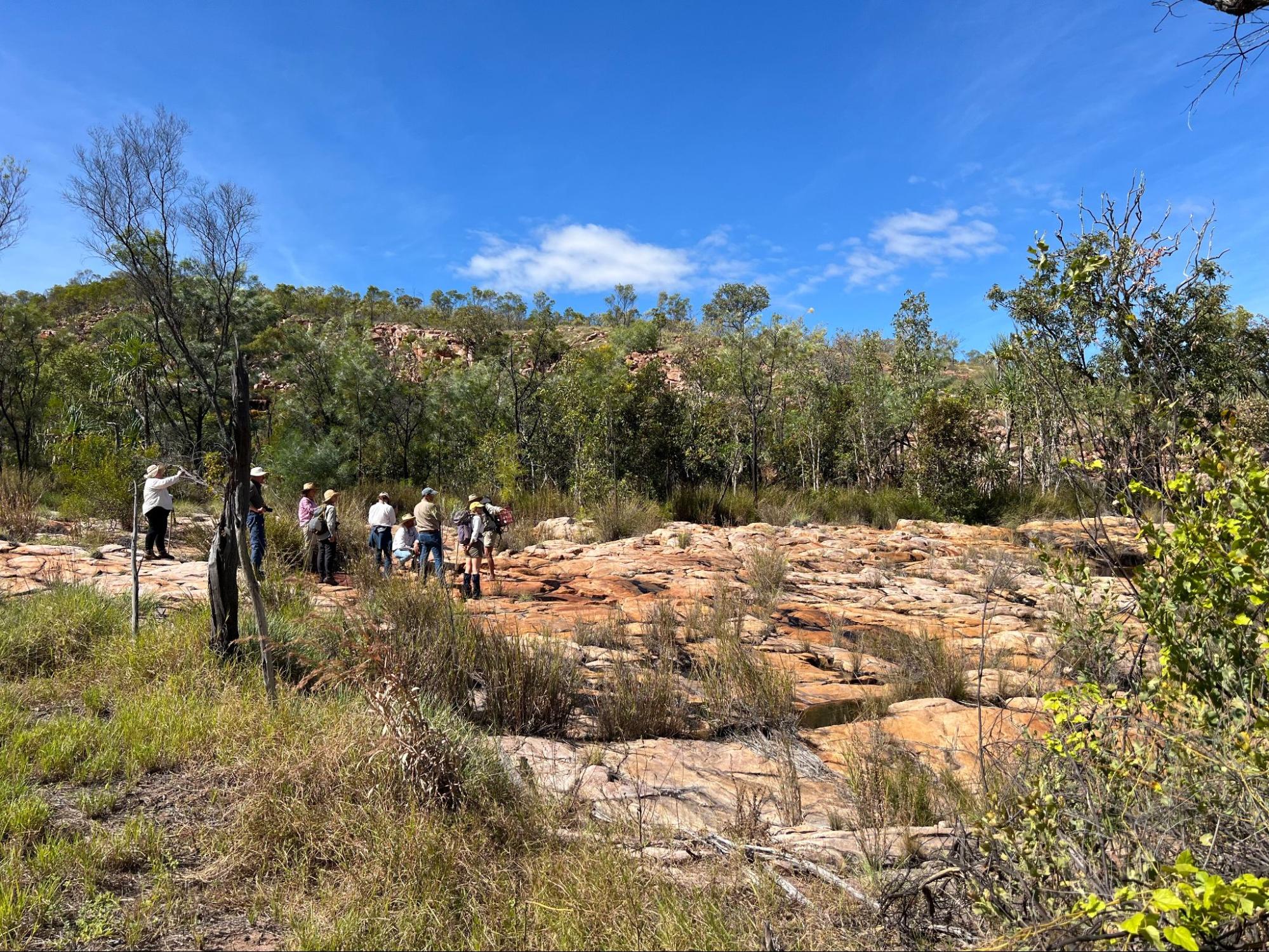
Image: Higher up in the Cockatoo Creek catchment.
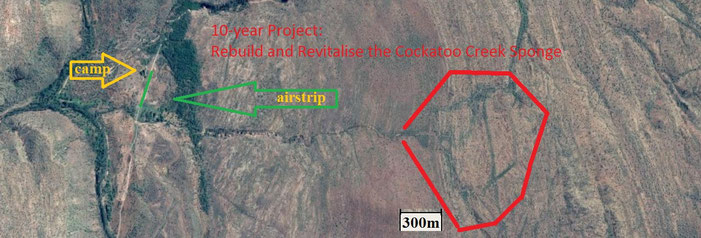
Image: Cockatoo Creek catchment, illustrating the initial pilot area (at the southern end of the green line) and the ultimate goal of restoring the higher catchment ‘sponge’ (red outline). Source: Chris Henggeler.
Getting ‘enviro-fit’: Structured experimentation to build ecological management skills
The sheer scale and remoteness of the rangelands presents challenges to implementing projects of this kind.
Both people with ecological management skills, and infrastructure (fencing, water) are required to manage fire and grazing animals intensively in this way. But it can be hard to find people with those skills, and to finance the high cost of infrastructure.
Chris wonders whether increased fertility resulting from this kind of intensive and regenerative management could support increased stock-days per hectare, which could enable investment in new infrastructure and attract people with, or willing to learn, the skills to manage the land in this way.
He suggests a concept he calls the ‘enviro-gym’ – an expansion of his approach of building out from the key areas close to existing station infrastructure in a step-by-step way, designed to both build pastoralists’ ecological management skills in a safe way, and discover the management methods that work to build ecological function and support increased carrying capacity in each context.
‘As Joel Salatin says, if it’s worth doing, it’s better to “first do it poorly” than not at all.’
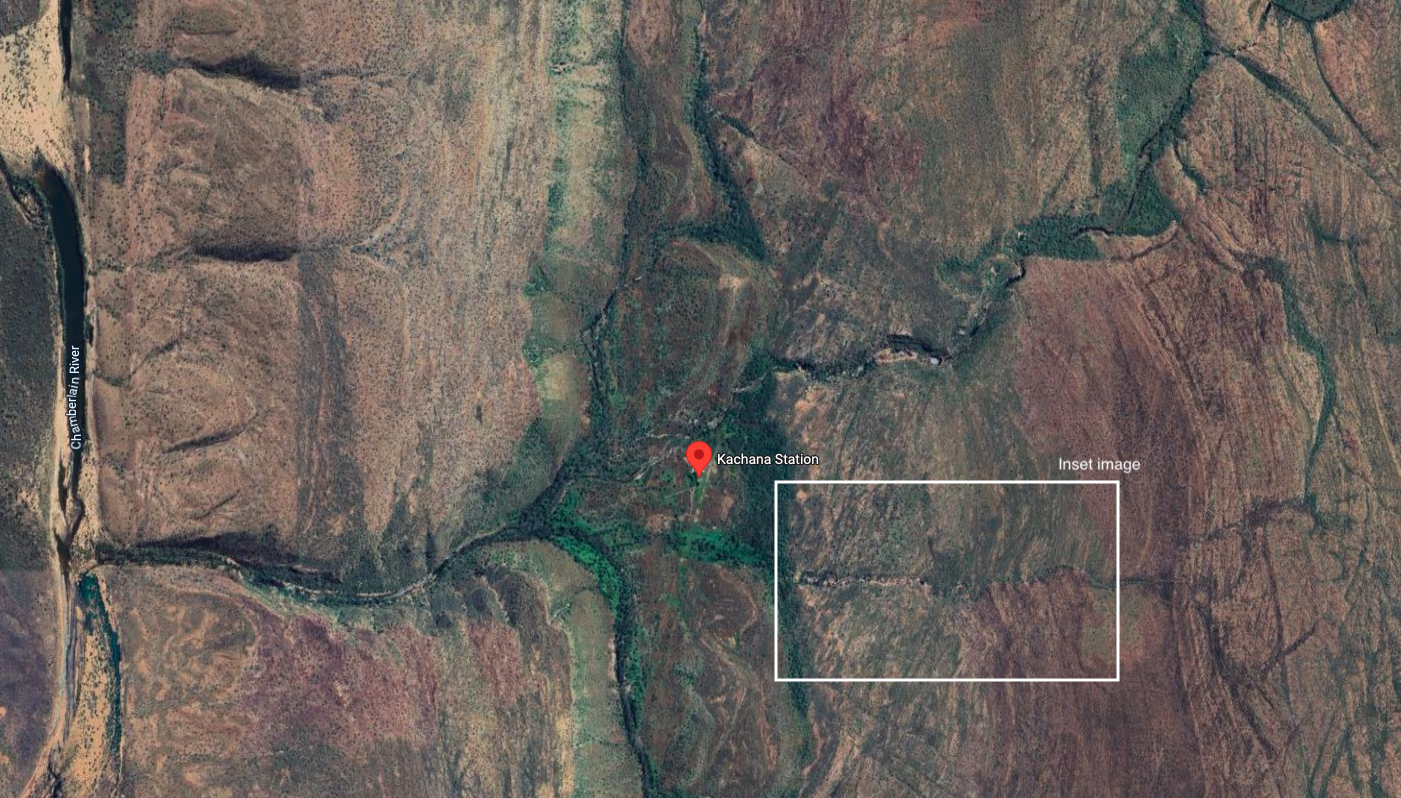
Image: Kachana Station from above in 2025, Cockatoo Creek indicated. Source: Google Maps, Soils for Life.
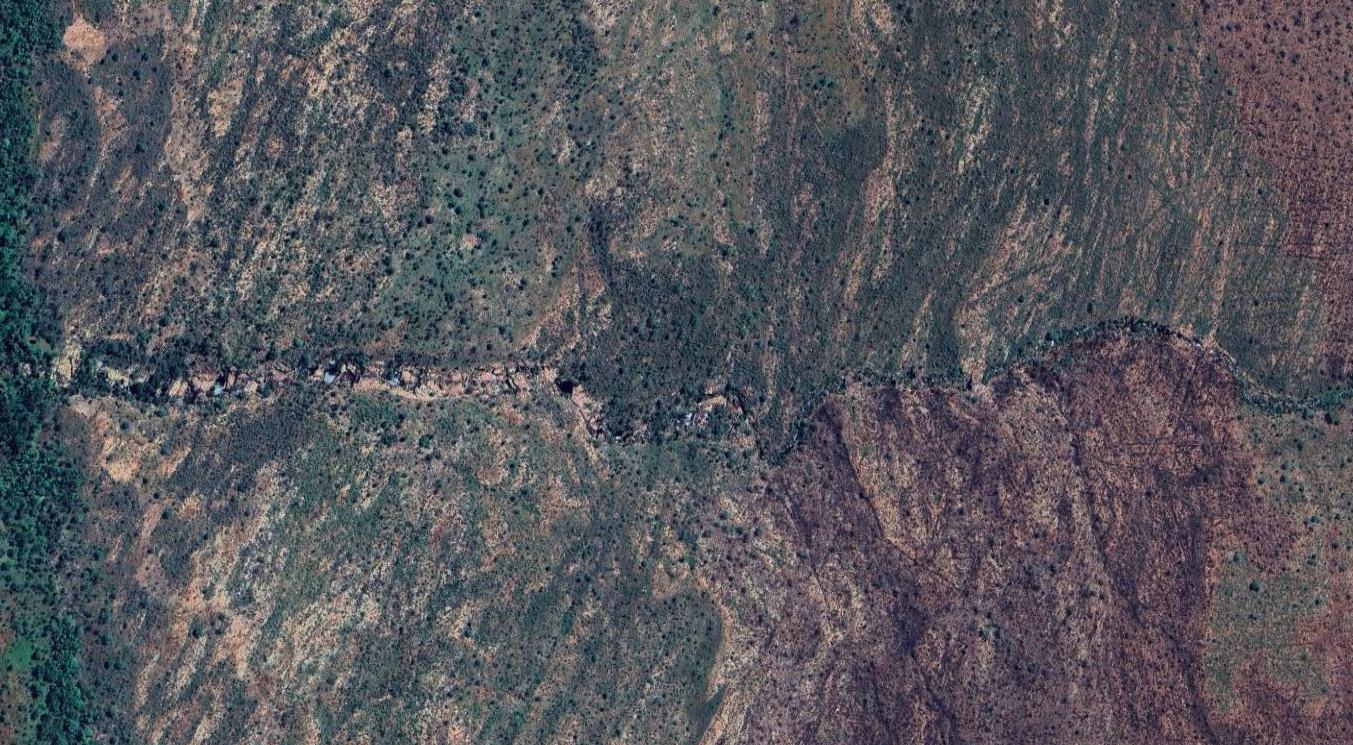
Image: Cockatoo Creek. Source: Google Maps.
Read more about Chris’ enviro-gym concept in this paper, and find out more about Kachana Station and Chris’ extensive writing on land management and related topics on his website.
Thank you to Chris and Jacqui for their incredible hospitality and generosity in sharing their experience and wisdom.
